
At Universe 2026 on Oct 28, GitHub made GitHub Agentic Workflows, an open source GitHub Next project, generally available on GitHub Free, Team and Enterprise. Developers describe tasks such as issue triage, CI failure analysis, documentation updates and test writing in natural-language Markdown, and gh aw compiles them into standard Actions YAML run by Copilot or a coding agent of their choice. GA adds self-hosted ARC runners with Docker-in-Docker, a non-experimental gh aw forecast cost estimate, per-workflow model providers and model routing, and Cloud Hypervisor or NVX micro-VM isolation.
Key Takeaways
- ✓Availability: GitHub Free, Team and Enterprise on github.com; using the default Copilot CLI engine requires a Copilot license
- ✓How it works: requirements in Markdown, compiled to standard Actions YAML that reuses existing runner groups and policies; run with Copilot or your own coding agent
- ✓Safe defaults: read-only permissions, a sandboxed container behind the Agent Workflow Firewall, safe-outputs validation, and a threat detection job before changes are applied
- ✓New at GA: self-hosted ARC runners with Docker-in-Docker, gh aw forecast out of experimental (with threat detection credits and monthly ranges), per-workflow model providers, model routing, micro-VM isolation and cross-repo enclaves
- ✓Customer story (Accenture's figures): one lead saved about 29 hours a week, AI authors 91% of the team's commits, and production errors fell from about 11,000 a day to under 1,000
Key Decision Metrics at a Glance
Not enough VRAM? Compare cloud API and self-hosting costs
Compare 40 dev plans & simulate token costs vs $20/mo subscriptions
Project Links & Resources
Direct AccessIn-Depth Technical Analysis
Background and pain points
Issue triage, CI failure analysis, docs syncing and adding tests all need judgment that hard-coded Actions YAML rules handle poorly, while letting coding agents change repos directly raises permission worries. GitHub Agentic Workflows (gh-aw), an open source GitHub Next project, had been in public preview, and this site tracked several of its 0.9x releases. On Oct 28 at Universe 2026, the official GitHub Changelog announced it is generally available.
Architecture and mechanism
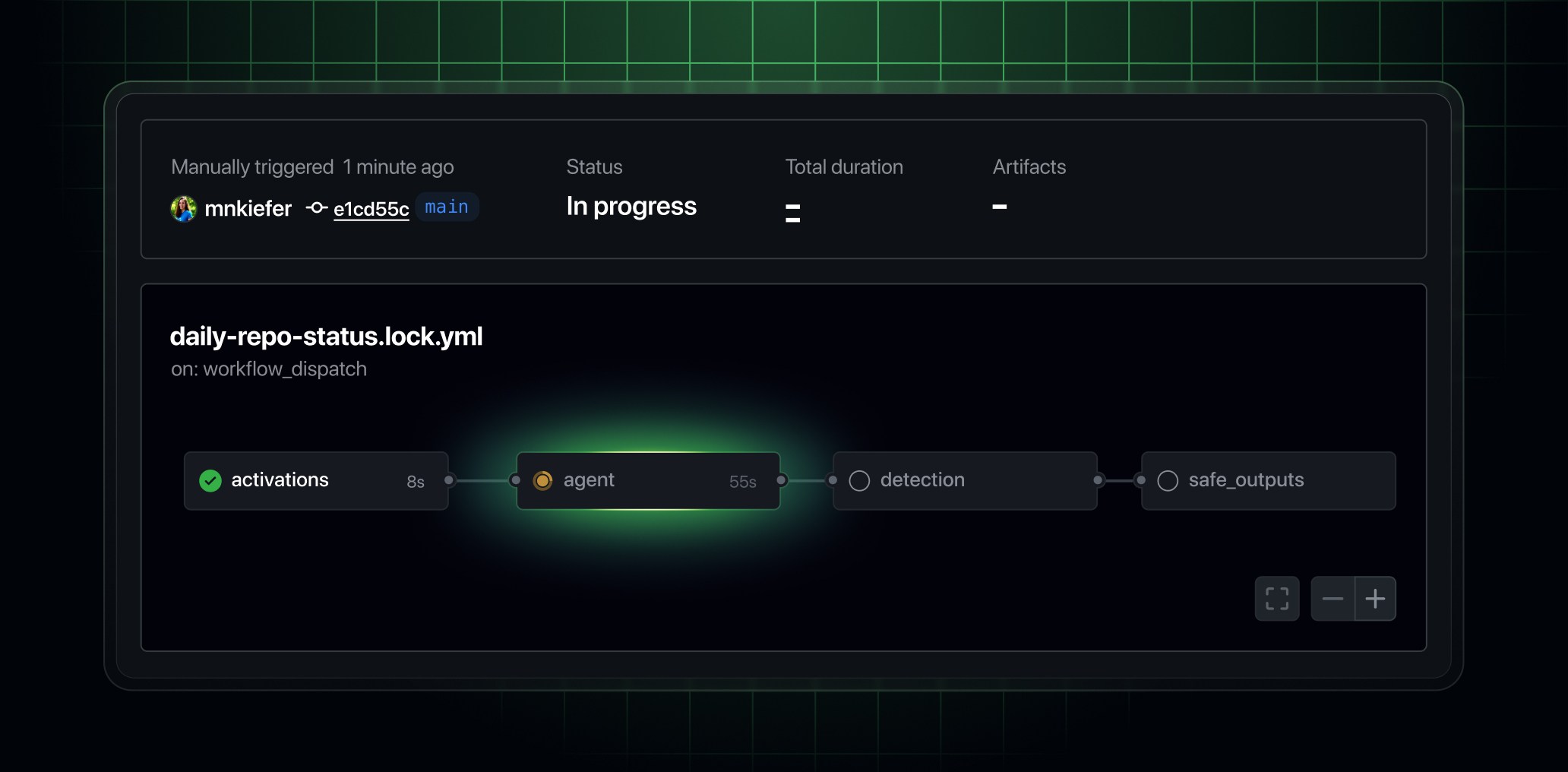
Developers write automation in natural language in Markdown files, and gh aw compiles them into standard Actions YAML, so they reuse existing runner groups and policy constraints; each workflow can run on GitHub Copilot or a coding agent you bring. Security is layered: agents read GitHub content under integrity filter rules, get read-only permissions by default, and run in a sandboxed container behind the Agent Workflow Firewall; outputs go through safe-outputs validation, and a separate threat detection job scans changes before they are applied. New since preview: self-hosted ARC runners with Docker-in-Docker; gh aw forecast is no longer experimental and covers threat detection credits and monthly spend ranges; a refreshed model inventory, per-workflow model providers and new gh aw add-wizard templates; a model router tuned to task type and difficulty; and agents running in Cloud Hypervisor or NVX micro-VMs, with enclaves to prevent leaks in cross-repo workflows.
Benchmarks
GitHub published no benchmarks. The only figures are a customer quote in the changelog from Ben Alton, a senior manager at Accenture: one lead saved about 29 hours a week, team velocity more than doubled on average, AI authors 91% of commits, and production errors fell from about 11,000 a day to under 1,000. That is one customer's self-report, not a general result.
Getting started
Follow the quickstart on the gh-aw site to install the gh CLI extension and trigger a first workflow in minutes; GitHub Next's agentics repo has ready-made templates for triage, dependency management, code review and reporting. The default Copilot CLI engine needs a Copilot license. Start with read-only workflows that only post comments or reports, run gh aw forecast to estimate monthly AI credits, then open write access step by step; enterprises can move workflows to self-hosted ARC runners with micro-VM isolation for sensitive repos.
Benchmark side-by-side against alternatives, or calculate monthly token cost vs subscription break-even.
Discussion & Comments
0Sign in to join the discussion
Connect with AI developers to exchange benchmark insights.