
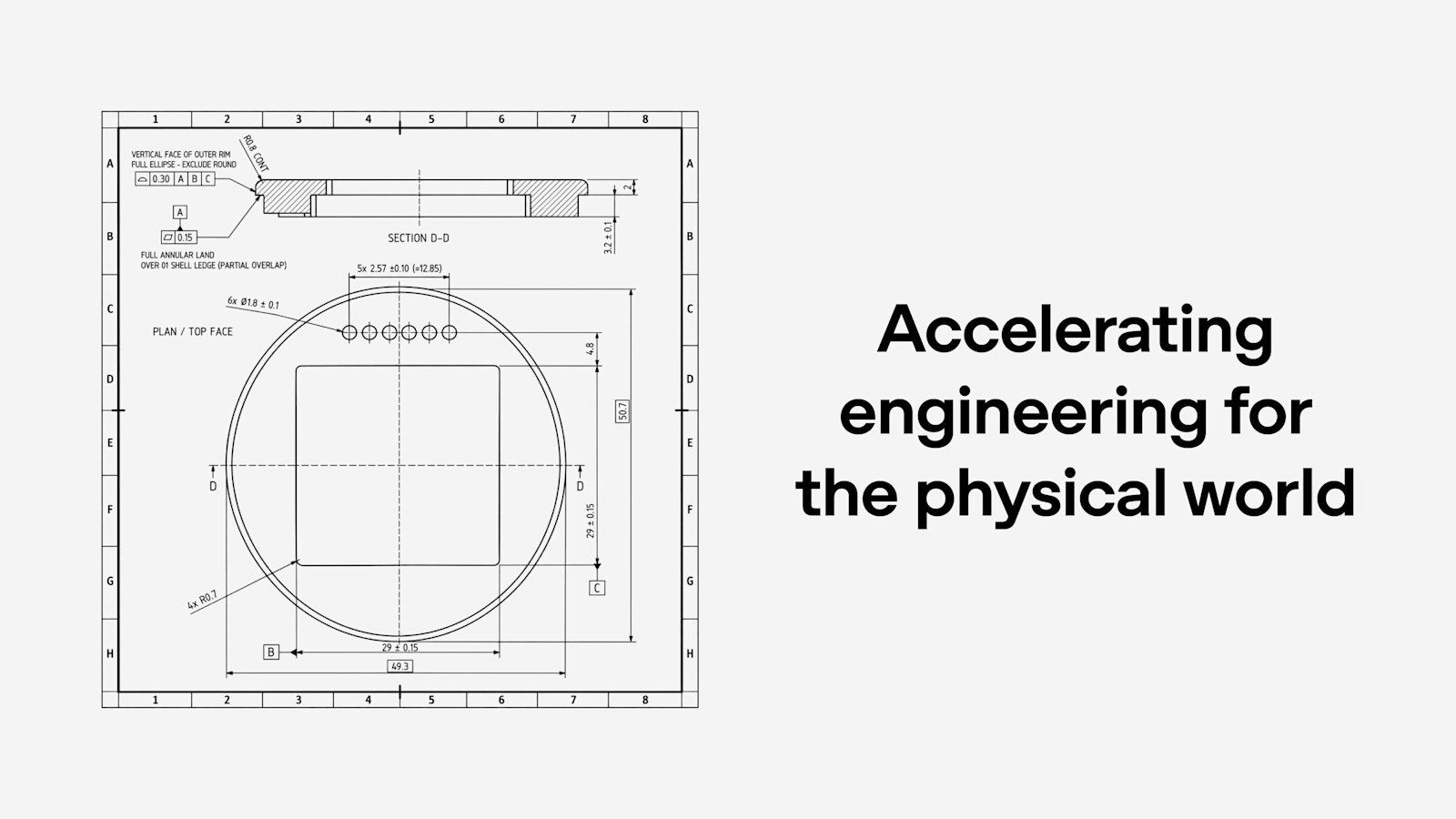
On November 3, OpenAI published "Accelerating engineering for the physical world," describing how its models help with mechanical design, electrical design and simulation. Two employees used GPT-6 Astra to design a device for talking to Codex (enclosure, PCB, firmware and software) in under a week, and a contract manufacturer built a small prototype batch in under a month, though manufacturing readiness still took several rounds of human review. Token usage across OpenAI hardware teams has grown 23-fold since February. On BenchCAD 2.0, a newer internal model averaged 0.875 versus 0.594 for GPT-6 Astra at its highest reasoning setting (OpenAI-reported). OpenAI is also expanding its work with Chip Ganassi Racing and announced a new research collaboration with Mazda.
Key Takeaways
- ✓In a test with no direct human edits, GPT-6 Astra handled the look, enclosure structure, component selection, PCB layout, UI and firmware; two employees finished the design in under a week as a side project, and prototypes came back in under a month, per the OpenAI blog.
- ✓OpenAI names the gaps: Astra did not consistently account for the manufacturer's production limits, tolerances or assembly details, so manufacturing readiness took several rounds of review.
- ✓OpenAI hardware and infrastructure teams use Codex and ChatGPT for CAD models, 2D manufacturing drawings, simulation and FEA setup, and design reviews; token usage has grown 23-fold since February (OpenAI-reported).
- ✓BenchCAD 2.0 (reconstructing 3D parts and assemblies, identifying circuit-board connections): a newer internal model scored 0.875 versus 0.594 for GPT-6 Astra at its highest reasoning setting (OpenAI-reported; the internal model is unnamed and unreleased).
- ✓Collaborators: Chip Ganassi Racing is testing 3D-scan-to-editable-CAD and 2D drawing workflows; Mazda is working with OpenAI researchers on airflow and structural simulations for vehicle design, with results promised "in the coming months."
Key Decision Metrics at a Glance
Turn your technical choice into a development budget
Compare 40 dev plans & simulate token costs vs $20/mo subscriptions
Project Links & Resources
Direct AccessIn-Depth Technical Analysis
Background
Hardware development means constantly reconciling mechanical structure, electronics, software and manufacturing constraints, each in its own specialized tool (CAD, ECAD, simulation), and much of the time goes to manual handoffs and rework. AI coding tools have mostly stayed in pure software. On November 3, OpenAI published "Accelerating engineering for the physical world" and posted on its official X account that "ChatGPT and Codex are helping engineers build for the physical world," sharing progress in mechanical design, electrical design and simulation.
How it works
OpenAI ran a test: with no direct human edits, GPT-6 Astra defined the requirements and designed a device for talking to Codex. Astra handled the look, the enclosure and internal mounting structures, component selection and PCB layout, the user interface, and the firmware and software that connect to Codex. Two employees did it as a side project in under a week, and a contract manufacturer built a small batch of prototypes in under a month. OpenAI also lists the gaps: Astra did not consistently account for the manufacturer's production limits, tolerances or assembly details, so getting ready for manufacturing still took several rounds of review. Internally, OpenAI's hardware and infrastructure teams, spanning robotics and compute infrastructure, use Codex and ChatGPT to create CAD models, prepare 2D manufacturing drawings, set up simulations and FEA, and review designs.
Benchmarks
All figures are OpenAI-reported. Token usage across hardware teams has grown 23-fold since February. On BenchCAD 2.0, which tests reconstructing 3D parts and assemblies and identifying circuit-board connections, a newer internal model averaged 0.875, compared with 0.594 for GPT-6 Astra at its highest reasoning setting. The internal model is unnamed with no release date, and OpenAI gave no comparison with other vendors' models.
What developers can do
OpenAI is expanding its work with Chip Ganassi Racing to turn 3D scans of existing parts into editable CAD models and 2D manufacturing drawings, useful when original design files are missing, and announced a new research collaboration with Mazda using airflow and structural simulations to explore vehicle designs, with results due in the coming months. Hardware and embedded developers can already use Codex for code-driven CAD (scripted modeling) and firmware work, treating model output as a draft while engineers own tolerances, manufacturability and assembly. OpenAI is also inviting engineers and software vendors in mechanical, electrical and mechatronics fields to collaborate.
Benchmark side-by-side against alternatives, or calculate monthly token cost vs subscription break-even.
Discussion & Comments
0Sign in to join the discussion
Connect with AI developers to exchange benchmark insights.