AI Coding Live News

Apple Opens Siri AI to All Developers: iOS 27.3 Betas Add a Developer Preview for App Intents and Multi-Step Skills

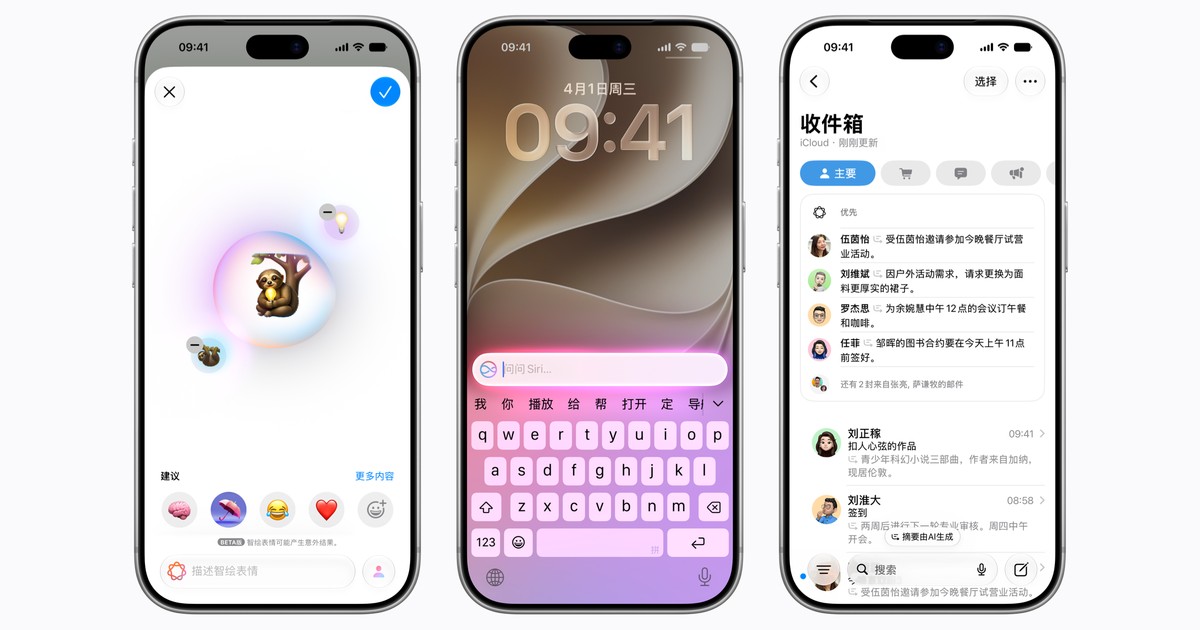
On November 3, Apple announced on its Developer site that a new Developer Preview in the iOS 27.3, iPadOS 27.3, macOS 27.3 and visionOS 27.3 betas lets any app bring its content and actions into Siri AI through App Intents, tapping personal context, onscreen awareness and natural language. Apple also introduced skills, which teach Siri AI to combine several actions into one experience, and Siri AI can now surface any entity in the Spotlight semantic index. It is a preview only: customer rollout is a few months away and App Store submissions open in spring. Siri AI remains unavailable in the EU on iOS, iPadOS and watchOS.

Apple Opens Siri AI to All Developers: iOS 27.3 Betas Add a Developer Preview for App Intents and Multi-Step Skills

Key Takeaways

  • Covers four platform betas: iOS 27.3, iPadOS 27.3, macOS 27.3 and visionOS 27.3 (Apple Developer news)
  • Any app can join Siri AI via App Intents; new skills combine several actions into one request, and Siri AI can surface any Spotlight semantic-index entity, not just ones that fit an existing schema
  • Apple has already rolled the capabilities into 15 of its own apps, including Calendar, Files, Finder, Mail, Maps, Messages, Notes, Photos, Safari, Shortcuts and Weather
  • Timeline: customers get it "in a few months," App Store submissions open in spring, and Apple Intelligence Group Labs run November 4-5
  • Limits: Siri AI is unavailable in the EU on iOS, iPadOS and watchOS and for users under 13; server-model features have daily usage limits, with paid expanded access promised later
Read full story
Linked Models & Agents:

Apple Intelligence is coming to China: iOS 27.3 developer beta starts Nov 4, public release in December, with Alibaba Qwen inside Siri, Writing Tools and Visual Intelligence

In a press release on its China newsroom, Apple said the first Apple Intelligence features will open for testing in the latest iOS developer beta starting November 4 and reach users in China with the iOS 27.3 release in December. The features run on Apple-built generative models and include Live Translation, Writing Tools, Visual Intelligence, Clean Up, Genmoji, notification and Mail summaries, and Type to Siri; Apple also partnered with Alibaba to bring Qwen into Siri, Writing Tools and Visual Intelligence. The first wave covers iPhone 15 Pro and newer only; Siri AI and the other next-generation features announced at WWDC 2026, plus Image Playground, are not included, and Mac, iPad and other platforms wait on further approvals.

Apple Intelligence is coming to China: iOS 27.3 developer beta starts Nov 4, public release in December, with Alibaba Qwen inside Siri, Writing Tools and Visual Intelligence

Key Takeaways

  • Timeline (Apple): testing in the latest iOS developer beta from November 4, public rollout with iOS 27.3 in December, no exact date given
  • First-wave features include Live Translation (Messages, FaceTime, Phone and AirPods), Writing Tools, Visual Intelligence, Clean Up, Genmoji, natural-language photo search, Priority Mail, notification summaries and Type to Siri
  • Alibaba Qwen is built into Siri, Writing Tools and Visual Intelligence: users can ask about photos, PDFs and presentations and use Qwen to compose original text, signing in with a Qwen account or Sign in with Apple
  • Supported devices: iPhone 16 and later, iPhone Duo, iPhone 15 Pro/Pro Max and iPhone Air, with Siri and device language set to English and Simplified Chinese
  • Siri AI and other next-generation WWDC 2026 features are excluded, MacRumors says Image Playground is also missing, and other platforms follow after the necessary approvals
Read full story
Linked Models & Agents:
⚡ Qwen⚡ Apple Foundation Models🤖 Siri🌐 Apple🌐 Alibaba

LM Studio Bionic 1.1.10 adds the oMLX engine, bringing RAM-plus-SSD KV caching and MLX speculative decoding to local models on Macs

LM Studio posted on X at 15:32 UTC on Oct 29 that users can now download a new oMLX engine inside LM Studio and run it with MLX models they already have. The official changelog lists it in Bionic 1.1.10, alongside speculative decoding for MLX models and an in-app terminal. oMLX is an open-source Apple Silicon inference server maintained by developer jundot (Apache 2.0, about 23,000 GitHub stars) built around continuous batching and a two-tier RAM and SSD KV cache. LM Studio has not published speed comparisons for the engine.

LM Studio Bionic 1.1.10 adds the oMLX engine, bringing RAM-plus-SSD KV caching and MLX speculative decoding to local models on Macs

Key Takeaways

  • LM Studio says the oMLX engine can now be downloaded inside the app and used with existing MLX models; the post has about 540 likes (post)
  • The Bionic 1.1.10 changelog (Oct 29) also lists speculative decoding for MLX models, a public in-app terminal and llama.cpp 2.66.0 extension packs (changelog)
  • oMLX is Apache 2.0 open source with about 23,000 GitHub stars and needs macOS 15+ on Apple Silicon M1 to M5 (GitHub)
  • Its core is a two-tier KV cache: hot blocks stay in RAM, overflow is written to SSD as safetensors, and matching prefixes are restored from disk even after a restart
  • LM Studio has published no speed comparison with its existing MLX engine; one user reported that restart-to-update failed after launch and LM Studio is investigating
Read full story

ChatGPT adds iCloud Mail and iCloud Calendar plugins on all plans, connected with an Apple app-specific password

On Oct 27 the official ChatGPT account announced that iCloud Mail and iCloud Calendar plugins are available in ChatGPT on all plans across web, desktop and iOS, rolling out globally. Users can ask ChatGPT to find an email, catch up on their inbox, check what is next or update a calendar event. The two plugins are installed separately, both connect with an Apple app-specific password, and both include read-only contact lookup; standalone Contacts and Reminders plugins are not part of this launch.

ChatGPT adds iCloud Mail and iCloud Calendar plugins on all plans, connected with an Apple app-specific password

Key Takeaways

  • Available on every ChatGPT plan, including Free, on web, desktop and iOS, rolling out globally and subject to workspace app controls
  • Found under Settings > Plugins; iCloud Mail and iCloud Calendar are installed and connected separately
  • Both connect with an Apple app-specific password, which requires two-factor authentication; never use the main Apple password or paste it into a chat
  • Mail only works with @icloud.com, @me.com and @mac.com addresses, while Calendar uses the primary Apple Account email, which may differ
  • Disconnecting in ChatGPT does not revoke the app-specific password at Apple; that has to be done separately at account.apple.com
Read full story
Linked Models & Agents:
ADSponsored

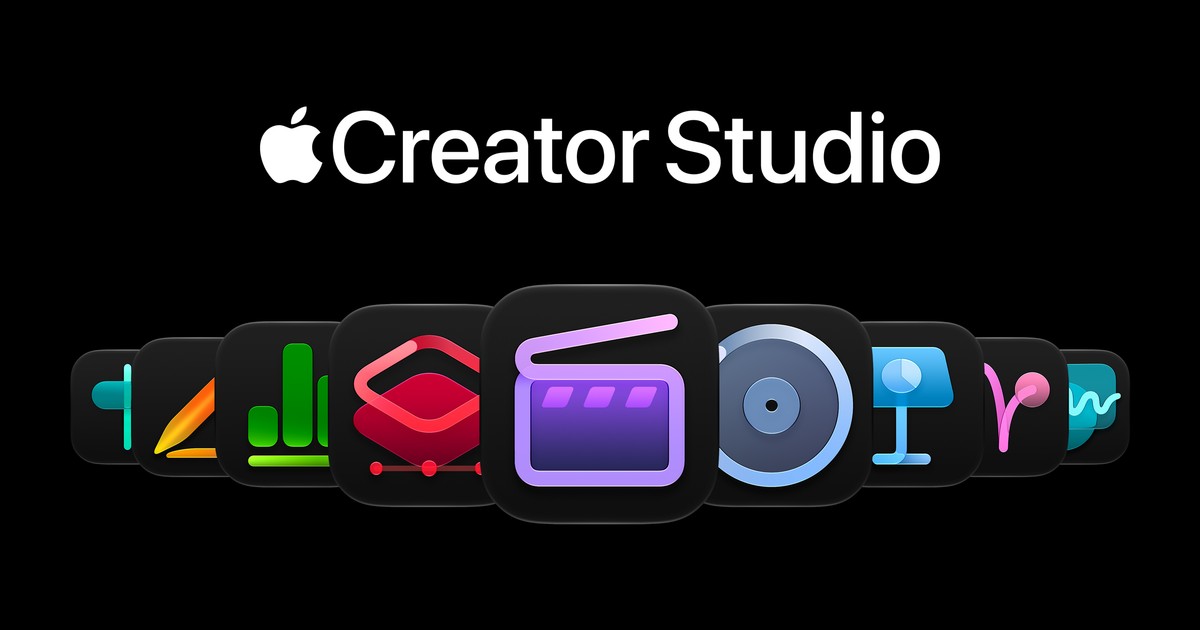
Apple Creator Studio adds AI assistants built on Apple models and OpenAI to Logic Pro, Keynote, Pages and Numbers, plus MCP support so external agents can edit iWork documents

On October 27 Apple announced a major Apple Creator Studio update: Logic Pro for Mac plus Keynote, Pages and Numbers gain beta intelligent assistants that Apple says are powered by a combination of Apple-built models and OpenAI and understand document context. Keynote, Pages and Numbers also add Model Context Protocol (MCP) support, letting external AI agents read content, make edits and run automated actions inside the apps. Pixelmator Pro adds natural-language Generate Fill, and Keynote introduces the open JSON-based .keyx format. The update ships free to existing subscribers on the App Store in November; pricing stays $12.99 per month or $129 per year.

Apple Creator Studio adds AI assistants built on Apple models and OpenAI to Logic Pro, Keynote, Pages and Numbers, plus MCP support so external agents can edit iWork documents

Key Takeaways

  • Logic Pro for Mac, Keynote, Pages and Numbers gain beta assistants that Apple says run on a combination of Apple-built models and OpenAI
  • Keynote, Pages and Numbers support MCP so external AI agents can read content, edit and automate actions (requires macOS 27 or later)
  • Keynote adds the open JSON-based Keynote Interchange Format (.keyx), designed to be readable by external tools and AI agents
  • Assistants are U.S. English only and need an Apple Intelligence-capable device on iOS, iPadOS or macOS 27; free update for subscribers in November
  • Pricing unchanged at $12.99 per month or $129 per year, $2.99 per month for education
Read full story

Apple ships 27.2 updates: Siri AI adds French, Japanese, Korean, Portuguese and Spanish, and can now recall past conversations

On Oct 26 Apple released iOS, iPadOS, macOS, watchOS and visionOS 27.2, and Siri AI (beta), the assistant rebuilt on Apple Intelligence, now supports French, Japanese, Korean, Portuguese and Spanish in addition to English. Apple says Traditional Chinese, Norwegian, Turkish and Vietnamese will follow by the end of the year. Per the iOS 27.2 release notes, Siri AI can now recall past conversations and draw on more sources such as photos in Messages, Calendar attendees and voicemails. Siri AI is still unavailable in the EU on iOS, iPadOS and watchOS and in mainland China, and server-side features have daily usage limits; Apple says expanded access will be offered for a fee in the future.

Apple ships 27.2 updates: Siri AI adds French, Japanese, Korean, Portuguese and Spanish, and can now recall past conversations

Key Takeaways

  • Languages: Siri AI grows from English-only to 6 languages, adding French, Japanese, Korean, Portuguese and Spanish; Apple says Traditional Chinese, Norwegian, Turkish and Vietnamese arrive by year end
  • 5 platforms: iOS, iPadOS, macOS, watchOS and visionOS 27.2 shipped the same day, with Siri AI still labeled beta
  • New abilities (per iOS 27.2 release notes): recall of past conversations, more sources including photos in Messages, Calendar attendees and voicemails, plus one Excluded Apps setting
  • Limits: unavailable on iOS/iPadOS/watchOS in the EU, for mainland China accounts and for users under 13; server-side features have daily caps, and Apple says paid expanded access is coming
  • Devices: Apple Intelligence hardware such as iPhone 15 Pro and later and M1-or-later iPad and Mac, with device and Siri language set to the same supported language
Read full story
Linked Models & Agents:
⚡ Apple Intelligence⚡ AFM 3🤖 Siri AI🌐 Apple

SGLang v0.5.22 Released: DeepSeek-V4.1 Throughput Jumps 2.3x on H200 and 1.9x on MI355X, InstantTensor Loads Models 10x Faster

The SGLang team released v0.5.22 featuring 950 PRs from 245 contributors: DeepSeek-V4.1 delivers up to 2.3x more throughput per GPU on NVIDIA H200 and 1.9x on AMD MI350X/MI355X via DSpark. The new InstantTensor loader cuts model loading time by 10x. B200 decodes Qwen3.8-Flash-Next 12% faster, while B300 speeds up GLM-5.3-Flash by 10% and yields 1.85x decode throughput for MiMo-V2.6-Pro. SGLang also adds native Apple Silicon PyTorch support and ComfyUI integration.

SGLang v0.5.22 Released: DeepSeek-V4.1 Throughput Jumps 2.3x on H200 and 1.9x on MI355X, InstantTensor Loads Models 10x Faster

Key Takeaways

  • SGLang v0.5.22 released with 950 PRs from 245 contributors across heterogeneous platforms
  • DeepSeek-V4.1 achieves up to 2.3x throughput per GPU on NVIDIA H200 and 1.9x on AMD MI350X/MI355X via DSpark
  • New InstantTensor loader speeds up large model checkpoint ingestion by 10x
  • Qwen3.8-Flash-Next decodes 12% faster on B200; MiMo-V2.6-Pro reaches 1.85x decode throughput on B300
  • PD disaggregation cuts p95 TTFT in half (-50%) on long prompts, alongside native Apple Silicon and ComfyUI diffusion support
Read full story
Linked Models & Agents:

Meta open-sources Muse Spark Open: 816B/42B natively multimodal US open-weight flagship, runs on two M5 Ultra Mac Studios

On 2026-10-15 Meta released Muse Spark Open open weights: an 816B-total / 42B-active MoE with a Perception Encoder, natively multimodal (text/image/video/audio in → text out), 1M context, aimed at coding and long-horizon agents. Weights are on Hugging Face (BF16/NVFP4), SageMaker, Model Garden and Foundry; APIs include OpenRouter, Together, Fireworks and Groq. Meta calls it the most capable US open-weight model to date and, with Apple, optimized it to run locally across two M5 Ultra Mac Studios via MLX.

Meta open-sources Muse Spark Open: 816B/42B natively multimodal US open-weight flagship, runs on two M5 Ultra Mac Studios

Key Takeaways

  • Specs: MoE 816B total / 42B active (256 experts, top-8), 62 layers, 1M context; text+image+video+audio in → text out (model card)
  • Local: NVFP4 needs ≥~700GB VRAM, BF16 ~2TB; or two Apple M5 Ultra Mac Studios via MLX (Meta blog)
  • Agentic benches (xhigh, official table): MCP-Atlas 89.2, JobBench 61.8, OSWorld Verified 80.4, Terminal-Bench 2.1 76.4, DeepSWE 1.1 60, AA Intelligence Index 39
  • Serve with SGLang / vLLM / TensorRT-LLM / Transformers / llama.cpp / Unsloth / MLX; Helion kernels claim 1.03–3.95× kernel speedups on NVIDIA/AMD
  • License: Muse Model License (display “Built with Muse Spark Open”; MaaS over $20M/yr needs a separate deal); OpenRouter ~$1.25/M in, $4.25/M out
Read full story
Linked Models & Agents:

Apple Uncovers MoE-Agent Alignment: Structuring Expert Selection During RL Post-Training Boosts Agentic Success by 10+ Points

Sparse Mixture-of-Experts (MoE) architectures are the de facto standard for long-horizon agentic systems due to their favorable activation ratios. However, the co-design of agentic trajectories and MoE routing topologies remains largely uncharted. Apple Machine Learning Research reveals a structural phenomenon (arXiv:2610.07332): off-the-shelf MoE models exhibit natural routing alignment with agentic operations, clustering expert activation patterns across semantically identical turns (e.g. READ, UPDATE, EXECUTE). Standard RL post-training neglects this specialization, permitting unconstrained routing drift that severely impedes policy convergence. Apple introduces a hierarchical routing control framework with entropy-gated stabilization, regularizing turn-level expert assignments to match agentic semantics while preserving token-level consistency. Evaluated across diverse benchmarks, the framework delivers over 10-point improvements in task success rate, demonstrating that agent trajectory semantics provide a critical inductive bias for MoE capacity optimization.

Key Takeaways

  • Apple ML Research discovers off-the-shelf MoE expert routing naturally aligns with high-level agentic actions (READ, UPDATE, EXECUTE)
  • Proposes hierarchical routing control with entropy-gated stabilization to prevent router collapse during agentic RL post-training
  • Delivers 10+ point success rate improvements across long-horizon agent benchmarks and boosts serving throughput by 18% with zero inference overhead
Read full story
Linked Models & Agents:
⚡ Sparse-MoE⚡ Agentic-RL⚡ Hierarchical-Routing⚡ Qwen-MoE🤖 Apple-ML-Research🤖 MoE-Agent🤖 Routing-Controller🌐 Apple🌐 Hugging Face
S
Strands Agents (AWS)strands-agents·
👀92
🔥85

AWS open-sources Strands Box: OS isolation plus temporal Dogwood policies to rein in agents running in YOLO mode

On Oct 7 AWS released Strands Box v0.1.0, an open-source (Rust, Apache 2.0) sandbox for AI agents. It pairs OS-level isolation with the Dogwood policy language: shell, Python, outbound HTTP and MCP calls all pass through one default-deny policy engine with a shared event history, so rules can depend on earlier actions and elapsed time. A gateway injects credentials so the agent never sees the secrets. Preview supports macOS on Apple silicon only; Linux is in development.

AWS open-sources Strands Box: OS isolation plus temporal Dogwood policies to rein in agents running in YOLO mode

Key Takeaways

  • Release: v0.1.0 shipped 2026-10-07 17:24 UTC, written in Rust, Apache 2.0 (GitHub)
  • Default deny: engine-checked operations need a matching permit, and forbid overrides it (Dogwood)
  • Temporal rule example: an agent may post Slack status updates at most 3 times per 10 minutes; git push timing and API spend caps work the same way (The Register)
  • Platforms: macOS 15+ on Apple silicon only for now; Linux in development, Windows on the radar, AgentCore / ECS / Kubernetes planned
  • Benchmarks: AWS has not published performance or security benchmark numbers
Read full story
ADSponsored
g
ggml-org@AICoder·
👀194
🔥84

llama.cpp v0.6.0 ships GLM-5.3-Flash (320B) and Qwen4Exp MTP speculative decoding, a new llama_batch_ext API, and up to ~3x faster few-row mat-mul on Apple GPUs

ggml-org released llama.cpp v0.6.0 on Oct 5 (v0.5.0 was Sep 23). It brings GLM-5.3-Flash (GLM5-Next, a 320B text+vision hybrid MoE) into a stable tag, adds MTP speculative decoding for Qwen4Exp (~1.5x decode on DGX Spark), introduces the llama_batch_ext / llama_process() API for mixed token and embedding batches, adds few-row MMA mat-mul kernels on Metal (up to ~3x for speculative and batched decoding), and bumps ggml to v0.26.0. Session file formats are bumped too.

Key Takeaways

  • New models: GLM-5.3-Flash (GLM5-Next, 320B KDA/DSA hybrid text+vision MoE), Clef decision model, Ling 3.0 VL, LFM2.5-Encoder
  • Speed: Qwen4Exp MTP speculative decoding ~1.5x decode on DGX Spark; Metal few-row MMA mat-mul up to ~3x
  • API: llama_batch_ext + llama_process() for mixed token/embedding batches; server and examples migrated
  • Compat: LLAMA_SESSION_VERSION 11 and LLAMA_STATE_SEQ_VERSION 4, so old session/state files must be regenerated
  • Server: /v1/models reports modalities, /v1/embeddings takes typed vision/audio/video input, new /v1/systemone endpoint
Read full story
Linked Models & Agents:
G
Gökdeniz GülmezGoekdeniz-Guelmez·
👀85
🔥78

MLX-LM-LoRA v5.8.6: Apple Silicon fine-tuning library jumps from 3.1.3, adds DSLA preference alignment and critic-free KLPO RL

Gökdeniz Gülmez shipped MLX-LM-LoRA v5.8.6 on Oct 5 (GitHub Release and PyPI), the first release after 3.1.3. It adds DSLA with DPO/ORPO/CPO objectives and critic-free KLPO with token/sequence routes and several KL estimators, improves GRPO stability and microbatching for Online DPO, XPO, RLHF REINFORCE and PPO, and adds fast VJP for gated-delta layers. Minimums rise to mlx>=0.32.3, mlx_lm>=0.32.0 and Python>=3.11; license standardized on Apache 2.0.

Key Takeaways

  • Jump from v3.1.3 (Sep 16) straight to v5.8.6, merging nine PRs (#64, #94, #96–#102).
  • Two new modes: --train-mode dsla (--dsla-loss dpo|orpo|cpo, default --latent-weight 0.1) and --train-mode klpo (--klpo-route token|sequence, estimators mc/binary/topk/full).
  • KLPO skips GRPO group normalization, PPO ratio clipping and the reference model, reusing GRPO reward callbacks and generation/scoring.
  • Raised minimums: mlx>=0.32.3, mlx_lm>=0.32.0, Python >=3.11.
  • QAT now covers DSLA; new GitHub Pages site with a Python API reference.
Read full story
Linked Models & Agents:

Apple to tighten macOS Full Disk Access: AI agents cited; grants need very explicit user action

On 2 Oct 2026 Apple posted on Developer News that macOS Full Disk Access will get additional controls so grants require very explicit user action. The post names AI agents as the reason risk will grow substantially. No OS version or ship date was announced.

Apple to tighten macOS Full Disk Access: AI agents cited; grants need very explicit user action

Key Takeaways

  • Official: developer.apple.com/news/?id=p6zjojqw dated 2026-10-02
  • Apple names AI agents as the reason FDA risk will grow substantially; FDA historically for backup-class apps
  • Direction: grants only via very explicit user action; no API, UI, or ship date yet
  • Press context (not Apple): TechCrunch ties the post to Muse desktop-access controversy and ChatGPT Mac reporting
  • Dev action: audit FDA use in coding agents; prefer user-picked folders and security-scoped bookmarks
Read full story

Unsloth v0.1.900-beta: local Laya Decision models + Skills editor; ~4.5× LTX-2.3 clips and up to 6.3× faster VAE decode

Unsloth shipped v0.1.900-beta on 2026-09-28 (PyPI unsloth 2026.9.12): Desktop runs Laya Decision models locally via a Jev-compatible /v1/systemone endpoint, adds a Skills CRUD editor and Library viewers for PDF/Office, and improves Apple Silicon with batched serving, structured outputs, and TurboQuant KV. Media pipelines claim ~4.5× LTX-2.3 clips, 1.7–6.3× VAE decode, and up to ~1 minute faster MiniMax-H3 first render with 25–29 GiB lower peak VRAM.

Unsloth v0.1.900-beta: local Laya Decision models + Skills editor; ~4.5× LTX-2.3 clips and up to 6.3× faster VAE decode

Key Takeaways

  • Shipped v0.1.900-beta — local Laya Decision API + Skills editor + Library viewers
  • LTX-2.3 ~4.5×; VAE decode 1.7–6.3×; MiniMax-H3 first render up to ~1 min faster, −25–29 GiB peak VRAM
  • Apple Silicon: batched serving, structured outputs, TurboQuant KV; ModelScope downloads
  • Docs: docs.unsloth.ai
Read full story
Linked Models & Agents:
⚡ Laya⚡ LTX-2.3⚡ MiniMax-H3⚡ Gemma-4🤖 Unsloth-Studio🌐 Unsloth

Xinference v3.5.0 Released: Native YuE2 Music Generation, MinerU2.5 PDF Parsing & Apple MLX Audio Models

Open-source distributed model serving engine Xinference (xorbitsai/inference) shipped v3.5.0, substantially upgrading its multimodal inference and edge acceleration capabilities. The release adds out-of-the-box support for YuE2 music generation, alongside AuK/AuK-Flash and Irodori TTS v4.1. On Apple Silicon, Xinference introduces native Apple MLX hardware acceleration for FishAudio-S2-Pro, Irodori TTS Small, and Breeze TTS 2. On the visual and document AI front, it integrates MinerU2.5 for complex document parsing and LingBot-World-V2 for embodied world simulation, while introducing distributed correlation metadata propagation across actor calls for enterprise observability.

Xinference v3.5.0 Released: Native YuE2 Music Generation, MinerU2.5 PDF Parsing & Apple MLX Audio Models

Key Takeaways

  • Generative audio expansion: native support for YuE2 music generation plus AuK, AuK-Flash, and Irodori TTS v4.1
  • Apple MLX acceleration: brings native MLX execution for FishAudio-S2-Pro, Irodori TTS Small, and Breeze TTS 2 on Apple Silicon
  • Document AI & World Models: out-of-the-box deployment for MinerU2.5 document parsing and LingBot-World-V2 world simulation
  • Distributed correlation tracing: propagates correlation metadata across actor calls for seamless multi-agent debugging
  • Enterprise audit controls: opt-in model request logging and refined virtualenv package management in the web dashboard
Read full story
Linked Models & Agents:
⚡ YuE2⚡ FishAudio-S2-Pro⚡ MinerU2.5⚡ LingBot-World-V2🤖 Xinference Worker🌐 Xorbits AI🌐 SenseTime