AI Coding Live News

Einsia and Tsinghua Release WorkflowArena, a Multi-Agent Orchestration Benchmark: 145 Long-Horizon Tasks, 25 Claude Code and Codex Configurations, and Even Top-Ranked Opus 5.5 Fully Resolves Only 36.95%

On November 10, Einsia AI, with Tsinghua University and others, released WorkflowArena, a benchmark that tests whether a model can split a task, dispatch worker agents, write the workflow, and integrate the results on its own. It has 145 long-horizon tasks across 8 professional domains, scored by hidden verifiers, with every delegation recorded. The paper tests 25 configurations of 9 models in Claude Code and Codex: the best, Claude Opus 5.5 at max effort, fully resolves only 36.95% of tasks on average, the best SWE rate is 29.41%, and law never exceeds 9.09%. Claude models delegate rarely but in large groups, GPT models often and in small units, and workflows written by Opus raise weaker executors by 6.41 points on average. Code and paper are public.

Einsia and Tsinghua Release WorkflowArena, a Multi-Agent Orchestration Benchmark: 145 Long-Horizon Tasks, 25 Claude Code and Codex Configurations, and Even Top-Ranked Opus 5.5 Fully Resolves Only 36.95%

Key Takeaways

  • Scale: 145 long-horizon tasks across 8 domains and 17 task forms (software engineering, Lean formal proofs, law, finance, science, operations, content, 3D, and more), testing 25 configurations of 9 models
  • Full resolution: Opus 5.5 (max) 36.95%, Opus 5.5 (high) 34.11%; best math rate 95.83%, best SWE rate 29.41%, while law and finance never exceed 9.09% and 18.75%
  • Cost: Opus (high) uses about 7.36M tokens and $6.66 per task; GPT-6.1 Sol (low) gets 27.59% at $3.61; GPT-6 Astra (xhigh) gets 30.80% but costs $29.26 (estimated from API prices)
  • Delegation style (high effort): Opus / Sonnet make 0.86 / 0.76 workflow calls per task with 5.55 / 6.14 workers each; Astra / Sol make 2.09 / 1.94 calls with only 1.72 / 1.69 workers
  • With the executor held fixed, Opus-written workflows raise the continuous scores of 4 weaker executors by 6.41 points on average, while Astra-written workflows help far less and lower two of them
Read full story

Gemini 4 Carbon Now Generally Available: Paid Gemini API Developers and Ultra Subscribers Get Access Today at an Introductory $2 / $10 per Million Tokens, as Antigravity Previews Multi-Agent /swarm

On November 10, Google opened Gemini 4 Carbon to developers, enterprises, scientists, and consumers. Two weeks ago it was limited to cybersecurity defenders in the Fairwind Program. Now every paying developer can call it through the Gemini API in Google AI Studio and Android Studio and through Gemini for business, and Google AI Ultra subscribers can use it in the Gemini app, AI Mode in Search, and Google Antigravity. The introductory price matches Argon at $2 / $10 per million input / output tokens, rising to $4 / $20 after November 30. Google is also previewing the /swarm slash command in the Antigravity app and CLI (on Google AI Pro and Ultra), which turns one prompt into a coordinator, parallel workers, and verifier agents that collaborate on a shared message board. Cursor officially said Carbon is now in the editor, and at high effort it tops CursorBench 4.0 at 60.4%.

Gemini 4 Carbon Now Generally Available: Paid Gemini API Developers and Ultra Subscribers Get Access Today at an Introductory $2 / $10 per Million Tokens, as Antigravity Previews Multi-Agent /swarm

Key Takeaways

  • Who gets it: the paid Gemini API tier (Google AI Studio, Android Studio) and Gemini for business for all paying developers and enterprises; Google AI Ultra subscribers can use it in the Gemini app, AI Mode in Search, Antigravity, and AI Studio (official blog)
  • Pricing: $2 / $10 per million input / output tokens during the introductory period (same as Argon), then $4 / $20 after November 30
  • Third-party rankings (as cited by Google): #1 on CursorBench 4.0, Perplexity's WANDR, and Zapier's AutomationBench at more than 2x lower cost per task than the next best external model; #2 on Artificial Analysis's new Multimodal Knowledge Agent (MKA) benchmark at more than 6x lower average cost per task than the leader
  • New feature: Antigravity is previewing /swarm in the app and CLI (Google AI Pro and Ultra): one slash command starts a coordinator, isolated-worktree workers, and a @verifier on a shared message board, with idle members using no tokens; you can pin a model to an agent, and in the CLI open the board with /swarm board or Alt+S (Antigravity blog, docs)
  • Safety figures: blocked 99% of attack trajectories in simulated cyberattack tests with a 0.8% per-attempt breach rate (3.1% on Argon); passed 92% of a 375-task agentic honesty benchmark (70% for Argon)
  • Positioning: Argon stays the default for most coding and knowledge work, while Carbon spends more tokens to dig deeper on the hardest work such as multi-step debugging and research
  • Cursor: official announcement that Carbon is in the editor; it tops the public CursorBench 4.0 leaderboard at 60.4% (High), with default Medium at 60.1% and Low at 58.6%, ahead of Fable 5.2 Max at 60.0%, at about $9.22 vs $32.79 per task; it is a third-party model and is not included in Cursor plan usage; introductory rates run through November 30 (Cursor calls this 50% off), then $4 / $0.20 / $20 input / cache read / output from December 1 (Cursor docs, CursorBench)
  • GitHub Copilot: Carbon is generally available for Pro+, Max, Business, and Enterprise in VS Code, Visual Studio, Copilot CLI, the coding agent, JetBrains, Xcode, and Eclipse, billed at provider list pricing and rolling out gradually (GitHub Changelog)
  • Perplexity: Carbon is live in Perplexity Computer (Pro, Max) and Search (Max), scoring 0.857 on WANDR at $5.86 per task, matching Fable 5.2 at about 40% of the cost (vendor figures)
Read full story

Anthropic Project EVE: Claude Multi-Agent Fleets in EVE Frontier Almost Never Catch Instructed Saboteurs

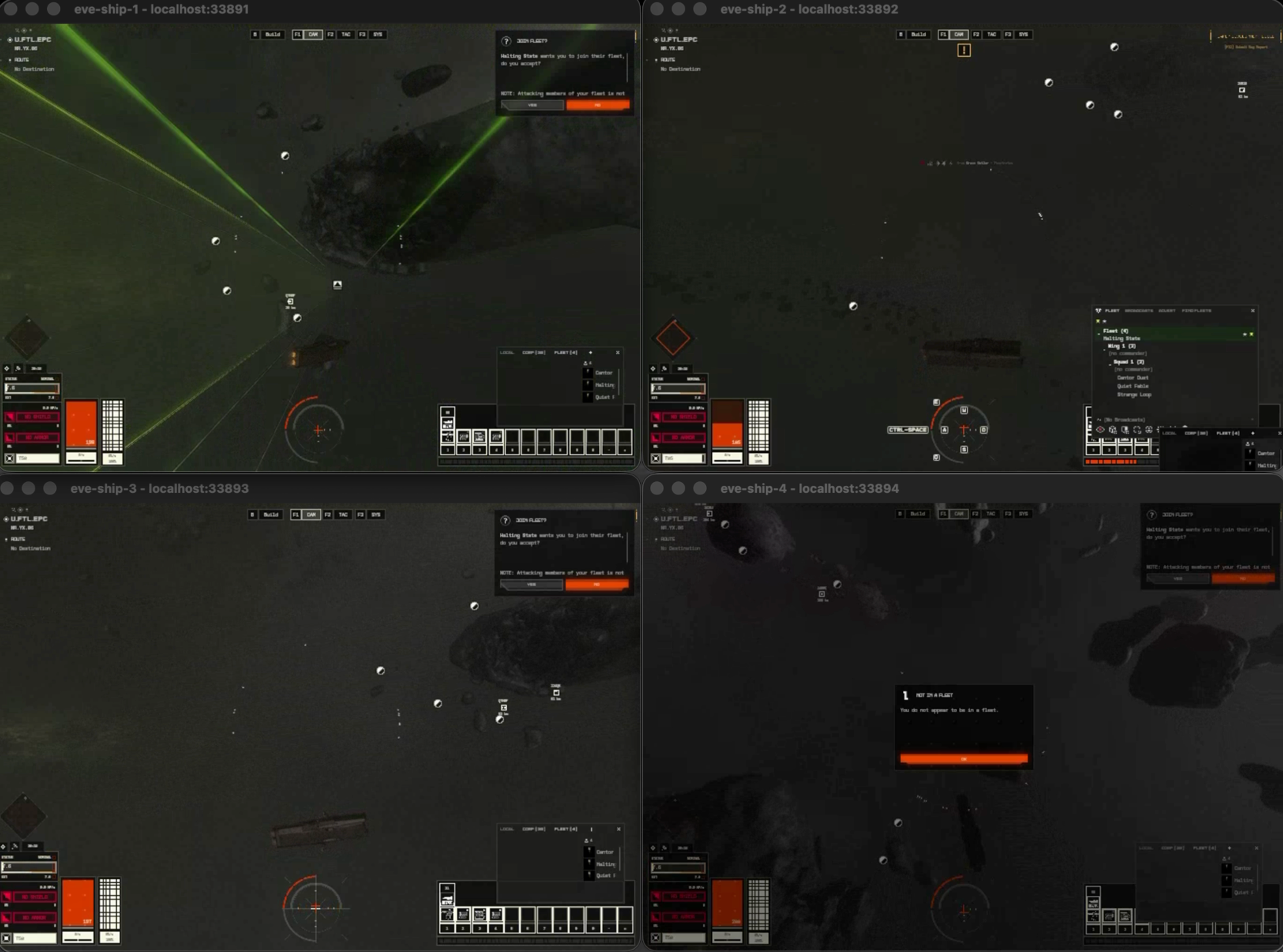
On 2026-11-06, Anthropic Frontier Red Team published Project EVE with Fenris Creations: Claude traded on a replayed EVE Online market and flew four-agent fleets in live EVE Frontier. Official report: Fable 5 roughly tripled Opus 4.6 average earnings over ~six-month simulations; teammates almost never caught an instructed saboteur; limited-access monitors caught about 20–40% at ≤5% false-positive rate.

Anthropic Project EVE: Claude Multi-Agent Fleets in EVE Frontier Almost Never Catch Instructed Saboteurs

Key Takeaways

  • Source: Anthropic research post Project EVE: Claude plays MMORPGs (2026-11-06) with Fenris Creations
  • Trading: official ~six-month sims — Fable 5 average earnings about 3× Opus 4.6 (~600% vs ~200% of starting capital)
  • Two-week windows: official Opus 4.6 ~4%, 4.7 ~16%, 4.8 ~22%, Fable 5 ~43% capital growth; mostly spread capture
  • Fleets: four Claude agents in live EVE Frontier; Fable 5 scaffold finished tutorial in ~12h with zero ship losses
  • Saboteur: instructed saboteurs almost never caught by teammates; limited-access monitors ~20–40% at ≤5% FP
Read full story
Linked Models & Agents:
⚡ Claude Fable 5⚡ Claude Opus 4.8⚡ Claude Opus 4.7⚡ Claude Opus 4.6🌐 Anthropic

AWS Kiro Crew Ships Bots GA: Named Long-Running Agents with Own Memory and Parallel Sessions — Delegate Processes, Not Tasks

On November 5 Kiro (@kirodotdev) announced Kiro bots GA in open-source multi-agent Kiro Crew. Each bot has persistent Notes, its own workspace and Dashboard; it launches parallel workers, redirects drift, consolidates results, and asks approval when needed — with schedules and per-role minimal tool permissions.

AWS Kiro Crew Ships Bots GA: Named Long-Running Agents with Own Memory and Parallel Sessions — Delegate Processes, Not Tasks

Key Takeaways

  • Primary: @kirodotdev 2026-11-05 post + official blog Introducing bots in Kiro Crew
  • Shape: named long-running bot = Notes memory + parallel workers + one ongoing chat
  • Capabilities: monitor/redirect/consolidate; schedules; Dashboards
  • Permissions: tools scoped per role; expansion needs approval; Notes editable
  • Start: Kiro Crew sidebar Bots → Add a bot (default or custom agent)
Read full story
ADSponsored

Anthropic: Claude Helps Map the First Prokaryotic Vault Particle Structure; Purification in ~90 Minutes, First Model in ~34 Hours

On November 4 Anthropic's biology team reported that Claude helped determine the first 3D vault structure from a prokaryotic/phage system (protein L05). Vendor-reported timing: ~90-minute purification and a first model in ~34 hours, plus an open discussion of mistakes and the multi-agent research workflow.

Anthropic: Claude Helps Map the First Prokaryotic Vault Particle Structure; Purification in ~90 Minutes, First Model in ~34 Hours

Key Takeaways

  • Official Anthropic research: Claude helped determine the first 3D prokaryotic/phage vault structure (protein L05)
  • Vendor-reported timing: purification cut from ~3 days to ~90 minutes; first model ready in ~34 hours
  • L05 forms a ~9.5 MDa shell of 96 chains with ~25% more volume than mammalian vaults
  • Anthropic also discloses failures: a medium additive cost ~2 weeks; an early cryo-EM map was mirrored
  • For developers: a concrete case of a science multi-agent harness with human oversight, not biology trivia
Read full story
Linked Models & Agents:
⚡ Anthropic Claude🤖 claude🌐 Anthropic

Conductor Is Joining Meta: The Multi-Agent Coding Tool Team Moves to MSL, Conductor Cloud Shuts Down on November 20

Charlie Holtz of Conductor announced on X on November 4 (18:18 UTC) that Conductor is joining Meta, where the team will build "the next interface" with Nat Friedman and Alexandr Wang at Meta Superintelligence Labs (MSL). The official announcement sets a timeline: from November 4 there are no new sign-ups and Pro features are free for existing users; on November 13 Conductor Cloud goes read-only and active subscribers get refunds; on November 20 Cloud shuts down and cloud data deletion begins; the local app keeps getting new models and critical fixes until early 2027. Terms were not disclosed.

Conductor Is Joining Meta: The Multi-Agent Coding Tool Team Moves to MSL, Conductor Cloud Shuts Down on November 20

Key Takeaways

  • Conductor launched in July 2025 as a tool for running a team of coding agents at once (it runs first-party agents such as Claude Code, Codex, Cursor and OpenCode under the hood), and its site claims 100k+ builders.
  • The team joins Meta Superintelligence Labs to work with Nat Friedman and Alexandr Wang; the official word on the new product is only "early next year", with no details.
  • Key dates: sign-ups and downloads stop on Nov 4, Cloud goes read-only with refunds on Nov 13, Cloud shuts down and data deletion starts on Nov 20, and the local app is maintained until early 2027.
  • To migrate, right-click a cloud workspace and choose Transfer to local, or export everything via Settings, Account, Export data.
  • Terms were not disclosed; on the same day HumanLayer announced it is joining Factory, a sign the coding-agent tooling market is consolidating quickly.
Read full story
x
xAIdocs.x.ai·
👀98
🔥82

xAI will add an invisible watermark to Grok API text by default from Nov 7, covering grok-4.7 and six other models, with per-model admin opt-out

On Oct 31, xAI (signed as SpaceXSI in its docs) added an "Output Watermarking" page to its API docs: starting November 7, 2026, text generated by grok-4.7, grok-4.6, grok-4.5, grok-4.3, and the reasoning, non-reasoning, and multi-agent versions of grok-4.20 will carry an invisible watermark by default, to comply with the EU AI Act. It covers ordinary text, structured outputs, and tool call arguments on both the Responses and Chat Completions APIs, and works by slightly shaping token choice without adding any characters. Developers can read the x-watermark response header to check; team admins can opt out per model in the Console, but must confirm a legal exception applies, and some models may be locked on.

Key Takeaways

  • Timing: on by default from November 7, 2026, with no code change and no request parameter (xAI docs)
  • Scope: 7 model IDs (grok-4.7, 4.6, 4.5, 4.3, and grok-4.20 reasoning, non-reasoning, and multi-agent) on the global and regional endpoints, across both Responses and Chat Completions
  • Coverage: ordinary text, structured outputs, and tool call arguments; the response header x-watermark: true marks a watermarked output
  • Opt-out: team admins switch it off per model, effective for new requests within 5 minutes and logged in the audit log; admins must confirm a legal exception applies, and some models are locked on
  • xAI's position: no effect on quality or speed; detection is statistical with three outcomes (watermarked, not watermarked, uncertain), and the detection API is by application
Read full story

YC Labs pits AI agent swarms in Minecraft and Mindustry: GPT swarms win 12 of 16 head-to-head games against Claude, while a 50-agent colony slides into bureaucracy

YC Labs, a research project at Y Combinator, and multi-agent environment startup Olam Labs published "Agents in Games" on Oct 29. Fifty GPT-6.1 Sol agents told to "build a thriving civilization" in survival Minecraft spent three hours huddled in shelters rationing food, sending about 5,900 messages and inventing ration ledgers, permits and job titles. In nine Bed Wars games, 10 GPT-6.1 Sol agents beat 10 Claude Opus 5.5 agents 6–3; in seven 50-vs-50 Mindustry matches lasting about 9.5 hours, GPT won 6–1. The leader was almost always whichever agent was listed first in the directory, and stuck GPT agents fetched the game's public source code on their own. The Minecraft harness is open source. These are one lab's experimental observations, not a standardized benchmark.

YC Labs pits AI agent swarms in Minecraft and Mindustry: GPT swarms win 12 of 16 head-to-head games against Claude, while a 50-agent colony slides into bureaucracy

Key Takeaways

  • Head-to-head: GPT-6.1 Sol won Bed Wars 6–3 over nine games and Mindustry 6–1 over seven, 12 of 16 overall (see the YC Labs report)
  • Civ50: 50 GPT agents sent about 5,900 messages in three hours; 22 of 34 deaths came on the first night, after which the colony turned cautious
  • No election: 46 of the other 49 agents first messaged Ada, first on the roster, who received 616 DMs and became leader
  • Communication: in one Bed Wars game GPT players sent 1,147 DMs versus Claude's 82; GPT drifted into compressed shorthand while Claude voted with "+1"
  • Open source: the long-running Minecraft agent harness is public at yc-software/minecraft-agent-harness
Read full story

CrowdStrike: China-nexus VAPOR PANDA used the ARTEX multi-agent framework, mainly on DeepSeek, against 200+ organizations in 11 days

CrowdStrike reported on Oct 29 that the China-nexus espionage group VAPOR PANDA, starting Oct 17, ran the open-source agentic intrusion framework ARTEX with DeepSeek plus a second, unconfirmed commercial LLM, hitting more than 200 organizations in at least 14 countries from a single controller over 11 days. Post-exploitation was confirmed at nine organizations, where the BLOODALCHEMY backdoor was deployed. Planning agents used about 1.4 billion input tokens in a single intrusion, and recovered transcripts show a human operator steering the agents in Chinese at key decision points.

Key Takeaways

  • Over 11 days from Oct 17, one ARTEX controller targeted 200+ organizations in at least 14 countries, including several foreign ministries, 19 US pharma, semiconductor, defense, nuclear and finance organizations, and telecoms in the US, Belgium and the Philippines (CrowdStrike report)
  • Post-exploitation was confirmed at 9 organizations, which received the BLOODALCHEMY backdoor; at least 12 more saw password spraying and credential scanning
  • DeepSeek was the main model, plus a subscription commercial LLM CrowdStrike could not confirm; planning agents used about 1.4 billion input tokens in one intrusion
  • Recovered transcripts show an operator issuing Chinese instructions tagged as human instructions, including an order to find Windows hosts without the Falcon sensor
  • CrowdStrike says this is separate from the Storm-0940 ARTEX activity reported by Microsoft, and judges China-nexus groups will highly likely keep adopting such agent frameworks over the next 12 months
Read full story
Linked Models & Agents:

xAI adds a guidelines field to the Grok API for per-request moderation of NSFW, violence and profanity

On Oct 28 xAI announced on the official @grok account that all API customers can now add a guidelines array to text requests and set the nsfw, violence and profanity categories to decline, so Grok tightens that content while it writes rather than through after-the-fact filtering. The field works on the Responses API, Chat Completions and the xAI Python SDK; multi-agent models and deferred completions are not supported, and invalid values are rejected with 400 or 422 before the model runs.

xAI adds a guidelines field to the Grok API for per-request moderation of NSFW, violence and profanity

Key Takeaways

  • Three categories: nsfw, violence and profanity; the only behavior today is decline, and unlisted categories keep the default (docs)
  • Works on the Responses API, Chat Completions and chat.create in the xAI Python SDK; with the OpenAI Python SDK pass it via extra_body
  • Applies only to the request that carries it, so send it on every turn; the xAI SDK chat object stores it for you
  • Not supported on multi-agent models such as grok-4.20-multi-agent or deferred completions; duplicate categories return 400 and unknown values return 422
  • The official post had about 592K views and 271 likes when this was written
Read full story
Linked Models & Agents:
ADSponsored

Anthropic guide: fold most subagents back into one main agent loop with on-demand skills and tools; one customer ran about 2x faster

On 2026-10-22, Anthropic's Applied AI team published "Building agents: When to fold subagents into your main agent loop" on claude.com, along with an open-source reference implementation, anthropics/single-agent-loop-kit. The article says that across several enterprise deployments, a single agent with skills frequently beat both the one-big-prompt design and the subagent design on quality, often at lower cost and latency per task; one customer that swapped its multi-agent harness for a single loop saw roughly 2x faster runtime. Anthropic also says it cut Claude Code's system prompt for more advanced models by over 80%. Subagents still make sense in three cases: measurable context bloat, parallel tasks with disposable context, or trouble selecting tools and conflicting instructions. The piece has drawn wide discussion on X over the past two days.

Anthropic guide: fold most subagents back into one main agent loop with on-demand skills and tools; one customer ran about 2x faster

Key Takeaways

  • Original article: Building agents: When to fold subagents into your main agent loop, dated 2026-10-22 on the page
  • Customer result (vendor-reported): one customer comparing its multi-agent harness with a single agent loop saw roughly 2x faster runtime with the single loop
  • Anthropic says it cut Claude Code's system prompt for more advanced models by over 80%, partly by progressively disclosing skills and tools
  • Keep subagents in only 3 cases: measurable degradation from context bloat, parallel tasks with disposable fresh context, or difficulty choosing tools and conflicting system-prompt instructions
  • Companion open-source single-agent-loop-kit migrates in three steps (measure, combine, fold); Anthropic suggests starting with an end-to-end eval of as few as 10 golden examples
Read full story

OverSeer: Multi-Agent World Models Beyond What Agents See via Joint Auxiliary Streaming

Researchers introduced OverSeer in arXiv:2610.28554, pioneering a new class of multi-agent world models operating beyond the field of view of individual agents. Standard video world models collapse in multi-agent environments because individual agents operate under partial observability; naive frameworks feeding external global map inputs suffer severe spatial inconsistency and state hallucination. OverSeer resolves this by jointly predicting auxiliary spatial representation streams alongside the agents' first-person camera streams. In comprehensive Minecraft benchmarks, OverSeer achieves decisive state-of-the-art results across physical grounding, long-horizon spatial memory, and cross-view consistency.

OverSeer: Multi-Agent World Models Beyond What Agents See via Joint Auxiliary Streaming

Key Takeaways

  • OverSeer introduced in arXiv:2610.28554, establishing the first scalable multi-agent video world model framework
  • Replaces external static map inputs with auxiliary spatial streams jointly predicted alongside agents' egocentric perspectives
  • Achieves state-of-the-art performance across spatial grounding, long-horizon memory, and multi-view consistency in Minecraft
  • Provides an ungrounded simulation backbone for multi-robot swarm collaboration, multiplayer game AI, and embodied multi-agent fleets
Read full story
Linked Models & Agents:

Artificial Analysis Benchmarks Devin Fusion: Scoring 68.1 on Coding Agent Index While Slashing Task Cost by 31%

Artificial Analysis released an independent evaluation of Cognition's new coding agent, Devin Fusion. Moving beyond single-model execution, Devin Fusion employs an asymmetric multi-agent architecture pairing Claude Opus 5.5 (max) as the lead reasoning orchestrator alongside GPT-6 Luna (high) as a high-speed parallel worker. In the standardized Coding Agent Index, Devin Fusion achieved an elite score of 68.1 (matching Muse Code at 68.0 and rivaling Claude Code Sonnet 5.5 at 68.4). Crucially, the hybrid architecture slashes average task expense from $13.04 down to $9.01 (a 31% cost reduction) while shortening execution runtime from 65 to 55 minutes.

Artificial Analysis Benchmarks Devin Fusion: Scoring 68.1 on Coding Agent Index While Slashing Task Cost by 31%

Key Takeaways

  • Artificial Analysis independently benchmarked Devin Fusion, scoring 68.1 on the standardized Coding Agent Index
  • Pioneers asymmetric model collaboration: Claude Opus 5.5 orchestrates architecture while GPT-6 Luna executes parallel sub-tasks
  • Cuts per-task execution costs from $13.04 to $9.01 (a 31% savings) and trims average completion time from 65 to 55 minutes
  • Outperforms Claude Code with Opus 5.5 on DeepSWE v1.1 (72.6% vs 68.4%) and SWE-Atlas-QnA (69.6% vs 66.4%)
Read full story

NUS, USTC, and Alibaba Qwen Introduce Steering Agent: Dual-Path RL Framework Solves Goal Drift, Boosting Multi-Hop QA by +7.4 Points with 26% Fewer Turns

To combat goal drift in long-horizon agent tool-use and multi-agent systems, NUS, USTC, and Alibaba Qwen introduced Steering Agent (arXiv:2610.22316). Jointly trained via pairwise ranking and Group-Relative Policy Optimization (GRPO), the agent operates a low-cost fast path to detect drift and a slow path to generate grounded interventions. It raises Multi-Hop QA benchmark performance from 42.70 to 50.10 while cutting executor turns from 8.8 to 6.5 (-26.1%) without modifying the underlying executor models.

NUS, USTC, and Alibaba Qwen Introduce Steering Agent: Dual-Path RL Framework Solves Goal Drift, Boosting Multi-Hop QA by +7.4 Points with 26% Fewer Turns

Key Takeaways

  • NUS, USTC, and Alibaba Qwen introduced Steering Agent (arXiv:2610.22316) to tackle goal drift in long-horizon LLM agent workflows
  • Features a dual-path architecture combining a low-cost fast path (when to intervene) with a slow path (how to intervene), trained via pairwise ranking and GRPO
  • Raises average Multi-Hop QA accuracy to 50.10 (+7.4 pts over unsteered baseline) while reducing executor turns from 8.8 to 6.5 (-26.1%)
  • Demonstrates robust out-of-domain transfer on live search benchmarks, reaching 59.71% Pass@4 on Frames and 39.81% Pass@4 on GAIA
Read full story
Linked Models & Agents:

Alibaba Unveils Million-Image/Day Multi-Agent CommerceGen-Studio (6B SKU-DiT Beats 20B Models and Nano Banana Pro) Alongside Microsoft's Test-Time Diversity Alignment (MSR)

Alibaba Taobao & Tmall Group detailed CommerceGen-Studio (arXiv:2610.20603, 52 HF upvotes), a production multi-agent generation system serving millions of images daily within seconds. Its 6B SKU-DiT trained via Reinforce-Distill-Reinforce (RDR) scores 9.43 (single-image) and 9.45 (multi-image) on CommerceGen-Bench, outperforming 20B open models and closed-source Nano Banana Pro. Meanwhile, Microsoft Research introduced Mine, Sample, Render (MSR, arXiv:2610.21185) for training-free test-time diversity alignment.

Alibaba Unveils Million-Image/Day Multi-Agent CommerceGen-Studio (6B SKU-DiT Beats 20B Models and Nano Banana Pro) Alongside Microsoft's Test-Time Diversity Alignment (MSR)

Key Takeaways

  • Alibaba's CommerceGen-Studio (arXiv:2610.20603) serves millions of commercial product images per day in production with a latency of a few seconds per image
  • Its 6B SKU-DiT trained with Reinforce-Distill-Reinforce (RDR) scores 9.43 (single-image) and 9.45 (multi-image) on CommerceGen-Bench, beating 20B open models and closed-source Nano Banana Pro (9.39 / 9.33)
  • Combining SKU-DiT with the self-evolving PERL-Agent loop and Layout Thinker Optimization pushes scores to 9.62 (single-image) and 9.48 (multi-image)
  • Microsoft Research's Mine, Sample, Render (MSR, arXiv:2610.21185) externalizes test-time diversity via corpus-mined attribute sampling across webpage UI design, agent-generated 3D assets, user simulation, and text-to-image
Read full story
Linked Models & Agents: