AI Coding Live News

Fireworks Forge Launches: Ultra-fast Inference Preview Hits 1,500 Tokens/s, Half-Price Background Mode, Nexus Desktop for Codex and Claude Desktop, Sovereign Private Preview

At its first Forge conference on November 3, open-model inference platform Fireworks launched a batch of products. Ultra-fast, powered by NVIDIA Blackwell, is in public preview at up to 1,500 tokens per second on DeepSeek V4.1 Flash, cutting a 30-turn agent task from 1 minute to 8 seconds. Background Mode runs deferrable work at half price, alongside multi-day prompt caching and higher rate limits. Nexus Desktop brings open-model routing into the Codex app, Claude Desktop and OpenCode, with Pro plans from $8 per month. Fireworks also announced No Eval, serverless LoRA inference, the Fireworks Sovereign private preview and a 60+ partner Frontier Ecosystem.
Fireworks Forge Launches: Ultra-fast Inference Preview Hits 1,500 Tokens/s, Half-Price Background Mode, Nexus Desktop for Codex and Claude Desktop, Sovereign Private Preview

Key Takeaways

  • Ultra-fast public preview: on NVIDIA Blackwell, up to 1,500 tokens per second on DeepSeek V4.1 Flash; in Fireworks' benchmark a 30-turn agent task fell from 1 minute to 8 seconds (Fireworks blog)
  • Cost options: Background Mode runs deferrable work at half price; multi-day prompt caching cuts the cost of resuming long context; higher serverless rate limits and Elastic Burst are generally available
  • Nexus Desktop launches: personalized routing across open and closed models inside the Codex app, Claude Desktop and OpenCode; Pro from $8 per month, Teams from $10 per seat per month
  • Training: No Eval (private preview) turns production traces into task evals; serverless LoRA inference (public preview) starts with GLM 5.3 Flash at per-token pricing with no idle charge; free training on Muse Glimmer 30B through November 30
  • Enterprise: Fireworks Sovereign (private preview) runs the inference engine in a customer's own cloud or data center; Fireworks says it already manages over 25,000 GPUs in customer environments; plus a 60+ partner Frontier Ecosystem
Read full story

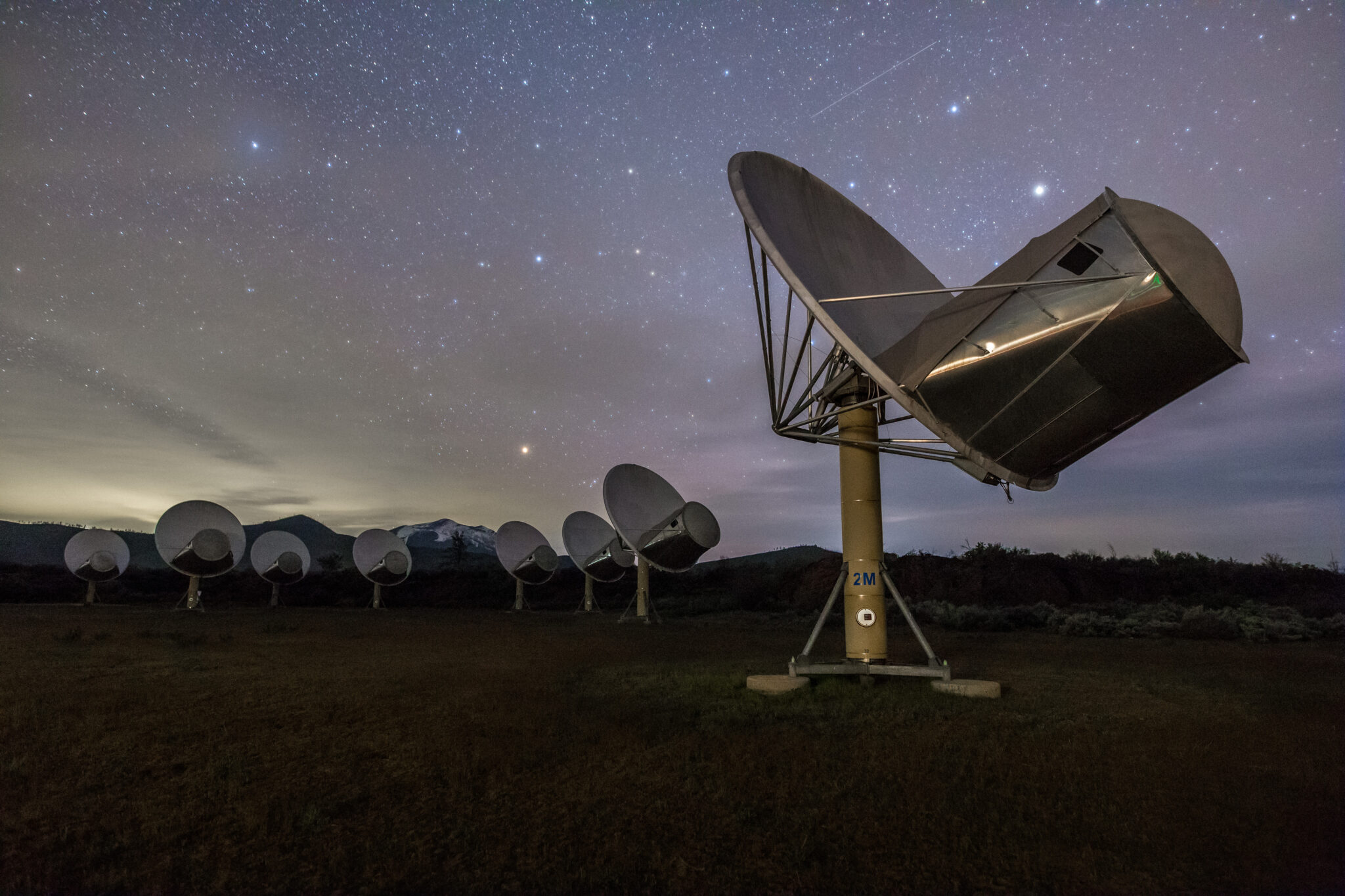
NVIDIA says AI agents now steer the SETI Allen Telescope Array, calibrating it and analyzing up to 2.4 Tbps of live radio data from plain-language requests

An Oct 30 NVIDIA blog post says Breakthrough Listen and the SETI Institute have brought agents into daily SETI work at the Allen Telescope Array (ATA, 42 dishes of 6 m each) in Northern California: from a single natural-language request, agents can steer the antennas, calibrate and focus, fix data errors, and run AI models on the live stream. Holoscan's DAQIRI library pulls sensor data straight into GPU memory, the SETI Institute's CyberEther handles signal processing, and the web-based orchestrator Nexus acts as the agent harness, handling up to 2.4 Tbps on premises on RTX PRO 6000 Blackwell GPUs. The pipeline has made the first real-time AI detection of a pulsar in the Crab Nebula, and the team is evaluating open models such as Nemotron. The @NVIDIAAI Halloween post on Oct 31 drew about 274 likes.

NVIDIA says AI agents now steer the SETI Allen Telescope Array, calibrating it and analyzing up to 2.4 Tbps of live radio data from plain-language requests

Key Takeaways

  • Throughput: up to 2.4 Tbps of radio data on NVIDIA RTX PRO 6000 Blackwell GPUs, with inference running on premises next to the instrument (NVIDIA blog, vendor-reported)
  • Three layers: DAQIRI moves sensor data straight into GPU memory, CyberEther does the signal math with cuFFT and cuBLAS, and Nexus serves as the agent harness for instrument state, compute, and pipelines
  • Capability: one plain-language request can steer the ATA's 42 six-meter dishes, calibrate and focus, fix data errors, and plot results; NVIDIA says this compresses weeks or years of human work into hours
  • Milestone: the first real-time AI detection of a pulsar in the Crab Nebula; no false-positive rates or other metrics were published, and no extraterrestrial signal has been found
  • Next: evaluating open models such as Nemotron for observatories where data locality matters, possibly one day running offline on the far side of the Moon
Read full story

CrowdStrike: China-nexus VAPOR PANDA used the ARTEX multi-agent framework, mainly on DeepSeek, against 200+ organizations in 11 days

CrowdStrike reported on Oct 29 that the China-nexus espionage group VAPOR PANDA, starting Oct 17, ran the open-source agentic intrusion framework ARTEX with DeepSeek plus a second, unconfirmed commercial LLM, hitting more than 200 organizations in at least 14 countries from a single controller over 11 days. Post-exploitation was confirmed at nine organizations, where the BLOODALCHEMY backdoor was deployed. Planning agents used about 1.4 billion input tokens in a single intrusion, and recovered transcripts show a human operator steering the agents in Chinese at key decision points.

Key Takeaways

  • Over 11 days from Oct 17, one ARTEX controller targeted 200+ organizations in at least 14 countries, including several foreign ministries, 19 US pharma, semiconductor, defense, nuclear and finance organizations, and telecoms in the US, Belgium and the Philippines (CrowdStrike report)
  • Post-exploitation was confirmed at 9 organizations, which received the BLOODALCHEMY backdoor; at least 12 more saw password spraying and credential scanning
  • DeepSeek was the main model, plus a subscription commercial LLM CrowdStrike could not confirm; planning agents used about 1.4 billion input tokens in one intrusion
  • Recovered transcripts show an operator issuing Chinese instructions tagged as human instructions, including an order to find Windows hosts without the Falcon sensor
  • CrowdStrike says this is separate from the Storm-0940 ARTEX activity reported by Microsoft, and judges China-nexus groups will highly likely keep adopting such agent frameworks over the next 12 months
Read full story
Linked Models & Agents:

Pinecone Launches Nexus in Public Preview with NoQL Code-Execution Agent

Pinecone released Nexus into public preview, featuring NoQL—a query-time code execution runtime agent. Instead of shuttling bulky context back and forth, NoQL generates and executes sandbox code on the fly to distill knowledge, slashing token consumption and query latency.

Key Takeaways

  • Introduces NoQL runtime agent to synthesize and filter query results on the fly
  • Dramatically curbs redundant token transfers in enterprise RAG workflows
  • Enforces rigorous sandbox isolation for enterprise-grade security and compliance
Read full story
Linked Models & Agents:
ADSponsored

Pinecone Nexus Reaches GA: Enterprise Knowledge Compiled for Agents with 80% Cost Reduction

Pinecone announced the General Availability of Nexus, a compiled knowledge layer for AI agents that demonstrated a 12% accuracy gain and 80% cost reduction on the Sierra τ-Knowledge benchmark with GPT-5.2.

Key Takeaways

  • Redefines RAG as a compiled enterprise knowledge layer rather than ad-hoc runtime retrieval glue;
  • Provides citation-backed structured responses and dedicated query-trace endpoints for granular prompt debugging;
  • Demonstrates that routing high-precision context yields superior ROI compared to upgrading to larger frontier models.
Read full story
Linked Models & Agents:
⚡ OpenAI GPT-5 Codex

Cerebras Unveils Wafer-Scale Roadmap at Hot Chips 2026: CS-4 Nexus, CS-5, and 3D DRAM CS-6

Cerebras revealed its next-generation wafer-scale roadmap at Hot Chips 2026, showcasing the CS-4 Nexus rack-scale platform, high-speed CS-5 decode acceleration, and 3D DRAM stacking on CS-6.

Key Takeaways

  • CS-4 evolves into the Nexus rack-scale system delivering unprecedented wafer-to-wafer interconnect bandwidth;
  • CS-5 targets record-breaking decode speeds for ultra-fast frontier LLM interactive workflows;
  • CS-6 plans wafer-scale 3D DRAM integration to overcome the memory bandwidth wall for multi-trillion parameters.
Read full story
Linked Models & Agents: