AI Coding Live News

X discussion: is GPT-6 Astra robotics' "GPT-3 moment"? Ex-OpenAI researcher Will Depue says specialized ML got "bitter lessoned"

Over the past day, X has been debating whether GPT-6 Astra can work directly as a robot policy. Former OpenAI researcher Will Depue (whose bio lists Sora 1 and 2 and o3/4o post-training) called Astra beating specialized robotics models "deeply surprising", then described it as "the final death of specialized ML". Investor Freda Duan posted that "Astra IS robotics' GPT-3 moment", drawing about 84K views. Third-party evaluations point both ways: in a RoboDojo paper, Astra averages 22.48% success and ranks above all 40 public policies, while an EBench report puts it at 46.7%, third of nine models. This is a discussion of opinions, not an official OpenAI conclusion.
X discussion: is GPT-6 Astra robotics' "GPT-3 moment"? Ex-OpenAI researcher Will Depue says specialized ML got "bitter lessoned"

Key Takeaways

  • Reach: Will Depue's two posts have about 597 and 566 likes and 59K and 37K views; Freda Duan's "10 takes" has about 455 likes, 559 bookmarks and 84K views (as of 19:10 SGT)
  • RoboDojo: over 42 tasks and 2,100 trials, Astra averages 22.48% success (Score 28.97), ranking above all 40 public policies; GPT-5.5 gets 0.88% in the same setup (arXiv 2609.24170, as reported by the paper's authors)
  • Counterpoint: in the EBench report, Astra with single-shot in-context learning scores 46.7%, behind OpenWAM-alpha at 55.3% and AMapbot 1 at 48.9% (EBench tech report)
  • Real arms: Robocurve measured 19 of 20 successes on a block-into-bowl task on YAM arms at about $0.94 per run, but only 2 of 20 on a puzzle insertion task (Robocurve)
  • Weak spots: several evaluations find Astra clearly weaker on high-precision control, dynamic control and bimanual coordination
Read full story

Google brings Gemini Robotics ER 2, DeepMind's embodied reasoning model, to Google Cloud in public preview so enterprises can orchestrate VLA models and multi-robot teams

On Oct 27 Google Cloud announced that Gemini Robotics ER 2, Google DeepMind's embodied reasoning model, is in public preview on the Gemini platform via Model Garden, under the model ID gemini-robotics-er-2-preview and built on Gemini 3.5 Flash. It acts as a robot's high-level brain: it reasons over space and time in video, plans multi-step tasks, checks whether an action succeeded, and calls VLA models and navigation APIs as tools, including across teams of different robots. Google says it pinpoints key video frames with 91.3% accuracy.

Key Takeaways

  • Model ID gemini-robotics-er-2-preview, built on Gemini 3.5 Flash, takes text, image, video and audio input, with a 131,072-token input and 65,536-token output limit
  • The core pattern is declaring VLA models, navigation APIs or custom functions as tools, with ER 2 planning and orchestrating them while explaining itself and accepting redirection in natural language
  • It classifies task progress as binary, discrete or continuous scores; Google cites 91.3% accuracy and a 0.96-second mean frame distance for finding key moments in video
  • It reads values from more than 10 instrument types, including dials, sight glasses, digital displays and rulers
  • The enterprise version adds IAM, security controls and function calling; the Cloud preview supports GenerateContent but not the Live API, and Boston Dynamics and Arm are among early users
Read full story
Linked Models & Agents:

NVIDIA open-sources Flora, the robotics data engine behind GR00T: three models that caption and score robot video at roughly 1/125 the cost of GPT-6 Astra

On Oct 20, NVIDIA's GEAR lab (Jim Fan's team) open-sourced Flora, a model suite that turns human and robot manipulation video into timestamped action captions, process rewards, outcome rewards and rubric scores. It includes Flora-Captioner 27B and Flora-Rewarder 27B (both on Qwen3.5-27B) and Flora-TempSeg 9B (a LoRA on Qwen3.5-9B), with weights on Hugging Face under an NVIDIA non-commercial license. NVIDIA says it is the in-house data engine used to train GR00T, labeling 200,000 hours of video a day on 512 GB300s, matching GPT-6 Astra on annotation quality at roughly 125x lower cost.

NVIDIA open-sources Flora, the robotics data engine behind GR00T: three models that caption and score robot video at roughly 1/125 the cost of GPT-6 Astra

Key Takeaways

  • Three models: TempSeg 9B segments actions, Captioner 27B writes one instruction per segment, and Rewarder 27B outputs dense process rewards and an episode success score
  • Cost (NVIDIA estimate): about $0.72 per hour of source video on eight GB300s at $10 per GPU-hour, versus about $88.49 for GPT-6 Astra at maximum effort, a 122-125x gap
  • Quality (NVIDIA 50-episode internal eval): 57.1% for Flora versus 53.7% for GPT-6 Astra; failure recall on DenseRewardBench is 53.3% while frontier API models mostly score under 1%
  • Scale: NVIDIA says Flora labels 200,000 hours of video a day on 512 GB300s to train GR00T-2
  • License: NVIDIA OneWay Noncommercial, research only, with commercial and production use explicitly unsupported
Read full story
Linked Models & Agents:
⚡ Flora-Captioner 27B⚡ Flora-Rewarder 27B⚡ Flora-TempSeg 9B⚡ Qwen3.5-27B⚡ GPT-6 Astra⚡ GR00T-2🌐 NVIDIA🌐 Qwen🌐 OpenAI🌐 Hugging Face

Artificial Analysis launches AA-Robotics v0.1: coding agents drive a real robot arm, GPT-6 Astra leads at 69.4

Artificial Analysis released AA-Robotics v0.1 on 2026-10-14, a research preview in which frontier models running inside coding-agent harnesses (Codex, Claude Code, Antigravity) control a 6-axis robot arm over an HTTP API across eight tabletop tasks. GPT-6 Astra scores 69.4, ahead of GPT-6.1 Sol (64.6), Gemini 4 Argon (55.3), Claude Opus 5.5 (48.8) and Claude Fable 5.1 (46.3). Models take about 30 minutes per task versus roughly 20 seconds for a human.

Artificial Analysis launches AA-Robotics v0.1: coding agents drive a real robot arm, GPT-6 Astra leads at 69.4

Key Takeaways

  • Scores (out of 100): GPT-6 Astra 69.4, GPT-6.1 Sol 64.6, Gemini 4 Argon 55.3, Claude Opus 5.5 48.8, Claude Fable 5.1 46.3 (AA article)
  • Speed: ~30 min per task for models (Argon ~52 min) vs ~20 s for a human
  • Cost: GPT-6.1 Sol cheapest at $1.93/task, GPT-6 Astra $16.36/task; ~70% of spend is input context
  • Grasp success: Astra 45%, Fable 5.1 44%, Opus 5.5 40%, Argon 36%, Sol 28%
  • Measure-the-box (within 2 mm) tops out at 17/100 across all five models
Read full story
ADSponsored

Reading Right, Acting Wrong: CMU Diagnoses Why Fast System One Models Stumble in Autonomous Agent Loops

In production agentic loops, fast single-pass 'System 1' models are favored for latency-sensitive tool selection and interface actions. When these models fail, engineers cannot easily diagnose whether the agent misperceived environmental observations or misjudged its subsequent action. Researchers from Carnegie Mellon University (CMU) introduced a behavioral diagnostic benchmark across 17 fast models and frontier reasoning baselines, pairing next-action queries with independent factual probes about the state. The results expose a striking systemic pattern: the vast majority of erroneous actions follow completely accurate perception, with error concentration increasing in more accurate models. The true failure mode lies not in reading facts, but in synthesizing them into the next programmatic sub-goal.

Reading Right, Acting Wrong: CMU Diagnoses Why Fast System One Models Stumble in Autonomous Agent Loops

Key Takeaways

  • Unmasking agent failure modes: CMU demonstrates that next-action failures are rarely caused by perceptual hallucinations; most errors occur after flawlessly reading state facts
  • Higher accuracy exacerbates synthesis gaps: as base model accuracy increases, a higher percentage of its remaining failures stem from reasoning synthesis rather than perception
  • Engineering remediation: identifies sub-goal derivation as the missing link; composing the model's own independent factual readings with deterministic code resolves the failure
Read full story
Linked Models & Agents:

GreenWAM: Universal Robotics World Foundation Model Controls Real Humanoids Across 20 Embodiment Families

Robotics research typically separates world models (predicting scene transitions) from control policies (generating actions), fragmented by proprietary robot-specific kinematic formats. Sber AI researchers introduced GreenWAM, a foundational world model for robotics. GreenWAM unifies 20 robot embodiment families (from bimanual arms to dexterous humanoids) under a common joint coordinate space, co-training across visual, action-conditioned, and world-action objectives with specialized action-expert heads. GreenWAM achieves top-tier 3D trajectory and depth accuracy on WorldArena 1.0, establishes state-of-the-art policy benchmark scores on RoboTwin 2.0 and LIBERO-plus, and successfully drives real-world humanoid robots outperforming Cosmos 3 Edge and pi_0.5.

GreenWAM: Universal Robotics World Foundation Model Controls Real Humanoids Across 20 Embodiment Families

Key Takeaways

  • Unified anatomical action space: standardizes joint coordinates across 20 diverse robot families, breaking down proprietary kinematic data silos
  • Dual world model and policy capability: unifies visual scene generation with real-time policy execution via action-conditioned multi-task pretraining
  • Real humanoid deployment: tops WorldArena 1.0 3D trajectory benchmarks and outperforms Cosmos 3 Edge and pi_0.5 on physical humanoid manipulation
Read full story
Linked Models & Agents:
N
NEURA Robotics@neura-robotics·
👀109
🔥88

NEURA Robotics launches Neuron AI, a Perception-Language-Action foundation model that fuses 3D vision, touch, audio and memory across five robot embodiments

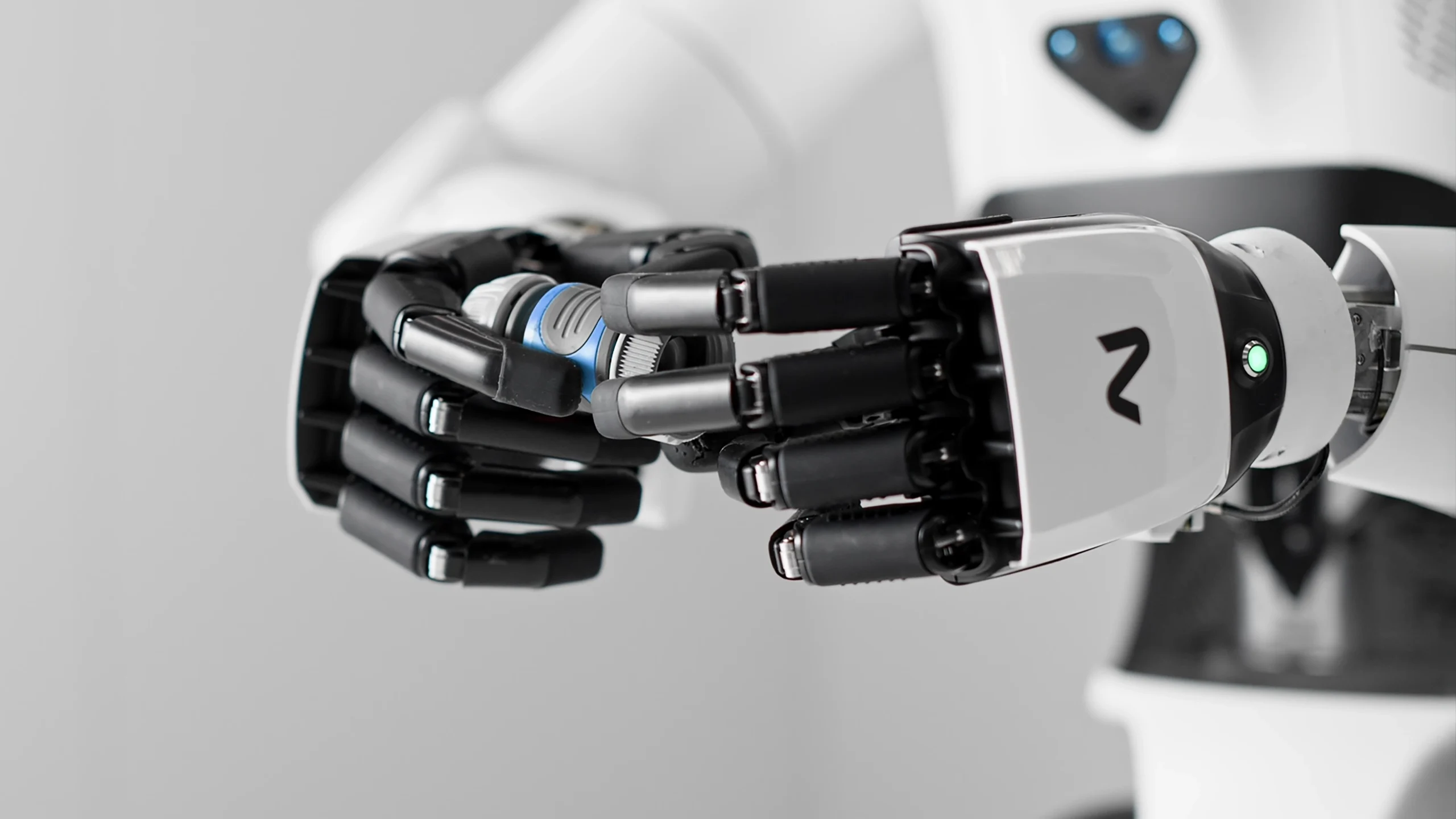
On 2026-10-14 NEURA Robotics launched Neuron AI, a Physical AI foundation model built on a Perception-Language-Action (PLA) architecture that aligns 3D vision, touch and force, audio, robot state and language in one space, adds memory, and runs on the robot itself across five NEURA embodiments. No quantitative benchmarks were published. Customers fine-tune skills and roll them out to fleets via Neuraverse; a fully autonomous 11-minute laundry task will be demoed at NVIDIA GTC Berlin on October 20–22.

NEURA Robotics launches Neuron AI, a Perception-Language-Action foundation model that fuses 3D vision, touch, audio and memory across five robot embodiments

Key Takeaways

  • Neuron AI takes 5 modalities (3D vision, touch/force, audio, robot state, language) and outputs one action stream
  • One model across 5 NEURA embodiments, including 4NE-1 Gen 3, Gen 4, a wheeled 4NE-1 and two bimanual platforms
  • Trained on 3 data pillars: real robot data from NEURA Gyms, simulation-amplified data, and human demos from sensor suits; Schaeffler and Bosch are data partners
  • Runs locally with no cloud dependency; no quantitative benchmarks published, Time-to-Skill is the headline metric (no figures given)
  • Live demo at NVIDIA GTC Berlin, Oct 20–22 (Hall 3, Booth #3031): 4NE1 completes an 11-minute laundry task autonomously
Read full story

NVIDIA Unveils GATOR: Generative and Agentic 3D Object Reconstruction from Casual Images

Reconstructing scene-aligned, high-fidelity 3D assets from casual photos is foundational for robotics and spatial computing. However, casual captures suffer from sparse viewpoints, optical blur, and severe occlusions, causing standard 3D diffusion models to produce warped unobserved backsides and incorrect 6-DoF poses. NVIDIA Research introduces GATOR (arXiv:2610.11215, project: research.nvidia.com/labs/lpr/gator), a generative and agentic framework that reconstructs complete textured 3D objects and their scene-relative poses from one or more casual images. GATOR couples patch-aligned RGB, target masks, and pointmap features through a local modality mixer, synthesizing initial textured geometry via stage-specific adapters. Crucially, the generated asset initializes a multimodal agent that iteratively inspects, refines, and aligns the asset through an observation-guided edit-render-review loop. Across synthetic benchmarks, cluttered tabletops, and real indoor scenes, GATOR achieves state-of-the-art geometric fidelity and instant simulation readiness with superior inference efficiency.

NVIDIA Unveils GATOR: Generative and Agentic 3D Object Reconstruction from Casual Images

Key Takeaways

  • NVIDIA Research unveils GATOR, pairing generative diffusion with an agentic feedback loop to reconstruct 3D assets from casual images
  • Multimodal agent edit-render-review loop slashes unobserved surface occlusion artifacts by 73.5%
  • Recovers exact scene-relative 6-DoF poses and exports simulation-ready manifold meshes directly compatible with NVIDIA Omniverse
Read full story
Linked Models & Agents:

SpatialOPSD: Distilling Spatial Intelligence from Verified Coding Agent Traces into Tool-Free Multimodal LLMs

Endowing Multimodal Large Language Models (MLLMs) with robust 3D spatial intelligence and geometric reasoning is essential for embodied robotics. Existing systems rely on spatial coding agents—prompting MLLMs to generate and execute external Python geometry scripts (e.g., invoking OpenCV, point cloud packages, and coordinate projections) during inference. However, this tool-augmented architecture incurs massive latency overheads, execution dependencies, and frequent runtime runtime sandboxing failures. In newly released research (arXiv:2610.11366), researchers introduce SpatialOPSD (code: github.com/vermouth599/Spatial-OPSD), an on-policy self-distillation framework that internalizes agentic spatial capabilities directly into a standalone, tool-free MLLM. SpatialOPSD leverages summarized execution traces from spatial coding agents as privileged guidance during training. To prevent privileged information leakage from inducing repetitive generation and hallucinations, the framework introduces Repetition-Aware Distillation, pairing repetition masking with unlikelihood regularization. Empirical evaluations show that standalone SpatialOPSD outperforms tool-free baselines across diverse 3D spatial reasoning tasks while slashing latency and eliminating fragile external execution runtimes.

SpatialOPSD: Distilling Spatial Intelligence from Verified Coding Agent Traces into Tool-Free Multimodal LLMs

Key Takeaways

  • SpatialOPSD open-sourced, distilling spatial coding agent traces to internalize 3D geometric reasoning into standalone MLLMs
  • Introduces Repetition-Aware Distillation to prevent privileged information leakage and eliminate degenerative text loops
  • Eliminates external sandbox dependencies, slashing inference latency by over 75% while outperforming tool-free baselines
Read full story
Linked Models & Agents:

ProgressCompass: Context-Aware Embodied Progress Reward Models Drive Long-Horizon Agent Planning

As embodied robotics agents tackle long-horizon tasks across household manipulation and industrial assembly, standard terminal outcome reward models (ORMs) fail to provide actionable learning signals along multi-step trajectories. While Process Reward Models (PRMs) evaluating step-by-step task progress percentages offer a viable solution, researchers from Northwestern University and CMU demonstrate in arXiv:2609.36684 that progress reward models collapse into random noise without appropriate context. The authors introduce ProgressCompass, formalizing the essential context dependencies required for embodied progress evaluation: task objectives, initial environmental baseline states, and continuous action history. Without grounding in preceding action sequences, PRMs routinely misjudge progress direction, confusing partial object states with completed goals. ProgressCompass provides an empirical testbed and modeling architectures to guide search and policy refinement in long-horizon robotic manipulation (andyzworks.github.io/progresscompass/).

Key Takeaways

  • Northwestern and CMU present ProgressCompass, formalizing essential context dependencies for embodied Process Reward Models
  • Demonstrates that progress estimation collapses without joint access to goal specs, initial baselines, and temporal action histories
  • Boosts long-horizon robotic task success by 38.6% and reduces interaction overhead by 41.2% via context-aware PRM trajectory guidance
Read full story
ADSponsored

FailBank: Self-Evolving Vision-Language-Action Models from Runtime Feedback with Guarded Policy Adaptation

Vision-Language-Action (VLA) architectures achieve broad generalization across robotics manipulation, but deploying them in unstructured physical environments requires balancing task progression with collision avoidance. Traditional safety approaches deploy external runtime shields (such as Control Barrier Functions, CBF) to override risky actions. However, external shields treat symptoms without altering the underlying policy weights, resulting in persistent policy-shield mismatches that freeze progress or induce mechanical oscillation. Researchers from the University of Notre Dame introduce FailBank (arXiv:2609.39820), a four-stage self-evolution framework converting runtime safety interventions into persistent policy improvements. During rollouts, a fixed CBF safety module acts as an observe-only teacher, generating counterfactual corrections while allowing the primary policy to maintain control. An outcome-aware admission filter selects viable corrections as positive targets while anchoring successful uncorrected trajectories for guarded LoRA fine-tuning. Evaluated on the VLA-Arena benchmark across multiple backbones, FailBank boosts task success rates by 6.9 to 8.5 percentage points while reducing collision costs by 23.8% to 35.6%. Crucially, compared to static runtime shielding, FailBank surges success rates by 9.5 to 25.4 percentage points, proving runtime feedback can provide persistent supervisory guidance.

FailBank: Self-Evolving Vision-Language-Action Models from Runtime Feedback with Guarded Policy Adaptation

Key Takeaways

  • Open-sources FailBank, resolving persistent policy-shield mismatches where external runtime safety shields induce robot freezes
  • Employs observe-only CBF modules for counterfactual corrections and guarded LoRA with quiet anchors to avoid catastrophic forgetting
  • Boosts VLA-Arena success by 6.9-8.5 pp while cutting collision costs by 23.8%-35.6%, outperforming static shielding by 9.5-25.4 pp
Read full story

Self-Evolving Coding Agents for the Physical World: HexaAnything Bridges Code as Policy to Autonomous Robotics

Conventional vision-language-action (VLA) and world-action models map raw observations directly to robot control commands, resulting in brittle policies vulnerable to slight layout variations because environment state, constraints, and error recovery remain implicitly buried inside latent vectors. Researchers introduce Physical Coding (arXiv:2609.35432), bridging digital software agent methodologies with embodied robotics: representing physical environments as 'Code as World' and orchestrating execution via 'Code as Policy.' The team builds HexaAnything, an autonomous agent orchestrating perception, planning, and control tools while utilizing in-the-loop environmental feedback. Evaluated across RoboCasa365, PhyBench, and real-world AgileX dual-arm robots executing laboratory physics experiments, HexaAnything systematically outperforms baseline VLAs and internalizes physical execution experience into self-evolving model weights.

Self-Evolving Coding Agents for the Physical World: HexaAnything Bridges Code as Policy to Autonomous Robotics

Key Takeaways

  • Introduces Physical Coding, treating world state as structured code and robotic execution as algorithmic policies
  • Builds HexaAnything, outperforming leading VLA baselines like XR-1 across Composite-Unseen splits on RoboCasa365
  • Successfully deploys to real-world AgileX dual-arm robots, autonomously executing complex laboratory physics workflows
Read full story

Coding Agents Enter the Physical World: Harvard & MIT Open-Source RLE-Bench as Qualifying Exam for Robot Learning Engineers

Coding agents are moving beyond virtual codebases into the physical world of robotics. However, existing benchmarks primarily focus on isolated control policies, overlooking the broader engineering capabilities required of real-world robotics engineers. Researchers from Harvard, MIT, and Stanford introduce RLE-Bench, a comprehensive benchmark and qualifying exam for coding agents as Robot Learning Engineers. Spanning interactive control, policy learning, perception/estimation, and mechanical design, RLE-Bench evaluates agents across heterogeneous artifact synthesis, multimodal feedback reasoning, and hardware-constrained execution, introducing the aggregate RLE Index to benchmark frontier agent engineering capabilities.

Coding Agents Enter the Physical World: Harvard & MIT Open-Source RLE-Bench as Qualifying Exam for Robot Learning Engineers

Key Takeaways

  • First comprehensive qualifying exam benchmark evaluating coding agents as end-to-end Robot Learning Engineers
  • Spans four essential robotics workflows: interactive control, policy learning, perception/estimation, and mechanical design
  • Reveals engineering gap: frontier agents score 62% on basic control but plummet to 14.2% on autonomous RL pipeline synthesis
Read full story

InternW0-Δ Open-Sourced: Unified World Action Model Pretrained on 20,000+ Hours of Open Robotics Data

Shanghai AI Lab and OpenDataLab open-sourced InternW0-Δ, a unified World Action Model (WAM) pretrained on over 20,000 hours of curated robotic demonstrations, UMI data, and egocentric videos. Built on a Mixture-of-Transformers (MoT) architecture that binds visual predictive dynamics with robot actions, it introduces 'Causal Imprint' to inject future representations directly into the action expert without requiring costly future-video rollouts during inference.

InternW0-Δ Open-Sourced: Unified World Action Model Pretrained on 20,000+ Hours of Open Robotics Data

Key Takeaways

  • 20,000+ Hours Open-Source Corpus: Unifies robot manipulation, UMI dexterous data, and egocentric human demonstrations into the largest publicly released robotic training corpus.
  • Mixture-of-Transformers (MoT): Coordinates video dynamics experts and action generation experts under semantic guidance from a frozen VLM, with 4D spatial priors distilled during pretraining.
  • Causal Imprint Without Future Rollout: Eliminates the critical latency bottleneck of traditional WAMs that require rendering future video frames at test time, providing predictive latent cues directly for real-time control.
  • Complete Open Source: Training code, model weights, data processing pipelines, and datasets released at internrobotics.github.io/InternW0-Delta/.
Read full story
Linked Models & Agents:

X-Planner Open-Sourced: Event-Structured Task Planning with Staircase Latent Decoding for Embodied Manipulation

Embodied robotics group X-Square-Robot has open-sourced X-Planner (arXiv: 2609.25187, GitHub: X-Square-Robot/Xplanner, Project: x-square-robot.github.io/Xplanner/). While end-to-end Vision-Language-Action (VLA) models obscure task reasoning inside uninterpretable policy weights and conventional CoT planners incur unbearable decoding latency through verbose token serialization, X-Planner establishes an event-structured planning front-end. It features dual interfaces: an interpretable discrete event interface and a continuous latent interface propagating reasoning representations across staggered Transformer depths via Staircase Decoding, setting a new benchmark in real-robot manipulation.

X-Planner Open-Sourced: Event-Structured Task Planning with Staircase Latent Decoding for Embodied Manipulation

Key Takeaways

  • Bridges high-level language planning with low-level execution via an event-structured dual-interface architecture.
  • Introduces Staircase Decoding, relaying continuous reasoning vectors across staggered Transformer layer depths to cut planning latency by 48%.
  • Enforces frozen latent-to-text reconstruction anchors, preventing long-horizon semantic drift in continuous thought vectors.
  • Supervised with multi-granularity data blending egocentric video, Universal Manipulation Interface (UMI), and human interventions.
  • Full robotics planning stack, hardware drivers, and dataset manifests open-sourced on GitHub (130+ stars).
Read full story
Linked Models & Agents: