Hugging Face, BitRobot, the Singapore Embodied AI Centre, NUS and others launched RoboColosseum on November 4, a distributed real-robot evaluation framework covering four embodiments: SO-101, Franka, Bimanual-YAM and the Unitree G1 humanoid. The first study ran 5,699 blinded pairwise comparisons at 124 sites across 5 VLA policies and 3 frontier models. Claude Opus 5.5 and GPT-6 Astra beat their VLA counterparts on average task progress by 12.1 and 11.0 points, while Grok 4.7 trailed by 7.5. All rollouts are open on Hugging Face, and the project pledges 10,000 free evaluation hours to academic labs.
Zoom
Key Takeaways
Two tracks: the Open Track runs blinded zero-shot pairwise comparisons, and the Fine-tune Track gives each VLA the same 100 demonstrations per task across 20 tasks.
The VLAs tested are GR00T N1.7, pi0.5, MolmoAct2, G0.5 and LingBot-VLA v2; the frontier models are GPT-6 Astra, Claude Opus 5.5 and Grok 4.7.
After fine-tuning, GR00T N1.7 leads on SO-101 and pi0.5 leads on Franka and Bimanual-YAM; on the G1 humanoid no policy completes any task, with average progress of 13.3% to 23.2%.
Rankings agree only weakly across robots (Kendall W = 0.24), and zero-shot rankings poorly predict rankings after fine-tuning.
On November 3, Apple announced on its Developer site that a new Developer Preview in the iOS 27.3, iPadOS 27.3, macOS 27.3 and visionOS 27.3 betas lets any app bring its content and actions into Siri AI through App Intents, tapping personal context, onscreen awareness and natural language. Apple also introduced skills, which teach Siri AI to combine several actions into one experience, and Siri AI can now surface any entity in the Spotlight semantic index. It is a preview only: customer rollout is a few months away and App Store submissions open in spring. Siri AI remains unavailable in the EU on iOS, iPadOS and watchOS.
Zoom
Key Takeaways
Covers four platform betas: iOS 27.3, iPadOS 27.3, macOS 27.3 and visionOS 27.3 (Apple Developer news)
Any app can join Siri AI via App Intents; new skills combine several actions into one request, and Siri AI can surface any Spotlight semantic-index entity, not just ones that fit an existing schema
Apple has already rolled the capabilities into 15 of its own apps, including Calendar, Files, Finder, Mail, Maps, Messages, Notes, Photos, Safari, Shortcuts and Weather
Timeline: customers get it "in a few months," App Store submissions open in spring, and Apple Intelligence Group Labs run November 4-5
Limits: Siri AI is unavailable in the EU on iOS, iPadOS and watchOS and for users under 13; server-model features have daily usage limits, with paid expanded access promised later
Anthropics help center article "How Claude marks AI-generated content" (updated Oct 28) now lists older models released before Aug 2, 2026, including Claude Mythos 5, Opus 4.7, Opus 4.6, Opus 4.5, Sonnet 4.6 and Sonnet 4.5, as carrying text watermarks on first-party surfaces, and says Anthropic is adding watermarks to these models to meet EU AI Act Article 50 transparency duties. According to a customer email screenshot reported by outlets such as MACCUS, the legacy rollout starts Nov 3, with Amazon Bedrock possibly a few days later; Anthropics public pages do not state that date. The watermark follows Google DeepMinds SynthID-Text approach, adds no hidden characters or extra tokens, and detection is in private preview only for regulators, media, researchers and similarly obligated organizations, which has drawn complaints on X that users cannot check their own text.
Zoom
Key Takeaways
Scope: in the official support table, older models such as Mythos 5, Opus 4.7/4.6/4.5 and Sonnet 4.6/4.5 are ticked only for first-party text watermarks; cloud-partner watermarks and C2PA file credentials remain limited to models launched after Aug 2 (see the help center)
Timing: a customer email reported by media puts the start at Nov 3, with Bedrock possibly a few days later (MACCUS); Anthropics public pages give no date
Cost and quality: Anthropic says the watermark adds no characters, no extra tokens and no extra cost, using a variant of SynthID-Text (see Anthropics explainer)
Detection: the detection API is in private preview for regulators, law enforcement, media, fact-checkers, researchers and obligated enterprises; ordinary users cannot check text yet
Reach: watermarks apply worldwide across Claude, the Claude Platform API, Claude Code, Cowork and Tag, because Anthropic says it has no durable way to scope them by region yet
On Oct 26 Cursor announced that its Agent SDK is generally available. An agent's system prompt is written in Markdown and its tools in TypeScript; agents can be deployed on Cursor's hosted infrastructure or run on your own machines, and built-in evals measure every change. Cursor's docs say it uses the same Cursor SDK harness that powers Bugbot, Security Review, Approval Bot and Rollouts, can be triggered from source-control events, issue trackers, Slack or schedules, and is managed under Deployed Agents after deployment. Cursor has not published pricing or benchmarks.
Zoom
Key Takeaways
Same harness: Cursor's docs say Agent SDK runs on the harness behind four of its own agents: Bugbot, Security Review, Approval Bot and Rollouts
Project layout: bot/instructions.md is the required always-on system prompt, each bot/tools/*.ts file is one typed tool, with folders for skills, MCP connections, subagents, channels, hooks and schedules, and evals live in evals/*.eval.ts
Triggers and deployment: runs can be triggered from source control, issue trackers, Slack, webhooks or schedules; deploy on Cursor-managed hosting or self-host, then manage under Deployed Agents
CLI: agent-sdk validate, run and eval check the project, run a real turn and run evals; Cursor says only run and eval need a Cursor credential
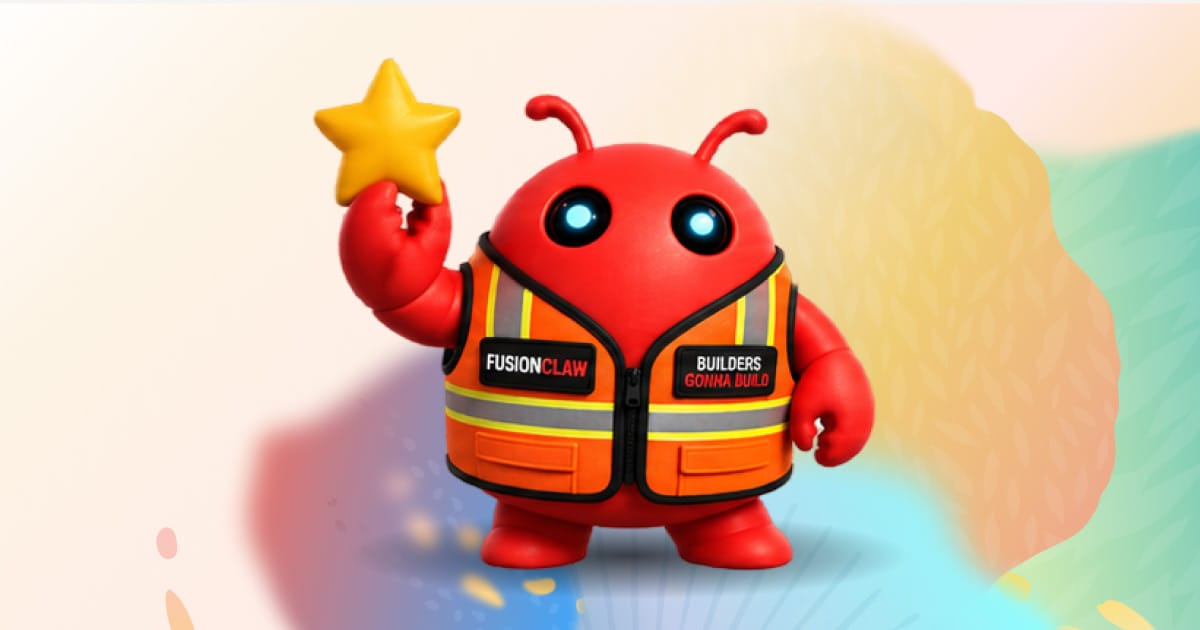
At Oracle AI World in Las Vegas on Oct 26, Oracle announced Oracle Fusion Claw, a new execution runtime for agents, and 25 Claw-powered Agentic Applications now available across ERP, HCM, supply chain (SCM) and customer experience (CX). It also introduced Fusion Companion and Fusion Agentic Home: employees describe a goal in natural language in supported AI tools such as ChatGPT or in the native Fusion interface, and the system picks and coordinates the transactions, workflows, approvals and AI agents needed, within existing identity, permission and approval controls. Oracle has not published pricing, benchmarks or a detailed rollout schedule.
Zoom
Key Takeaways
Runtime: Fusion Claw is a new agent execution runtime that Oracle says supports larger-scale and longer-running work, continuous replanning, deterministic execution and governed autonomy (press release)
Scale: 25 Claw-powered Agentic Applications are available now across the ERP, HCM, SCM and CX suites, including Ledger, Workforce Orchestration, Payroll Activity Workspace and Procurement Spend
Access: Fusion Companion works through supported AI tools such as ChatGPT and customer- or partner-built interfaces, with Fusion Agentic Home as the native entry point (Fusion Companion release)
Governance: all execution stays within existing identity, permissions, policies and approval controls, and decisions needing human judgment are escalated
Not disclosed: Oracle has not published pricing, benchmarks or a per-app rollout schedule
Tencent ARC in collaboration with Tsinghua University released and open-sourced Looking Ahead (arXiv:2610.29989, GitHub: TencentARC/Looking-Ahead), establishing a breakthrough paradigm for autoregressive video synthesis. Overcoming the chronic pathology of traditional autoregressive video models—where unidirectional sequential extrapolation causes exponential error accumulation and severe visual collapse over extended rollouts—Looking Ahead introduces Lookahead Attention. By coupling casual autoregressive decoding with a forward-looking planning stream that anchors future spatiotemporal keypoints, the framework eliminates cumulative drift and visual jitter in long-form generation.
Zoom
Key Takeaways
Tencent ARC and Tsinghua University introduce Looking Ahead (arXiv:2610.29989), open-sourcing a long-horizon video framework
Eliminates exponential error propagation and visual degeneration inherent to unidirectional token-by-token video rollouts
Pioneers Lookahead Attention, leveraging global temporal keypoint anchors to constrain local micro-texture rollouts
Establishes a new state-of-the-art across physical consistency and dynamic motion metrics for open-weight autoregressive models
The Microsoft VS Code team announced Canvases in VS Code Preview (v1.142), introducing dedicated shared visual workspaces connecting developers with autonomous coding agents. Addressing the severe UX limitations of cramped sidebar chat windows—where complex multi-file architectural modifications and agent diffs become hard to track—Canvases provides an expansive, interactive infinite-canvas whiteboard. Developers and agents (such as GitHub Copilot, Claude Code, and Cline) can collaboratively organize system flowcharts, live interactive code diffs, execution traces, and unit test rollouts side by side.
Zoom
Key Takeaways
Microsoft VS Code Preview v1.142 introduced Canvases, pioneering a spatial human-agent collaborative interface
Transceives beyond claustrophobic sidebar chats to an expansive, pan-and-zoom whiteboard mapping concurrent multi-file agent diffs
Embeds code files, architecture diagrams, interactive git diffs, terminal outputs, and test runners as unified interactive cards
Natively bridges GitHub Copilot, Claude Code, and third-party coding agent harnesses, accelerating IDE spatial development
While supervised fine-tuning (SFT) distills agentic tool-use capabilities from frontier LLMs into small language models (SLMs, 0.6B to 8B parameters), student agents frequently suffer from 'progress stagnation'—collapsing into repetitive, unproductive tool-calling loops as interaction trajectories extend. In arXiv:2610.19439, researchers introduced Progress-Aware Distillation (ProD). ProD defines a rigorous stagnation scoring formulation that dynamically identifies and penalizes stagnant behavior during student trajectory rollouts via an adaptive SimPO-inspired margin. Experiments across 8 diverse SLMs prove ProD effectively eradicates repetitive loops while boosting task completion efficiency and success rates.
Zoom
Key Takeaways
ProD introduced in arXiv:2610.19439, targeting the pervasive failure mode of progress stagnation in SFT-distilled SLM agents
Formulates a rigorous stagnation score, penalizing student-generated unproductive loops through an adaptive, margin-based objective
Validated across 8 SLMs spanning 0.6B to 8B parameters, consistently mitigating stagnation across in-domain and out-of-domain benchmarks
Substantially reduces wasted token consumption in multi-turn tool interaction while boosting overall task completion rates
ControlNet creator Lvmin Zhang and researchers from Stanford and CUHK unveiled MTEdit (arXiv:2610.23751). To resolve the visual degradation and cumulative error drift inherent in conventional sequential rollout for multi-turn image editing, the team introduced Packed Trajectory Canvas (PTC). MTEdit constructs a landmark dataset of 500K trajectories and 2.69M editing turns (averaging 5.38 turns, up to 8 turns), demonstrating stable instruction following and ambient identity consistency across 8 consecutive edits.
Zoom
Key Takeaways
ControlNet author Lvmin Zhang's team released MTEdit (arXiv:2610.23751), introducing Packed Trajectory Canvas (PTC) to eliminate visual drift in multi-turn image editing
Packs four progressive edits into a single 2x2 canvas, generating the full trajectory in one diffusion pass to enforce ambient consistency
Constructs the largest multi-turn dataset with 500K trajectories and 2.69M edits spanning up to 8 turns (averaging 5.38 turns per trajectory)
Maintains superior fidelity through Turn 8 with a 7.63 score, with full code and datasets released on GitHub
Modal said in an October 19 blog post that it will add NVIDIA's Arm-based Vera CPU to power Modal Sandboxes, its first step beyond an all-x86 fleet. Using Agentless Agent Bench, a 50-task suite built from Terminal-Bench, Modal measured up to 2x the task throughput of a comparable x86 GNR machine under heavy concurrency, with per-task latency equal or lower (vendor figures). On an idle host running tasks serially, Vera's edge was small. The capacity targets background coding agents and reinforcement learning rollouts.
Zoom
Key Takeaways
Throughput: under heavy concurrency Vera reached up to 2x the task throughput of a comparable x86 GNR machine, with per-task latency equal or lower (Modal early tests, vendor figures).
Benchmark: Agentless Agent Bench uses 50 Terminal-Bench oracle solutions and verifiers with network calls removed, isolating CPU work such as compilation, grep, git and device emulation.
Idle serial runs: across the 50 tasks Vera was often but not always faster, and not by a large margin; the gap opens under contention.
Why: Modal credits Vera's high memory bandwidth for packing more containers per core without throttling; x86 alternatives plateaued earlier as CPU counts rose.
Rollout: this is Modal's first Arm support and needs infrastructure and image-build changes; no launch date or pricing was announced.
Modern 3D world models typically use view-dependent features from geometry foundation models (GFMs) as predictive states, entangling camera-induced variations with physical scene dynamics. Tongji University and Tencent introduced GeoState (arXiv:2610.22343). By aggregating multi-view GFM features into a view-decoupled 3D scene state, GeoState models physical scene evolution independently of camera viewpoints, maintaining a single context-derived scale throughout rollouts without per-frame scale realignment.
Zoom
Key Takeaways
Tongji University and Tencent introduced GeoState (arXiv:2610.22343) for view-decoupled 3D world modeling
Separates physical scene evolution from camera-dependent observations via a dedicated scene tokenizer and ray-based geometry decoder
Maintains a single context-derived scale throughout multi-second rollouts on Waymo without per-frame scale alignment, outperforming VGGT-World and FR3D
Demonstrates robust zero-shot cross-sensor generalization across KITTI and nuScenes datasets
Continuous diffusion language models (CDLMs) currently transplant architectures from causal LLMs or vision DiTs that are not optimized for parallel diffusion. Researchers from Xiaohongshu (Dots Studio), Peking University, CUHK Shenzhen, and UCLA introduced LangDiT (arXiv:2610.22330). By separating feature normalization from noise modulation, detaching shortcut gradients, and introducing confidence-gated self-conditioning, LangDiT reduces generation perplexity (GenPPL) to 21.72 on LangFlow and 11.33 on Plaid across 1024-token OpenWebText rollouts.
Zoom
Key Takeaways
Xiaohongshu, PKU, and CUHK Shenzhen introduced LangDiT (arXiv:2610.22330), the first transformer backbone customized for continuous diffusion language models
Decouples representation scaling from noise modulation via Q/K RMSNorm and stabilizes training through vocabulary shortcut detachment
Drives 1024-token generation perplexity on OpenWebText down to 21.72 on LangFlow and a record 11.33 on Plaid formulations
Maintains strong quality (27.51 GenPPL) even under 128 denoising steps, isolating transformer design as the core lever for diffusion text generation
Addressing rollout homogenization and zero-variance advantage collapse in group-relative reinforcement learning (GRPO), SERO (arXiv:2610.19397) restores learner-visited states to execute multi-step oracle continuations with policy-reachability weighting—boosting 7B ALFWorld OOD success by +11.20 points to 87.50%—while UNSW's EDEN (arXiv:2610.16105) appends a single anchored Gaussian-perturbed embedding position to a fraction of rollouts, lifting Qwen2.5-Math-7B AIME 2025 Pass@256 by +13.33 points (to 66.67%) without increasing rollout budgets.
Zoom
Key Takeaways
SERO restores learner-visited states and executes multi-step oracle continuations with policy-reachability weighting, boosting 7B ALFWorld unseen success by +11.20 points to 87.50% (95.57% seen)
UNSW's EDEN appends a single anchored Gaussian-perturbed embedding position to a fraction of rollouts, beating G=32 standard GRPO using only G=16 rollouts
On AIME 2025, EDEN lifts Qwen2.5-Math-7B Pass@256 by +13.33 percentage points (from 53.33% to 66.67%) while preserving diverse multi-derivation reasoning traces
Controlling acting LLM agents requires step-level confidence signals to decide whether to execute an action, abstain, or hand off control to humans. Research from NYU introduces outcome-grounded confidence calibration for multi-step agents. Rather than calibrating confidence against immediate local actions, the framework aligns per-step verbalized confidence with the ultimate multi-step episode outcome using GRPO rollouts and proper scoring rules. Evaluated across ALFWorld, TextWorld, and WebShop on Qwen2.5-7B, confidence AUROC jumps to 0.68–0.85, steps within the top-10% confidence bracket succeed 4.3x more frequently, and expected calibration error plummets from 0.42 to below 0.12.
Zoom
Key Takeaways
Outcome-grounded calibration: trains step-level verbalized confidence against eventual multi-step episode outcomes via GRPO rollout groups and proper scoring rules
Immediate first-step foresight: enables agents to recognize task failure vulnerabilities right from the initial step, elevating confidence AUROC to 0.68–0.85
4.3x higher success in top-tier confidence: the top 10% of confident steps succeed ~4.3x more often, driving expected calibration error from 0.42 down below 0.12
To improve credit assignment in long-horizon agentic tasks, combining reinforcement learning with verifiable rewards (RLVR) and on-policy self-distillation (OPSD) has emerged as a leading paradigm. However, existing pipelines neglect the dynamic evolution of agentic skills and the reliability of privileged teacher signals. Researchers from CUHK and Tencent introduced RSIPO, enabling skills and policies to co-evolve recursively. RSIPO extracts skills directly from trajectory rollouts, optimizes skill generation via replay, and employs Empirical Bayes shrinkage to calibrate student trust in teacher logits. Operating on Qwen2.5-7B, RSIPO achieves 98.6% success on ALFWorld, outperforming standard GRPO by 17.4 percentage points.
Zoom
Key Takeaways
Co-evolution of skills and policies: the agent continuously extracts skills from executed trajectories, breaking the rigidity of static skill registries
Empirical Bayes shrinkage calibration: dynamically modulates student trust in teacher supervision, shielding the policy from noisy privileged guidance
State-of-the-art 98.6% on ALFWorld: delivers a 17.4 percentage-point improvement over standard GRPO on Qwen2.5-7B, excelling across embodied and search tasks