On 2026-11-06 Ghostty creator Mitchell Hashimoto announced libghostty-vt 1.0: a portable C terminal-emulation library extracted from Ghostty, with a semver-stable C ABI and packaging support for distros. He says it already runs in hundreds of projects used by tens of millions of people—including JetBrains IDE terminals (~12.5M active users), Vercel Turborepo TUIs, and agentic coding tools such as herdr and cmux—and has driven ~10,000 live terminals on a 4-core/8 GB Linux box. Official docs list agents that read TUI screens as a first-class use case.
Stability: semver + strict ABI; opaque handles with enum getters/setters; ELF symbol versioning; CI gates with libabigail
Adoption: JetBrains IDE terminals (~12.5M active users); Neovim PR approved to replace libvterm pending packaging; herdr/cmux and other agentic tools built on it
Vendor-cited scale: ~10k live shell terminals on a 4-core/8 GB Linux box; full-feature WASM build can stay under ~1 MB
Agent angle: docs list agents/automation that read what a TUI shows—so coding agents need not reinvent VT parsing
On 2026-11-06 the official ChatGPT account announced Remix for Sites: open a site a teammate built, tell ChatGPT what to change, and get your own version that you keep editing in chat. It is rolling out to ChatGPT Business and Enterprise accounts. OpenAI has not said whether a remix carries over the database, secrets, or connectors, and lists no separate price; per the Help Center, building and editing a Site counts toward Codex usage.
Zoom
Key Takeaways
Scope: Remix is rolling out to ChatGPT Business and Enterprise accounts; Plus / Pro availability is not stated
Flow: open a teammate's Site, describe the changes in plain language, get your own copy, then keep iterating in chat
Billing: per the Help Center, building/editing a Site counts toward Codex usage; Enterprise hosting charges are currently waived; each Site database caps at 10 GB
Versus co-editing: Can edit means several people change one Site at one URL; Remix spins off a separate copy for variants or template reuse
Official demo video runs about 105 s; as of 2026-11-07 10:10 UTC the post had about 1,261 likes and 120K impressions
On 2026-11-06 Hugging Face Harness Hub released Harness Adapters: one rank-32 LoRA per base model and coding harness (pi, OpenCode, Hermes), trained with GRPO on verifiable tasks inside unmodified harnesses. Vendor smoke evals claim fewer tool calls with equal or better accuracy. A safeagents proxy rule-checks every tool call and blocks reward hacks. Bases include LiquidAI LFM2.5-24B-A2B, LFM3-1.7B, and experimental TwIL-8B.
Zoom
Key Takeaways
Mechanics: one LoRA per model x harness (rank 32, all-linear), GRPO-trained inside unmodified pi / OpenCode / Hermes
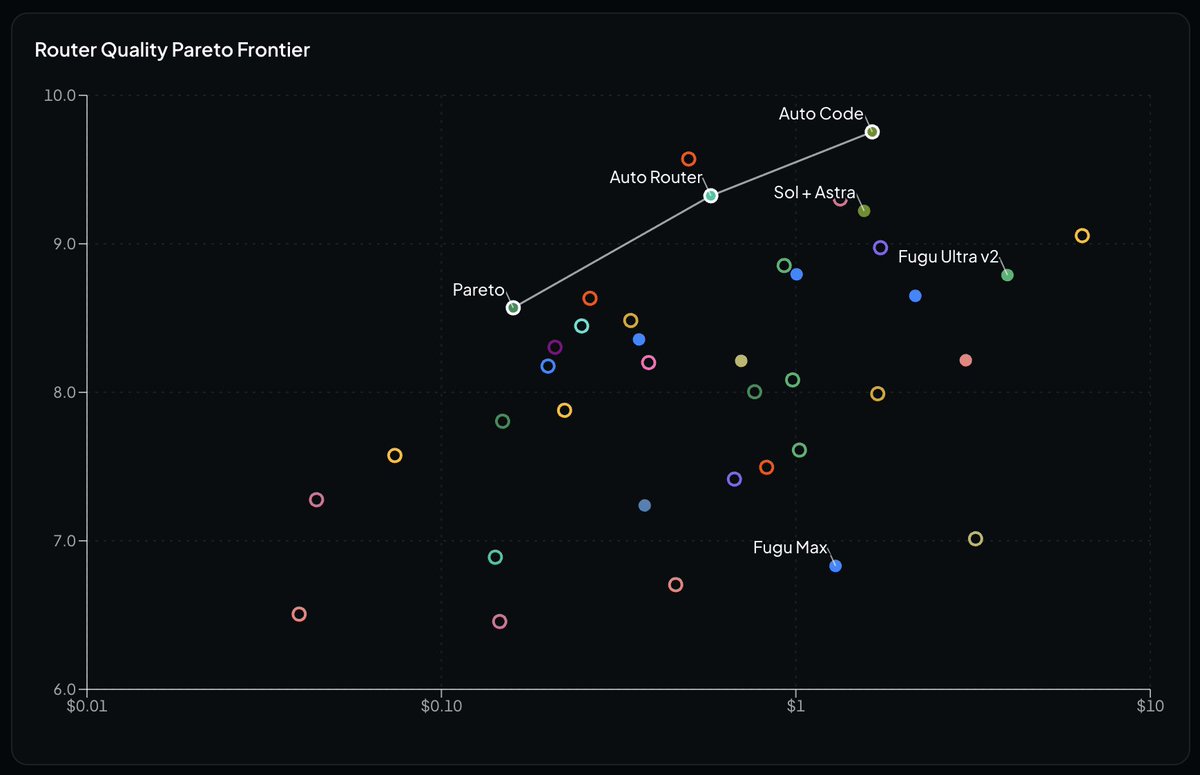
On 2026-11-06 OpenRouter launched a rebuilt Auto Router (openrouter/auto) and coding-focused Auto Code (openrouter/auto-code). Vendor-stated: Auto Code scores in line with Claude Opus 5.5 across five benchmarks at about 74% lower cost per task; routing p90 latency about 0.65s vs 1.96s for the prior router. It weighs eleven request factors plus live price, provider health, and cache; no extra routing fee.
Zoom
Key Takeaways
Vendor-stated: Auto Code roughly matches Claude Opus 5.5 on five benchmarks at ~74% lower cost per task
Latency: routing step p90 ~0.65s in a live test vs ~1.96s for the prior router (~3x faster)
Usage: set model to openrouter/auto or openrouter/auto-code; pay the served model's list price, no routing surcharge
Mechanics: eleven request factors + live price/health/cache; stayed on the same model for nearly 9/10 agent turns in beta to protect caches
Compat: cost_tier / allowed_models / excluded_models still work; chatroom and API expose routing reasons
On the evening of 2026-11-05, the DeepSeek Harness team said that as of Nov 4, counting only users on DeepSeek's official API, daily active users reached about 1.54 million with roughly 92 trillion tokens consumed that day; third-party plugins are about 35,000, and about 60% of active users have built or installed one. The team said it will build an official plugin marketplace and is preparing an author support program, but neither the marketplace nor incentive details are live yet.
Zoom
Key Takeaways
Vendor figures (official-API users only): disclosed 2026-11-05 for data as of Nov 4 — about 1.54M DAU and about 92 trillion tokens that day
Ecosystem: ~35,000 third-party plugins; ~60% of active users built or installed at least one (vendor-stated)
Roadmap: official plugin marketplace planned — not live yet; no public onboarding date
Author support: token incentives and related programs in preparation; rules TBD — not already paying out
Hands-on: deepseek.com/harness; review file/network/credential permissions before third-party plugins
On 2026-11-06, Anthropic Claude Duet co-creator and lead David Sutton (@davidsuttonca) and PM lead Karan Ahuja (@ahuja_karan) posted on X that Claude Duet now connects to Claude Code sessions: from a phone you can check what is running, approve changes, and send updates for sessions on your computer or in the cloud. Ahuja also notes Projects plus continuing Claude chats and memory. First-hand product-lead update, not an @AnthropicAI blog post; Duet remains a US Pro/Max/Ultra research-preview waitlist.
Zoom
Key Takeaways
Source: Claude Duet co-creator/lead David Sutton (@davidsuttonca) X post 2026-11-06 19:20 UTC + PM lead Karan Ahuja (@ahuja_karan) same-day confirm; Snape Report / daily.dev follow-ups
Capability: from a phone, check Claude Code session progress, approve changes, and send follow-ups; works for local and cloud sessions (product-lead wording)
Extras: Ahuja says Projects plus continuing Claude chats and memory; calls it the #1 early-user request
Framing: first-hand employee product update, not an @AnthropicAI account post; Duet research preview still US Pro/Max/Ultra waitlist
Context: related to Claude app Code tab / Remote Control docs, but this story is specifically Duet↔Code linking; do not cite as a company blog
On 2026-11-06, Cursor's changelog shipped Voice Chat with Agents: realtime two-way voice calls with coding agents in the Agents Window, IDE, web, and iOS. Dictation remains a separate feature. Grok Voice handles listening and speaking (voices include Ara, Eve, Leo, Rex, Sal); the coding agent still uses the model you picked. With Privacy Mode on, voice chat runs with zero data retention. A signed-in Cursor account is required (API-key-only sessions cannot start a call).
Zoom
Key Takeaways
Source: Cursor changelog Voice Chat with Agents (2026-11-06) + docs at cursor.com/docs/agent/voice-chat
UX: start when the agent is idle and the chat input is empty via the waveform button; during a call hand off coding, read-only check diffs/runs/history, switch Project workers
Split: Grok Voice listens and speaks; the coding agent keeps your chosen model and speaks short progress/done notes
Privacy/limits: Privacy Mode = zero data retention for voice; signed-in account required; API-key-only sessions cannot call; ~10 min silence hangup by default plus a daily call limit
Not dictation: Cmd+Shift+Space still toggles dictation (formerly Voice Mode); Voice Chat is two-way speech with no dedicated shortcut
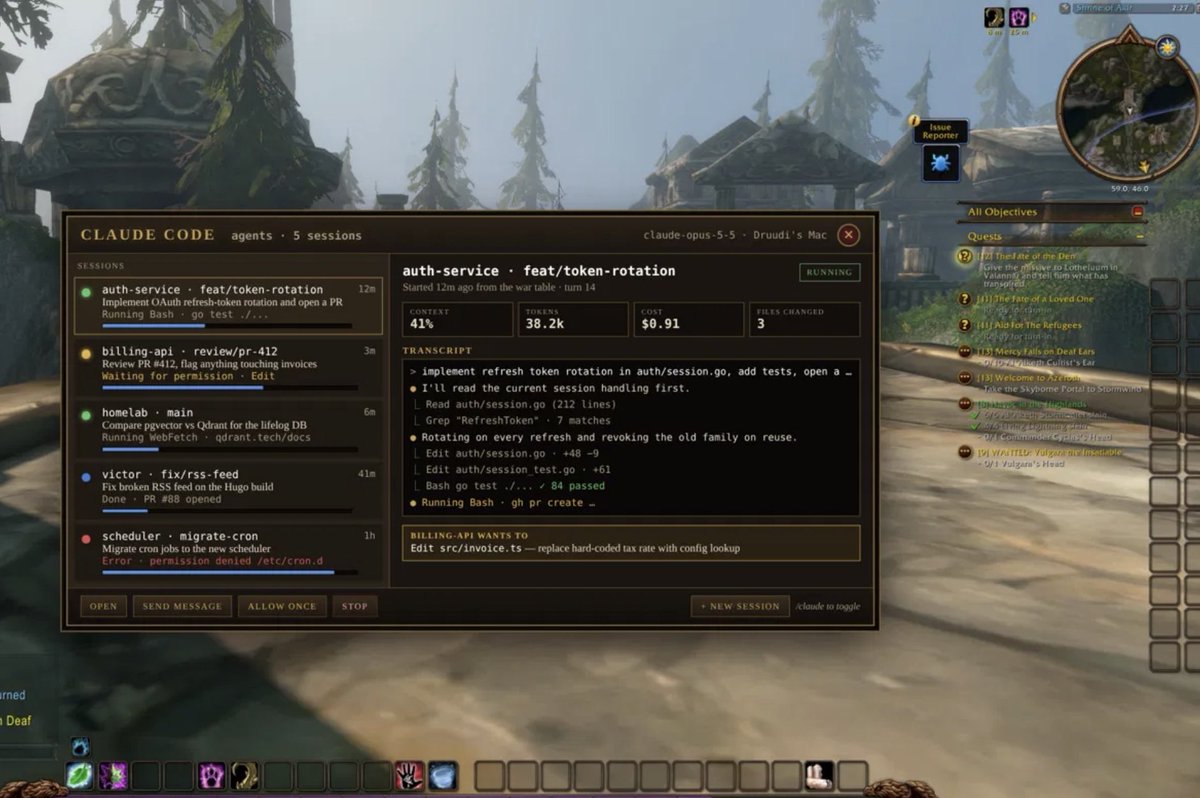
On 2026-11-06, Anthropic Claude Code community lead Ado (@adocomplete; bio: Community, Claude, Code at @AnthropicAI) posted a custom World of Warcraft UI addon that shows Claude agent progress and can kick off new tasks from inside the game (~979 likes, ~102k impressions). Ado later noted Blizzard blocks disk/I/O so players must /reload. Personal demo/discussion—not a company product launch.
Zoom
Key Takeaways
Source: first-hand post by Anthropic Claude Code community lead Ado (@adocomplete) on 2026-11-06—not a company product announcement
Demo: custom WoW UI addon overlays Claude agent status and can start new tasks from in-game
On 2026-11-06 Anthropic published The components of agent memory, covering in-session memory notes plus offline dreaming (fix notes against transcripts, build wikis, promote hierarchy). It reports CL-Bench, Pokemon, and internal-corpus wiki evals; @AnthropicAI amplified. Engineering methods post, not a product GA.
Zoom
Key Takeaways
Source: Anthropic Engineering The components of agent memory (2026-11-06) + @AnthropicAI
Core: memory notes in-session plus dreaming offline to fix notes, build wikis, and preload top-layer memory
Evals: on CL-Bench DB tasks Opus 5+ closes the learning loop; in Pokemon Fable 5's 9 files beat Sonnet 3.7's 413-file archive
Wiki: on ~350k internal docs, dreaming 2 to 128 sessions lifted 25-question scores ~13% to ~48%; search+wiki ~61% vs search-only ~53%
Practice: Claude Code auto memory injects only first 200 lines or 25KB of MEMORY.md; methods post, no new public API announced
On 2026-11-06 Meta introduced Spaces in Muse: describe an idea and Muse builds a custom experience (trackers, planners, games), pinnable to sidebar/main tabs and schedulable; connected apps can keep spaces updated. Available today where Muse is offered; multi-user sharing still exploratory.
Zoom
Key Takeaways
Source: Meta Newsroom 'Design the Muse App, Just for You' (2026-11-06) + official @Muse post
Capability: describe an idea; Muse builds a persistent editable space, pinnable to sidebar/main tabs, schedulable show/hide
Sync: with connected apps, vendor says spaces can update in the background
Scope: available today wherever Muse is offered; multi-user sharing still exploratory
Related: Muse Wonder specialized models covered separately; this item is Spaces UX only
On 2026-11-06, Google DeepMind (@GoogleDeepMind) and VP Science Pushmeet Kohli published research: under human supervision, AI agents found two weaknesses in legacy 1024-bit RSA—signature padding adds no extra protection once an attacker controls about half the signed block (sandbox replay ~3.5× less CPU than prior), and a batch-factoring algorithm cuts average cost per additional same-size key by about 30×. Official caveat: modern 2048-bit and larger protocols remain unaffected.
Zoom
Key Takeaways
Source: @GoogleDeepMind post on 2026-11-06 + Pushmeet Kohli X Article; two technical PDFs (signatures / Batch NFS)
Scope: legacy 1024-bit RSA only; official statement that 2048-bit and larger remain secure
Signatures: once an attacker controls ~half the signed block, padding adds no protection; sandbox on a known 1024-bit benchmark key used ~3.5× less CPU and under 1/1000 of full break cost
Short fingerprints (e.g. 32-byte): theoretical estimate ~1600× better than prior best for 1024-bit keys
Batch factoring: for many same-size keys, average cost per additional key ~30× lower vs prior batch methods
On 2026-11-06, Cua (@trycua) and Scale AI AgentEnv launched Cua Driver Bench (Bench v2): same Claude Sonnet 5.5, tasks, and limits with only the computer-use driver swapped, scoring task done, GUI-only, and eight undisturbed-user criteria. Scale macOS background full-pass: cua-driver ~58% (23/40), agent-desktop ~20%, browser-use ~3%; Cua-run Codex Computer Use ~33%. Tasks and trajectories are public to rerun.
Zoom
Key Takeaways
Source: Cua official blog + @trycua thread on 2026-11-06; Scale ran macOS/Linux; Cua ran Windows and some controls
Method: 10 Bench v2 tasks; background keeps a simulated user typing; full pass = done + GUI-only + 8 undisturbed criteria
On 2026-11-05 Hugging Face said its open-source ML Intern is available as a Slack bot you can install in your own workspace. Mention @ML Intern to evaluate models, build datasets, and fine-tune using your own Hugging Face account; each thread is a session with an approved compute budget and optional HuggingChat MCP servers.
Zoom
Key Takeaways
Official: @huggingface 2026-11-05; docs ML Intern in Slack; install at huggingface.co/chat/slack/install
Form: Slack bot running the same agent as HuggingChat, billed and publishing under each user's HF account
On 2026-11-05 Planet Labs announced the Planet AI App is generally available: a map-based chat UI to search a 10+ year, 3,000+ layer daily satellite archive with natural-language place finding, change-over-time views, and Deep Research agents. Entry point: ai.planet.com.
Zoom
Key Takeaways
Official: @planet / CEO @Will4Planet on 2026-11-05; blog Introducing the Planet AI App
Capabilities: natural-language place search, decade change/timelapse, file upload + scheduled reports, Deep Research agents
Data: vendor claim 10+ years of daily imagery and 3,000+ layers; results grounded in inspectable Planet imagery
Entry: ai.planet.com; aimed at discovery for non-GIS users, not a full GIS replacement
No standalone model benchmarks or detailed pricing published; summer beta with hundreds of users shaped discovery features
On 2026-11-05 DigitalOcean launched Cuttlefish, a native iPhone app for Managed Agents (Public Preview): follow live sessions and tool calls, approve or deny full commands or diffs, require Face ID/passcode for high-risk actions, and steer, pause, checkpoint, or roll back. Sessions run in cloud microVMs that keep going when the phone is locked or offline. With Box as launch partner, Box Mount (Private Preview) syncs a Box folder into the agent sandbox under Box permissions and version history.
Zoom
Key Takeaways
Official: @digitalocean post 2026-11-05 14:11 UTC; blog introducing-cuttlefish; App Store, Public Preview
Live sessions/reasoning/tool calls; approve full command, path, or diff; Face ID/passcode for high-risk; steer, pause, resume, stop
In-app previews of sites/docs; browse workspace files; checkpoints with fork/rollback
Supervises harnesses including Claude Code, Codex CLI, OpenCode, OpenHands, Hermes, LangGraph, CrewAI
Box Mount (Private Preview): sync a Box folder into the sandbox; edits/deletes write back with Box permissions and version history