

On November 11 Alibaba's Qwen team published Qwen Code v1.0.0-preview on GitHub. According to the release notes, this version merges the agent harness built inside Alibaba's AI IDE Qoder, the layer that ties a model to its tools and execution, into Qwen Code, for understanding, implementing, debugging and testing code. It supports sign-in with Qwen and Qoder accounts, multiple model providers and custom compatible endpoints; it ships native packages for macOS, Linux and Windows for the first time, so no separate Node.js install is needed; and it supports session resumption and non-interactive runs for scripting and automation. The code is open source under Apache 2.0, but during the preview the team is not accepting community pull requests and expects to open them after December 2026.
Key Takeaways
- ✓Scope: 1.0 Preview merges Qoder's agent harness and Qwen Code into one open-source coding agent (per the official release notes)
- ✓Install: first native packages for macOS, Linux and Windows, 8 builds in total including arm64 and musl, with no Node.js required
- ✓Models: sign in with a Qwen or Qoder account, use QwenCloud or Alibaba Cloud Model Studio, or any third-party or custom compatible endpoint
- ✓Automation:
qwen --continueand--resumepick up saved sessions, andqwen -pruns a single non-interactive request - ✓Caveats: preview interfaces and settings may change; community PRs are paused until after December 2026, while the 0.27.x line is still maintained on main
Key Decision Metrics at a Glance
Turn your technical choice into a development budget
Compare 40 dev plans & simulate token costs vs $20/mo subscriptions
Project Links & Resources
Direct AccessIn-Depth Technical Analysis
Background and Industry Pain Points
Competition among coding agents has shifted from raw model strength to how reliable the harness is: the same model inside different harnesses can differ a lot in long-task success, tool use and permission control. Alibaba had two separate lines: the AI IDE Qoder for product users, and the open-source command-line agent Qwen Code, with about 29K GitHub stars. Their agent capabilities evolved separately, so developers who wanted to embed Alibaba's agent stack in their own products lacked one unified open-source base.
Architecture Highlights and Mechanism
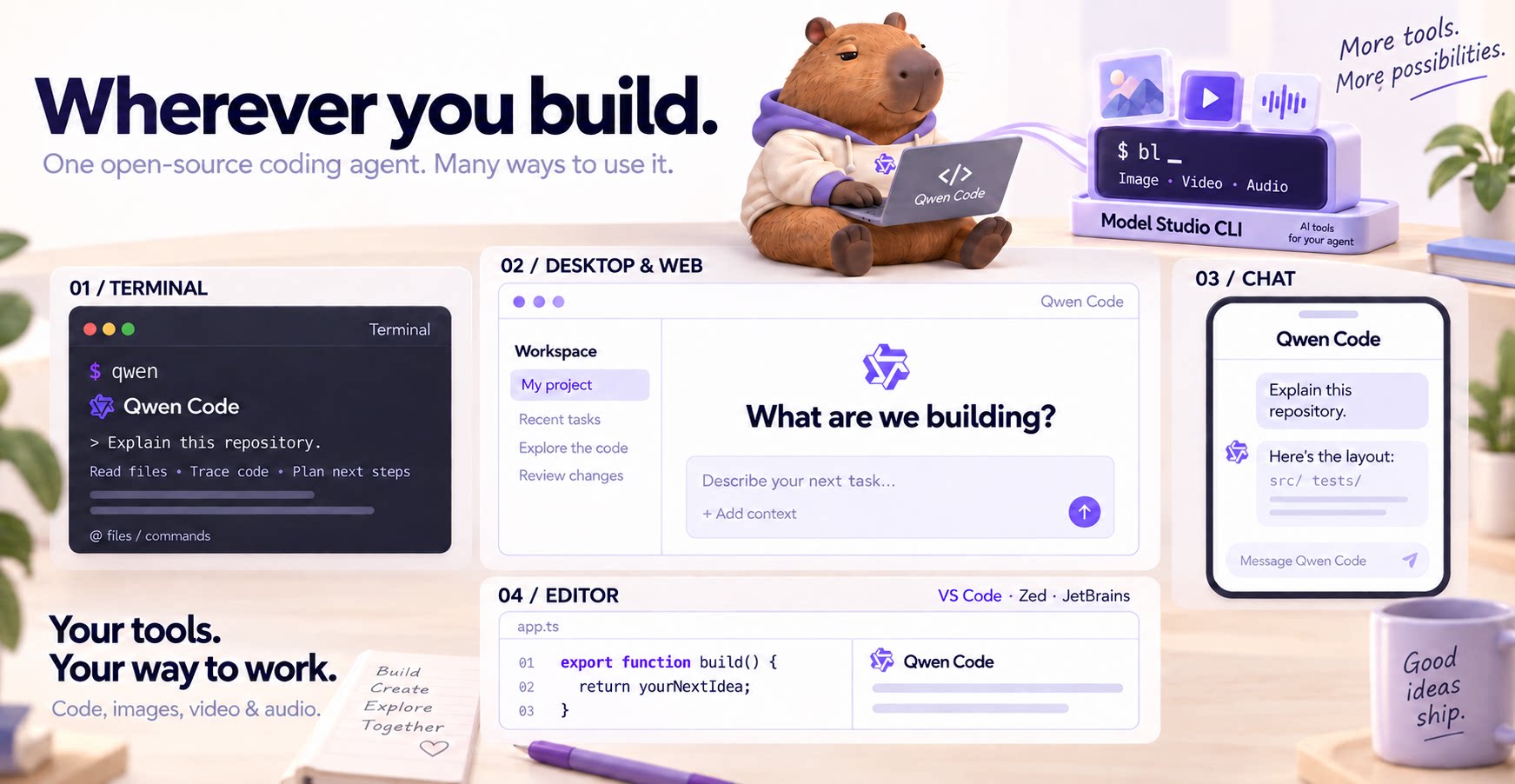
Qwen Code 1.0 Preview folds the harness refined in Qoder into Qwen Code, which now handles understanding code, editing it, debugging and running tests. The official docs list project instructions, file and shell tools, permission controls, persistent sessions, subagents, background tasks, Skills, plugins, MCP and Hooks. It is not tied to one model: you can use a Qwen or Qoder account, QwenCloud or Alibaba Cloud Model Studio, or any compatible endpoint. Distribution moves to native executables for macOS, Linux (including musl) and Windows on x64 and arm64.
Benchmarks and Measured Results
This is a tooling release. The team has not published SWE-bench or Terminal-Bench scores or direct comparisons with Claude Code or Codex CLI, and real results depend mostly on the model you connect. The verifiable facts are version and distribution details: v1.0.0-preview shipped at 03:55 UTC on November 11, with 8 native packages under Apache 2.0. Some developers on X questioned whether Alibaba running Qoder, Qwen Work and Qwen Code side by side duplicates effort.
Developer Guide and Getting Started
On Linux or macOS run the official install.sh script; on Windows use install.ps1 in PowerShell, or download the matching package from the GitHub release. Run qwen in your project, connect an account or provider with /auth, pick a model with /model, and review edits with /diff. Try it on a non-critical repo first: preview interfaces and settings may change, and teams that need stability can stay on the 0.27.x stable line.
Benchmark side-by-side against alternatives, or calculate monthly token cost vs subscription break-even.
Discussion & Comments
0Sign in to join the discussion
Connect with AI developers to exchange benchmark insights.