AI Coding Live News

Anthropic Launches Message Threads in Public Beta on the Messages API: Server-Side Conversations Cut Claude Code TTFT About 35% on 500K-1M Token Requests

On November 2 (US time) Anthropic put message threads into public beta on the Messages API (beta header message-threads-2026-08-12). The API keeps the conversation on the server: the first request sends the full conversation and creates a thread, and each later request sends only new messages plus the previous response id. Anthropic says threads are on by default for most Claude Code users, cutting median time to first token by about 35% on 500K-1M token requests, while the median long-conversation request shrank from about 800 KB to 1.8 KB. Threads expire after 5 idle minutes; pricing and rate limits are unchanged.

Anthropic Launches Message Threads in Public Beta on the Messages API: Server-Side Conversations Cut Claude Code TTFT About 35% on 500K-1M Token Requests

Key Takeaways

  • Per Anthropic, median time to first token on 500K-1M token Claude Code requests is about 35% lower.
  • The median long-conversation request fell from about 800 KB to about 1.8 KB, since each turn uploads only new messages plus previous_message_id.
  • A thread expires 5 minutes after its last request and is deleted within 1 hour; an expired thread returns 404 thread_not_found and must be replayed in full.
  • Pricing and rate limits are unchanged; Message Batches, token counting and on-demand compaction are unsupported, and threads are not ZDR or HIPAA eligible.
  • Available on the Claude API, Claude Platform on AWS, Google Cloud (Anthropic managed) and Microsoft Foundry, with a thread helper in the SDKs.
Read full story
Linked Models & Agents:

Google DeepMind expands Gemini-built PlanAssist to 15 English councils after pilots cut planning assessment time by up to 58%

On October 31, Google DeepMind said PlanAssist, a Gemini-built planning tool developed with the UK government, Google Cloud and Faculty, will be made available to 12 more local planning authorities in England, bringing the total to 15 for a 12-month Beta on live applications. In early pilots at Barnet, Camden and Dorset, DeepMind says the average officer time on householder assessment tasks fell by 58%, and more than 70% of the drafted reports were approved with no edits. Planning officers keep the final decision.

Google DeepMind expands Gemini-built PlanAssist to 15 English councils after pilots cut planning assessment time by up to 58%

Key Takeaways

  • Scale: from 3 pilot councils to 15; the 12 new ones join in three cohorts for a 12-month Beta (DeepMind blog)
  • Efficiency: average officer time on householder assessment tasks fell 58% in pilots (vendor-reported; DeepMind's X post says "up to 58%")
  • Quality: more than 70% of AI-drafted reports were approved by officers with no edits (vendor-reported)
  • The UK government says, together with new rules, routine householder processing can halve from eight weeks to four, and it aims to offer the tool to every council in England in 2027 (GOV.UK)
Read full story

Nous Research opens the official Hermes Agent mobile beta: iOS via TestFlight, Android via Firebase, connecting your phone to your own gateway to approve tools and manage bots and routines

During NousCon 2026 in New York on Oct 30, Nous Research released an official mobile beta of Hermes Agent and put up a sign-up page at hermes-agent.nousresearch.com/mobile: iOS users join the "Hermes Agent - Mobile" beta through TestFlight, and Android users join through Firebase App Distribution. The TestFlight page says the app connects to your own Hermes gateway so you can chat with streaming, approve tool calls, and manage bots and routines from anywhere. Teknium, co-founder and lead engineer of Hermes Agent, confirmed on X that the iPhone and Android betas launched together. Nous has not announced a general release date or any benchmarks.

Key Takeaways

  • Entry point: the official page hermes-agent.nousresearch.com/mobile covers 2 platforms, iOS through TestFlight and Android through Firebase App Distribution
  • Positioning: the TestFlight description says the app connects to your own gateway for streaming chat, tool-call approval, and managing bots and routines; it is a client, not a separate agent running on the phone
  • Confirmation: Teknium, co-founder and lead engineer of Hermes Agent, confirmed in a reply on X that the iPhone and Android betas both launched on NousCon day
  • Watch for clones: several third-party Hermes phone clients already exist, so only use the links on the official page; Nous has not published a general release date or benchmarks
Read full story

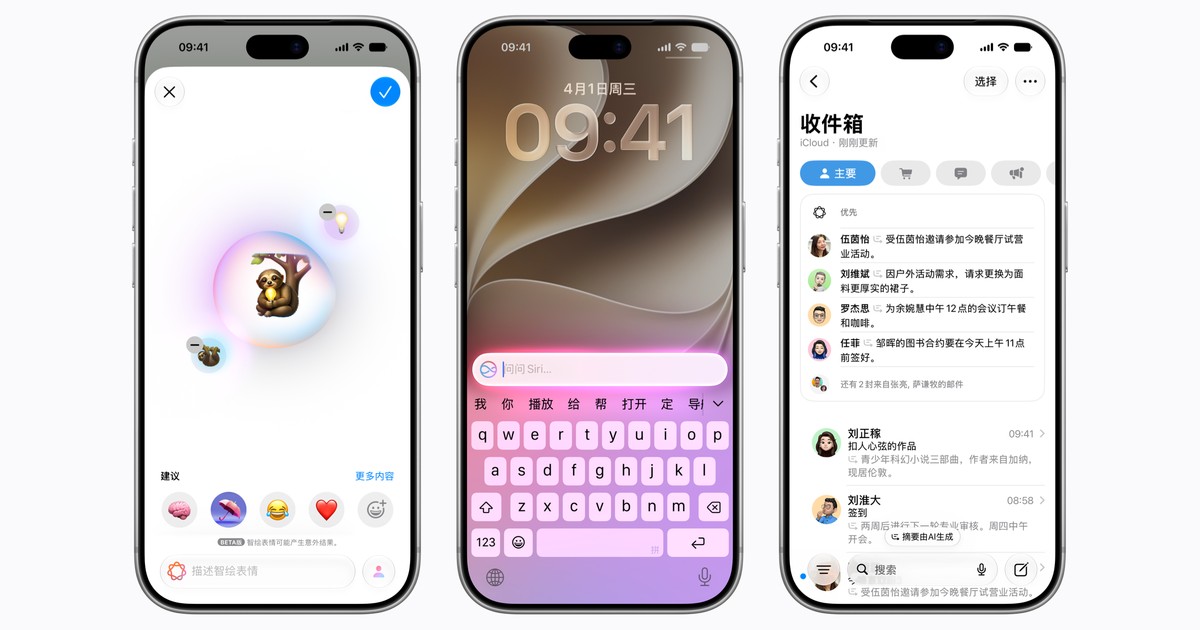
Apple Intelligence is coming to China: iOS 27.3 developer beta starts Nov 4, public release in December, with Alibaba Qwen inside Siri, Writing Tools and Visual Intelligence

In a press release on its China newsroom, Apple said the first Apple Intelligence features will open for testing in the latest iOS developer beta starting November 4 and reach users in China with the iOS 27.3 release in December. The features run on Apple-built generative models and include Live Translation, Writing Tools, Visual Intelligence, Clean Up, Genmoji, notification and Mail summaries, and Type to Siri; Apple also partnered with Alibaba to bring Qwen into Siri, Writing Tools and Visual Intelligence. The first wave covers iPhone 15 Pro and newer only; Siri AI and the other next-generation features announced at WWDC 2026, plus Image Playground, are not included, and Mac, iPad and other platforms wait on further approvals.

Apple Intelligence is coming to China: iOS 27.3 developer beta starts Nov 4, public release in December, with Alibaba Qwen inside Siri, Writing Tools and Visual Intelligence

Key Takeaways

  • Timeline (Apple): testing in the latest iOS developer beta from November 4, public rollout with iOS 27.3 in December, no exact date given
  • First-wave features include Live Translation (Messages, FaceTime, Phone and AirPods), Writing Tools, Visual Intelligence, Clean Up, Genmoji, natural-language photo search, Priority Mail, notification summaries and Type to Siri
  • Alibaba Qwen is built into Siri, Writing Tools and Visual Intelligence: users can ask about photos, PDFs and presentations and use Qwen to compose original text, signing in with a Qwen account or Sign in with Apple
  • Supported devices: iPhone 16 and later, iPhone Duo, iPhone 15 Pro/Pro Max and iPhone Air, with Siri and device language set to English and Simplified Chinese
  • Siri AI and other next-generation WWDC 2026 features are excluded, MacRumors says Image Playground is also missing, and other platforms follow after the necessary approvals
Read full story
Linked Models & Agents:
⚡ Qwen⚡ Apple Foundation Models🤖 Siri🌐 Apple🌐 Alibaba
ADSponsored

Claude API launches the Usage and Cost Analytics API in beta and raises the request size limit to 128 MB

Per the official Claude API release notes, on Oct 29 Anthropic launched the Usage and Cost Analytics API in beta, with two endpoints, /v1/organizations/analytics/usage and /analytics/cost, that filter and group token usage and cost by model, workspace, API key, and the user or service account behind each request, with 1-minute, 1-hour, or 1-day buckets. The older Usage and Cost API is now legacy but still supported. On Oct 28 the maximum request size for the Messages and Token Counting APIs on the first-party Claude API rose from 32 MB to 128 MB.

Key Takeaways

  • The new API needs the analytics-usage-cost-2026-08-24 beta header; one endpoint returns token and request counts, the other cost in USD (per the official docs)
  • group_by takes up to 5 dimensions, time buckets can be 1m, 1h, or 1d, and each filter accepts up to 100 values
  • Claude Console and Claude Enterprise organizations share the same endpoints and fields; it also works on Claude Platform on AWS and Claude Models on Google Cloud (Anthropic managed)
  • The old Usage and Cost API and four Enterprise Analytics usage and cost report endpoints are now legacy but still supported, with migration guides
  • Since Oct 28 the Messages and Token Counting APIs accept requests up to 128 MB instead of 32 MB (4x), on the first-party Claude API only
Read full story

Amp launches macOS Satellites beta: agents boot a cloud Mac with Xcode in ~30 seconds to build, test and run iOS and Mac apps, from $2/hour

On Oct 29 Amp shipped macOS Satellites: threads keep running on a Linux orb, and when work needs macOS Amp boots a fresh cloud Mac with Xcode and simulators, uses it only to build, run and test, and returns screenshots, logs and screen recordings to the thread. mac.medium costs $2/hour and mac.large $4/hour; the beta is waitlisted. CEO Quinn Slack says agents need a Mac only about 35% of the time even for macOS-heavy work.

Amp launches macOS Satellites beta: agents boot a cloud Mac with Xcode in ~30 seconds to build, test and run iOS and Mac apps, from $2/hour

Key Takeaways

  • Amp says the cloud Mac is ready in about 30 seconds with Xcode, iOS simulators and Homebrew preinstalled
  • Two sizes: mac.medium (6 CPUs, 14 GB) at $2/hour and mac.large (12 CPUs, 28 GB) at $4/hour, drawn first from plan orb usage, then Amp credits
  • A Mac stays up 20 minutes after use so follow-ups reuse its build cache, then it is deleted and nothing is saved
  • CEO Quinn Slack posted on X that even macOS-heavy agent work needs a Mac only ~35% of the time (company figure)
  • Beta only: join the waitlist under Settings > Experimental Features
Read full story
Linked Models & Agents:

Vercel CI enters beta: runs only the Turborepo tasks a change affects, 2-6x faster CI built for coding agents

On Oct 28 Vercel launched Vercel CI in beta on all plans. It reads turbo.json, runs only the tasks affected by a code change, serves unchanged tasks from Remote Cache, and gives each task its own machine on Hive, Vercel's compute layer. Vercel says time from git push to "CI passed" in its own repos is 2-6x faster and that nearly 8 million tasks have run across its repos and the private beta; agents can watch and debug CI through the Vercel CLI and MCP.

Vercel CI enters beta: runs only the Turborepo tasks a change affects, 2-6x faster CI built for coding agents

Key Takeaways

  • Speed: push-to-"CI passed" time in Vercel's own repos is 2-6x faster (vendor figure)
  • Scale: nearly 8 million tasks completed across Vercel's repos and the private beta
  • Setup: add "tags": ["ci"] to a task in turbo.json, with no workflow YAML, and Remote Cache is on by default
  • Agent-ready: vc ci ls, inspect, logs and grep plus Vercel MCP let agents inspect runs, logs and flaky tests
  • Compatible: posts a check to GitHub pull requests so existing branch protection still works; beta on all plans
Read full story

ChatGPT dots add texting: US Pro users can message their dot over iMessage or RCS, and the dot texts back with proactive updates

On Oct 28 OpenAI announced through @ChatGPT that users can now text their dot, the always-on agent inside ChatGPT. You can hand it a task or something to watch using text, photos or voice notes, and it texts you proactively when there is a relevant update. Texting runs over iMessage or RCS, not plain SMS; only you can text your dot and it can only text you. It is rolling out in beta to a limited number of US Pro users and is not supported in Business or Enterprise workspaces. Texts pass through the third-party provider Linq, and OpenAI says the conversation is not end-to-end encrypted.

ChatGPT dots add texting: US Pro users can message their dot over iMessage or RCS, and the dot texts back with proactive updates

Key Takeaways

  • Scope: a limited beta for US Pro users; not supported in Business or Enterprise workspaces (OpenAI Help Center)
  • Channels: iMessage on iPhone and RCS on Android only; a plain SMS gets an automatic reply asking you to use iMessage, RCS or the app
  • Setup in 3 steps: open the dot's profile and choose Texting, enter your number to get a confirmation text, then enter the code
  • Privacy: texts route through third-party provider Linq, so they are not end-to-end encrypted; Linq keeps no message content after delivery, only metadata such as timestamps and delivery status
  • Context: texting shares the same memory and plugins as the dot in the app; reply STOP or turn it off under Texting to stop
Read full story

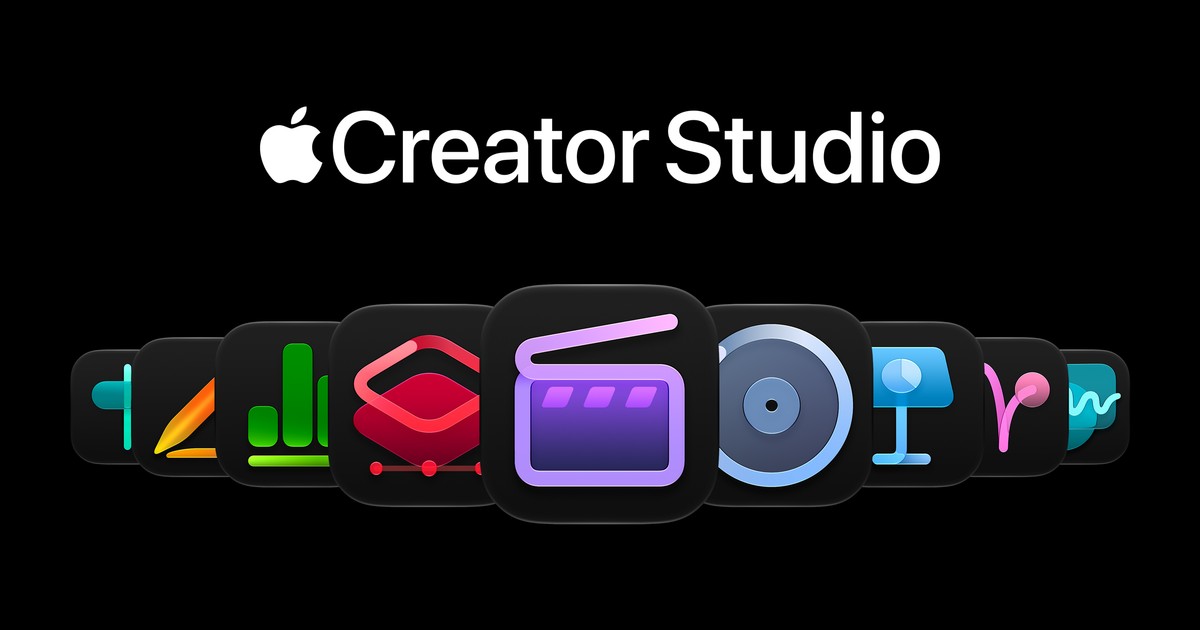
Apple Creator Studio adds AI assistants built on Apple models and OpenAI to Logic Pro, Keynote, Pages and Numbers, plus MCP support so external agents can edit iWork documents

On October 27 Apple announced a major Apple Creator Studio update: Logic Pro for Mac plus Keynote, Pages and Numbers gain beta intelligent assistants that Apple says are powered by a combination of Apple-built models and OpenAI and understand document context. Keynote, Pages and Numbers also add Model Context Protocol (MCP) support, letting external AI agents read content, make edits and run automated actions inside the apps. Pixelmator Pro adds natural-language Generate Fill, and Keynote introduces the open JSON-based .keyx format. The update ships free to existing subscribers on the App Store in November; pricing stays $12.99 per month or $129 per year.

Apple Creator Studio adds AI assistants built on Apple models and OpenAI to Logic Pro, Keynote, Pages and Numbers, plus MCP support so external agents can edit iWork documents

Key Takeaways

  • Logic Pro for Mac, Keynote, Pages and Numbers gain beta assistants that Apple says run on a combination of Apple-built models and OpenAI
  • Keynote, Pages and Numbers support MCP so external AI agents can read content, edit and automate actions (requires macOS 27 or later)
  • Keynote adds the open JSON-based Keynote Interchange Format (.keyx), designed to be readable by external tools and AI agents
  • Assistants are U.S. English only and need an Apple Intelligence-capable device on iOS, iPadOS or macOS 27; free update for subscribers in November
  • Pricing unchanged at $12.99 per month or $129 per year, $2.99 per month for education
Read full story

Apple ships 27.2 updates: Siri AI adds French, Japanese, Korean, Portuguese and Spanish, and can now recall past conversations

On Oct 26 Apple released iOS, iPadOS, macOS, watchOS and visionOS 27.2, and Siri AI (beta), the assistant rebuilt on Apple Intelligence, now supports French, Japanese, Korean, Portuguese and Spanish in addition to English. Apple says Traditional Chinese, Norwegian, Turkish and Vietnamese will follow by the end of the year. Per the iOS 27.2 release notes, Siri AI can now recall past conversations and draw on more sources such as photos in Messages, Calendar attendees and voicemails. Siri AI is still unavailable in the EU on iOS, iPadOS and watchOS and in mainland China, and server-side features have daily usage limits; Apple says expanded access will be offered for a fee in the future.

Apple ships 27.2 updates: Siri AI adds French, Japanese, Korean, Portuguese and Spanish, and can now recall past conversations

Key Takeaways

  • Languages: Siri AI grows from English-only to 6 languages, adding French, Japanese, Korean, Portuguese and Spanish; Apple says Traditional Chinese, Norwegian, Turkish and Vietnamese arrive by year end
  • 5 platforms: iOS, iPadOS, macOS, watchOS and visionOS 27.2 shipped the same day, with Siri AI still labeled beta
  • New abilities (per iOS 27.2 release notes): recall of past conversations, more sources including photos in Messages, Calendar attendees and voicemails, plus one Excluded Apps setting
  • Limits: unavailable on iOS/iPadOS/watchOS in the EU, for mainland China accounts and for users under 13; server-side features have daily caps, and Apple says paid expanded access is coming
  • Devices: Apple Intelligence hardware such as iPhone 15 Pro and later and M1-or-later iPad and Mac, with device and Siri language set to the same supported language
Read full story
Linked Models & Agents:
⚡ Apple Intelligence⚡ AFM 3🤖 Siri AI🌐 Apple
ADSponsored

Walmart opens up to AI shopping agents: an MCP-based Agent Gateway enters developer beta, and Agent Profiles with spending limits such as $50, $100 or $200 arrive next month

On October 21 Walmart announced Agent Profiles, the Walmart Agent Gateway and terms for AI agents. The Gateway lets agents search and buy across Walmart and Sam's Club over MCP, starting with a beta for companies and developers. Agent Profiles, due next month, let shoppers authorize each agent separately, see its orders apart from their own, set a spending limit or approve every purchase, and revoke access at any time. Agents never receive payment-card data and are blocked if they break the terms. TechCrunch reports Amazon is moving the other way and blocking third-party shopping agents.

Walmart opens up to AI shopping agents: an MCP-based Agent Gateway enters developer beta, and Agent Profiles with spending limits such as $50, $100 or $200 arrive next month

Key Takeaways

  • Access: the Walmart Agent Gateway uses MCP (Model Context Protocol), opening first as a beta for companies and developers, instead of agents clicking through the website in a browser
  • Agent Profiles arrive next month: one profile per agent, orders listed separately, spending limits such as $50, $100 or $200 (Walmart's examples) or approval for every purchase
  • Terms: purchases need customer approval by default, agents never get payment-card data or change payment methods, see only the data the task needs, and are blocked if they break the rules
  • Pricing (vendor statement): agents see the same prices a person sees on Walmart.com; per Reuters no Walmart+ membership is required
  • Walmart already integrates with Muse, ChatGPT, Gemini and others for conversational shopping; TechCrunch reports Amazon is blocking third-party shopping agents
Read full story

Vercel open-sources durable-harness: Claude Code, Codex, OpenCode and Pi agents resume from a durable log after crashes instead of starting over

On Oct 20, Vercel released durable-harness, an open-source package (Apache 2.0, npm 0.0.1-beta.6, marked experimental). It adds durability from the outside to existing coding-agent harnesses such as Pi, OpenCode, Codex and Claude Code: every model and tool call is logged before and after it runs in a Workflow SDK World, and if a function times out or crashes, a queue hands the turn to a new function that resumes from the log, so finished model calls are not billed twice. It runs on Vercel, on local files, or on self-hosted Postgres and other backends.

Vercel open-sources durable-harness: Claude Code, Codex, OpenCode and Pi agents resume from a durable log after crashes instead of starting over

Key Takeaways

  • Supports 5 harnesses: Pi, OpenCode, Codex, Claude Code and libfx's fx (eve and fx are already durable on their own)
  • Mechanism: an intent is recorded before each model or tool call and the outcome after it; each turn is backstopped by a queue message so a new function resumes from the log
  • Finished model calls are read back from the log, so Vercel says you never pay twice for the same call's tokens; only tools marked replay: 'safe' are rerun
  • Swappable backends: Vercel World, local files, Postgres, plus MongoDB, Redis and Turso; two environment variables move it to Postgres
  • Status: Apache 2.0, npm 0.0.1-beta.6, and the README marks it experimental with an API that may change
Read full story

Ex-NVIDIA team Dream Labs exits stealth with a $90M seed and Dream-1, a robot foundation model that zero-shot controls unseen bimanual robots via a public API from $3/hour

On October 19 Dream Labs came out of stealth with a $90M seed round and opened a public API for Dream-1. Dream-1 is a World Action Model (WAM) that learns to predict video and actions together. The company says it can zero-shot control bimanual parallel-gripper robots without any demonstrations from that robot, and it ran 27 unseen robots in simulation, including the 18-year-old PR2. Pricing is $3/hour for Dream-1 and $2/hour for Dream-1-flash. In an independent Robocurve evaluation, Dream-1 scored 59 on RoboDojo-RC Tier 1 versus 48 for the previous best. The company stresses it is a research beta not validated for safety-critical use.

Ex-NVIDIA team Dream Labs exits stealth with a $90M seed and Dream-1, a robot foundation model that zero-shot controls unseen bimanual robots via a public API from $3/hour

Key Takeaways

  • Funding and team: $90M seed; the founders introduced World Action Models in the DreamZero paper in February 2026 while at NVIDIA.
  • Pricing: $3/hour for Dream-1, $2/hour for Dream-1-flash; each call returns 1.6 seconds of actions, about 2,250 calls per hour, roughly $0.0013 per call (company figures).
  • Generalization: zero-shot control of 27 unseen bimanual robots in simulation (including PR2); beta testers at 12 sites in 8 countries ran real-robot tasks.
  • Benchmark: Robocurve's independent eval gives 59 on RoboDojo-RC Tier 1 (previous best 48), 16x lower cost per attempt than Gemini 4 Argon and 1.7x faster than GPT-6 Astra; all 120 runs are public.
  • Limits: it predicts end-effector poses and relies on each robot's IK solver; robots far from its training can be adapted with the FaaS fine-tuning service using a little of their own data.
Read full story
Linked Models & Agents:
⚡ Dream-1⚡ Dream-1-flash⚡ DreamZero🌐 Dream Labs🌐 Robocurve🌐 NVIDIA

AWS announces TorchNeuron: PyTorch runs natively on Trainium, open-sourcing under Apache 2.0 on October 20

On October 19 Amazon announced TorchNeuron, which uses PyTorch's standard PrivateUse1 device-backend mechanism to register Trainium as a native "neuron" device, with eager mode, torch.compile and native distributed APIs such as FSDP, DTensor and DDP on Trn2 and Trn3. Amazon says existing PyTorch code runs with a single device configuration change, and it will be open-sourced under Apache 2.0 at PyTorch Conference North America on October 20. The official docs still list it as a closed beta for now.

AWS announces TorchNeuron: PyTorch runs natively on Trainium, open-sourcing under Apache 2.0 on October 20

Key Takeaways

  • Open-source release: October 20 at PyTorch Conference North America, Apache 2.0 license (per Amazon).
  • Hardware: Trainium2 and Trainium3; registers as the neuron device via PrivateUse1, with eager mode and torch.compile(backend="neuron").
  • Migration: Amazon markets it as one configuration change with no rewrite; the docs list .to("cuda") to .to("neuron") as the minimum, and tensor parallelism also needs sharding set by NeuronCore count.
  • PyTorch 2.9 is the last PyTorch/XLA-based release; from PyTorch 2.10 Neuron moves to TorchNeuron, so older scripts need updates.
  • Quality and ecosystem: Amazon says every build is tested against hundreds of thousands of models, TorchTitan is integrated and Hugging Face tools support Trainium natively; no performance benchmarks were published.
Read full story

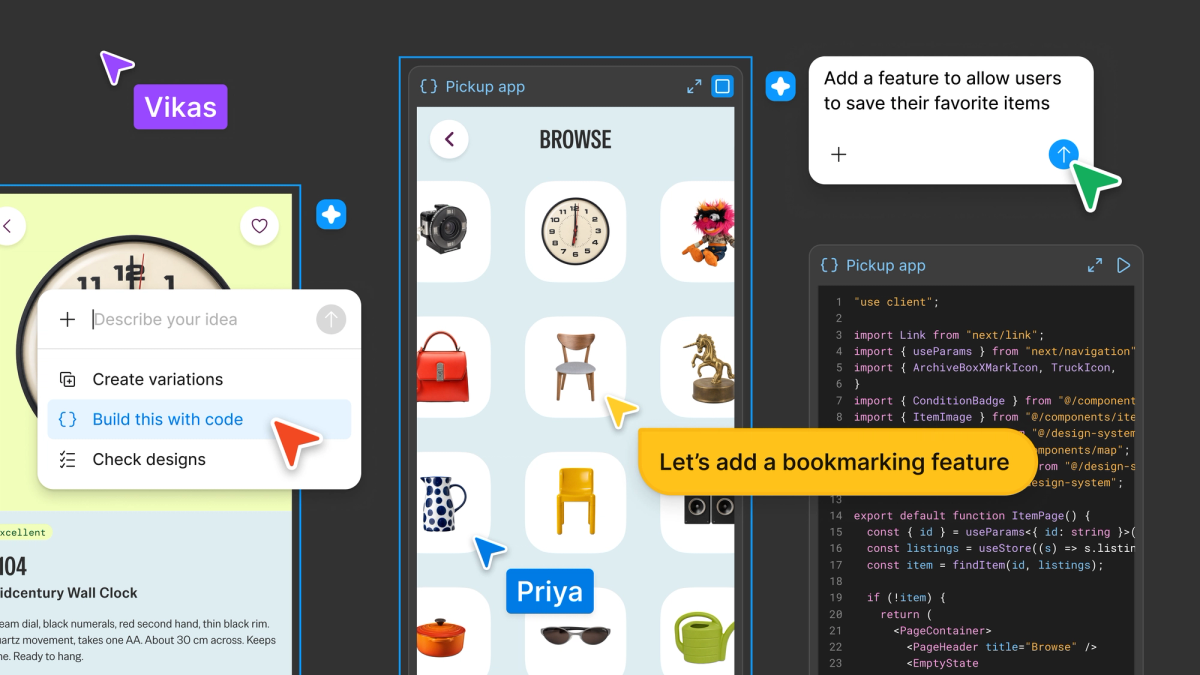
Figma Config India: Code Layers and Specs enter open beta, and agents can read and write specs and code layers through the Figma MCP server

At Config India on 2026-10-15 Figma launched agent-oriented features: Code Layers (running code on the canvas) in open beta on all plans, Specs (collaborative Markdown spec containers) in open beta on paid plans, Guidelines in open beta and Code Sources in closed beta. The Figma MCP server can now generate code layers and read/write Specs, with 20 new MCP partner integrations including OpenCode and JetBrains Junie.

Figma Config India: Code Layers and Specs enter open beta, and agents can read and write specs and code layers through the Figma MCP server

Key Takeaways

  • Code Layers: open beta on all plans, created from designs, local folders, GitHub, MCP or Chrome-extension page capture; uses AI credits, free on paid plans through 2026-11-04
  • Specs: open beta on Professional/Organization/Enterprise across web, desktop and mobile; pasting a Spec link into a coding agent carries Markdown, frame references, code layers and Code Connect snippets
  • MCP: the figma-spec skill lets agents read, create and update Specs; use_figma canvas writes remain a free beta with up to 20 KB output per call
  • Design systems: Guidelines open beta and Code Sources closed beta (import from a GitHub repo or npm package) on paid plans; Payload lands in Figma Make, with downloads up 6x in 12 months per Figma
  • Ecosystem: 20 new MCP partner integrations including OpenCode, Dia, JetBrains Junie and Meta Muse; the Figma agent is generally available
Read full story