Charlie Holtz of Conductor announced on X on November 4 (18:18 UTC) that Conductor is joining Meta, where the team will build "the next interface" with Nat Friedman and Alexandr Wang at Meta Superintelligence Labs (MSL). The official announcement sets a timeline: from November 4 there are no new sign-ups and Pro features are free for existing users; on November 13 Conductor Cloud goes read-only and active subscribers get refunds; on November 20 Cloud shuts down and cloud data deletion begins; the local app keeps getting new models and critical fixes until early 2027. Terms were not disclosed.
Zoom
Key Takeaways
Conductor launched in July 2025 as a tool for running a team of coding agents at once (it runs first-party agents such as Claude Code, Codex, Cursor and OpenCode under the hood), and its site claims 100k+ builders.
The team joins Meta Superintelligence Labs to work with Nat Friedman and Alexandr Wang; the official word on the new product is only "early next year", with no details.
Key dates: sign-ups and downloads stop on Nov 4, Cloud goes read-only with refunds on Nov 13, Cloud shuts down and data deletion starts on Nov 20, and the local app is maintained until early 2027.
To migrate, right-click a cloud workspace and choose Transfer to local, or export everything via Settings, Account, Export data.
Terms were not disclosed; on the same day HumanLayer announced it is joining Factory, a sign the coding-agent tooling market is consolidating quickly.
Hugging Face, BitRobot, the Singapore Embodied AI Centre, NUS and others launched RoboColosseum on November 4, a distributed real-robot evaluation framework covering four embodiments: SO-101, Franka, Bimanual-YAM and the Unitree G1 humanoid. The first study ran 5,699 blinded pairwise comparisons at 124 sites across 5 VLA policies and 3 frontier models. Claude Opus 5.5 and GPT-6 Astra beat their VLA counterparts on average task progress by 12.1 and 11.0 points, while Grok 4.7 trailed by 7.5. All rollouts are open on Hugging Face, and the project pledges 10,000 free evaluation hours to academic labs.
Zoom
Key Takeaways
Two tracks: the Open Track runs blinded zero-shot pairwise comparisons, and the Fine-tune Track gives each VLA the same 100 demonstrations per task across 20 tasks.
The VLAs tested are GR00T N1.7, pi0.5, MolmoAct2, G0.5 and LingBot-VLA v2; the frontier models are GPT-6 Astra, Claude Opus 5.5 and Grok 4.7.
After fine-tuning, GR00T N1.7 leads on SO-101 and pi0.5 leads on Franka and Bimanual-YAM; on the G1 humanoid no policy completes any task, with average progress of 13.3% to 23.2%.
Rankings agree only weakly across robots (Kendall W = 0.24), and zero-shot rankings poorly predict rankings after fine-tuning.
The official Kimi account @Kimi_Moonshot announced the Kimi K3.1 Pro model weights at 16:00 UTC on November 4; the moonshotai/Kimi-K3.1-Pro repository is public and not gated. The model card describes a natively multimodal MoE with 2.8T total and 104B active parameters and a 1M-token context, shipped as MXFP4 weights from quantization-aware training, about 1.56TB in total; vLLM, SGLang and TokenSpeed are the recommended engines. The license allows free use and modification, but Model-as-a-Service businesses with over $20M in annual revenue need a separate agreement.
Zoom
Key Takeaways
Architecture: 93 layers (1 dense), 69 KDA plus 24 Gated DSA attention layers, 896 experts with 16 selected per token plus 2 shared experts, and a 401M MoonViT-V2 vision encoder.
Compared with K3, the full-attention Gated MLA layers are replaced with Gated DeepSeek Sparse Attention for more efficient long-context modeling.
Vendor-reported scores on the model card: Terminal-Bench 4.0 65.7 (Opus 5.5 66.4), SWE Marathon v1.1 51.7 (Opus 5.5 46.3), HLE-Full with tools 70.0 and BrowseComp 92.1; ProgramBench 31.5 trails Opus 5.5 at 65.0.
License: a Model-as-a-Service business with over $20M revenue in any 12 months needs a separate agreement with Moonshot, and products above 100M monthly users or $20M monthly revenue must prominently display "Kimi K3.1-Pro"; internal use is exempt from both.
On the evening of November 2, SenseTime released the official version of SenseNova 6.8 Flash, a multimodal agent model with two main upgrades. First, long-term memory and proactive interaction: it keeps user goals and constraints across tasks and sessions and flags affected items when information changes. Second, design generation across Web, SVG, Three.js, Blender, animated PPT and motion posters, with Figma integration. It is live in SenseNova Studio, the Raccoon assistant and the SenseNova Token Plan; the official X account says the Token Plan offers a free trial of 1,500 API requests every 5 hours. SenseTime says it beats some international frontier models on agent collaboration, data analysis and presentation generation, but the announcement lists no specific scores.
Zoom
Key Takeaways
The official release landed on the evening of November 2, positioned as a multimodal agent model for office collaboration and design delivery
Long-term memory plus proactive interaction: it remembers goals, constraints and preferences across sessions and suggests changes when related information shifts (demos ran on an internal Raccoon build)
Design output spans Web, SVG, Three.js, Blender, animated PPT and motion posters, producing editable PPTX files and Blender projects, with Figma integration
Available in SenseNova Studio, the Raccoon assistant and the SenseNova Token Plan; the official X post cites 1,500 free API requests every 5 hours
SenseTime only says it beats some international frontier models on agent collaboration, data analysis and presentation generation; no scores were published and there is no independent evaluation yet
On November 3 (US Pacific time), Vercel launched Security Review in public beta. It is a new Vercel Agent capability alongside Code Review and Investigation: once enabled, every push to connected GitHub repositories triggers a diff-only vulnerability review that finishes in seconds. Findings land in the Security dashboard, PR comments and the CLI, and can be fixed with one click by Vercel Agent or pulled into your own coding agent via vercel security vulnerabilities. It is available to Pro and Enterprise teams, and reviews are free until November 10.
Zoom
Key Takeaways
Trigger: every GitHub push (including direct pushes to production) is reviewed automatically; only the diff is scanned, which Vercel says finishes in seconds, so it can run on every preview and production deployment
Beyond pattern matching: the agent traces how changed code is reached, checks existing protections and rechecks each finding, which Vercel says catches logic flaws such as missing authorization checks
Teams can write security policies in plain language, scoped to projects or the whole team, and manage them with vercel security policy
Pricing: Vercel Agent rate, model tokens at provider cost with no markup, plus $0.25 per million tokens; reviews are free until November 10, 2026, while Agent fixes are billed
Availability: public beta for Pro and Enterprise teams; Vercel has not published detection-rate or false-positive benchmarks
Indie developer Pieter Levels (@levelsio) said on X on November 2 that he used Claude Code to decompile the engine of the free Battlefield 1942 demo, port it to C, compile it to WebAssembly and host it at bf1942.pieter.com, where it runs in the browser with online co-op on the Tobruk map. He said the job took about 1 million output tokens, roughly $100 at API prices, while he pays for a $100-a-month Claude subscription. His two main posts drew about 2,200 likes and 340,000 views and reached X trending. These are the author's own claims and community discussion, not independently verified.
Zoom
Key Takeaways
Author's account: Claude Code decompiled the Battlefield 1942 demo engine, which was ported to C and compiled to WebAssembly to run in the browser.
The live build at bf1942.pieter.com opens directly, is labeled non-commercial and unofficial, and offers online co-op on Tobruk with no install.
Cost: about 1 million output tokens by the author's count, roughly $100 at API prices; he actually pays for a $100-a-month Claude subscription.
He said it was much harder than his earlier Quake and DOOM ports, whose engine source code id Software released long ago.
Reach: the first post had about 1,100 likes and 230,000 views, the launch post about 1,100 likes and 107,000 views; testers are already reporting bugs.
Indie developer Pieter Levels (@levelsio) posted a roughly 13.5-minute walk-and-talk video on X on November 1, following up his October 11 "software is dead" post. He says AI has finally hit programmers themselves, and the identity and sense of achievement that came from building paid products is fading; his own businesses and many friends' are flat or shrinking, and competition has exploded because anyone can now ship a landing page or app. He sees the remaining moats as community, audience, content and slower-moving enterprise B2B, and has already made Nomad List free as nomads.com. The post had about 2,478 likes and 205K views. These are personal views, not industry data.
Zoom
Key Takeaways
Original post: @levelsio video, Nov 1, 10:44 UTC, about 2,478 likes, 2,441 bookmarks, 204 replies and 205K views at fetch time
It quotes his October 11 "Software is dead" post (about 5,747 likes, 1.94M views); the video expands on what is left to do when AI can build everything
His GTA cheat-code analogy: every new model makes building faster and easier, but "where's the achievement?"; he says he is not pessimistic, just looking for a new source of achievement
His own observations: his and many friends' businesses are flat or shrinking, the ones still growing often rely on AI or VC sponsorships, and big labs building legal and medical products will absorb many small businesses
Nomad List is now free as nomads.com; he says sign-ups went from about 200 when paid to about 3,000 (period not stated), with revenue now from sponsorship and a $1 anti-spam membership
A widely discussed idea on X: on Oct 31 Stripe CEO Patrick Collison (@patrickc) posted that he is building an "improvements" feature into all of his personal vibecoded applications, a freeform text input hooked up to an agent that implements whatever is submitted. He says another person who uses one of the apps has already implemented 150 improvements in a few days, and he floats the name "liquid software" for the pattern. He is also candid that he does not know whether it scales: whether it becomes unmaintainable, how collaborative software works this way, and whether it can be secure and reliable. The post drew about 2,130 likes, 1,900 bookmarks and 147K views. This is a write-up of a personal opinion and the discussion around it, not an official Stripe product announcement.
Zoom
Key Takeaways
Buzz: about 2,133 likes, 1,896 bookmarks, 217 replies, 76 quotes and 147K views (public X metrics as of Nov 1, 12:15 SGT)
Pattern: every personal app gets a freeform text box wired to an agent that yolo implements whatever is submitted, which makes sanding a small rough edge almost free
Data point: Collison says another person using one of his apps implemented 150 improvements in a few days (self-reported; the app itself is not public)
His own open questions: does it become unmaintainable, can model gains outpace feature appetite, how does collaborative software work, and can it be secure and reliable
Debate: supporters say it will become standard and could even ship bespoke per-user features behind flags; skeptics note conflicts start once a second user asks for the opposite change, and maintenance and security remain unsolved; Collison himself compares it to the user-modifiable visions of Lisp machines, Smalltalk and HyperCard
HarnessPro (arXiv 2610.26770, submitted Oct 19 and revised Oct 20), from Tsinghua University, Z.AI (Zhipu) and collaborators, is a label-free way to improve an agent harness: specialized agents diagnose execution traces, rewrite instructions and runtime policies, score candidates with LLM-generated tests, and keep Lite, Medium and Heavy harnesses along the performance-cost frontier. Per the paper, with GPT-5.5 and Codex the Heavy mode reaches 80.8% on Terminal-Bench 2, 4.5 points above the prior RHO method, while cost per task drops from $1.09 to $0.72. The code is MIT-licensed and drew wider media coverage this week, including from Pandaily.
Zoom
Key Takeaways
Terminal-Bench 2 (GPT-5.5 with Codex, mean of 3 runs): Heavy reaches 80.8% at $0.72 per task, versus RHO at 76.3% and $1.09, a 33.9% cost cut (paper figures, arXiv)
Averaged over three benchmarks: +2.0 points pass rate and -26.1% cost per task versus RHO, across Terminal-Bench 2, SWE-Bench Pro and ProgramBench
Holds across models: with GLM-5.2 and Claude Code on Terminal-Bench 2, Heavy hits 81.4% at $0.62, versus vanilla at 74.6% and $0.92 and RHO at 78.0% and $1.00
Budget modes: Medium matches RHO at 76.3% on Terminal-Bench 2 for only $0.56 per task; Lite gets 72.9% at $0.43
Cheap to train: only 10 training tasks per benchmark and 3 to 4 evolution epochs, tested on 59, 100 and 100 held-out tasks; the three harness tiers are MIT-licensed on GitHub
On Oct 29 Google said Gemini Notebook (formerly NotebookLM) now gives students free access to hundreds of textbooks from U.S. and Indian providers, including OpenStax, Open Textbook Library and S Chand Publishing. Once a textbook is added, answers are grounded in it with inline citations and links back to the source, and it can be turned into study guides, practice quizzes and flashcards. The catalog sits under Add sources, then Textbooks.
Zoom
Key Takeaways
Google's blog says hundreds of textbooks from U.S. and Indian providers are available at no charge; Google VP Josh Woodward put the number at over 700 in his own X post
Launch providers include OpenStax, Open Textbook Library and S Chand Publishing
Once a textbook is added, every answer is grounded in it, with inline citations and direct links back to the source
It extends Expert Intelligence, launched Aug 27 with more than 100,000 purchasable Google Play Books titles
The official @Gemini_Notebook post had about 185K views, over 5,000 likes and over 2,800 bookmarks when this was written
Anthropic is extending its AI for Science program, launched in May 2025, from individual researchers to institutions: six science funders (including the US NSF, Simons, Sloan and Schmidt Sciences) will distribute Claude credits to researchers, six institutions (such as STScI, Sanger, the Crick and EMBL) will use credits in-house, and six public-good research projects (such as gnomAD, FlyWire and the Lean math library Tau Ceti) get direct support. Anthropic did not disclose the total value of the credits.
Zoom
Key Takeaways
Anthropic names 20 partners in three groups: funders and societies, research institutions, and specific research projects (per Anthropic)
Funders include the roughly $9B-a-year US NSF, Simons, Sloan, Schmidt Sciences and CAS (American Chemical Society), which will pass Claude credits on to researchers
Institutions include STScI, which runs science operations for Hubble and Webb, plus Wellcome Sanger, the Francis Crick Institute, EMBL and Gladstone
Projects include gnomAD (DNA data from 800,000+ people), the FlyWire fruit-fly connectome and Tau Ceti, a Lean autoformalized math library
Total credit value, grant sizes and how to apply were not disclosed; Anthropic earlier launched a discounted Team plan for scientists
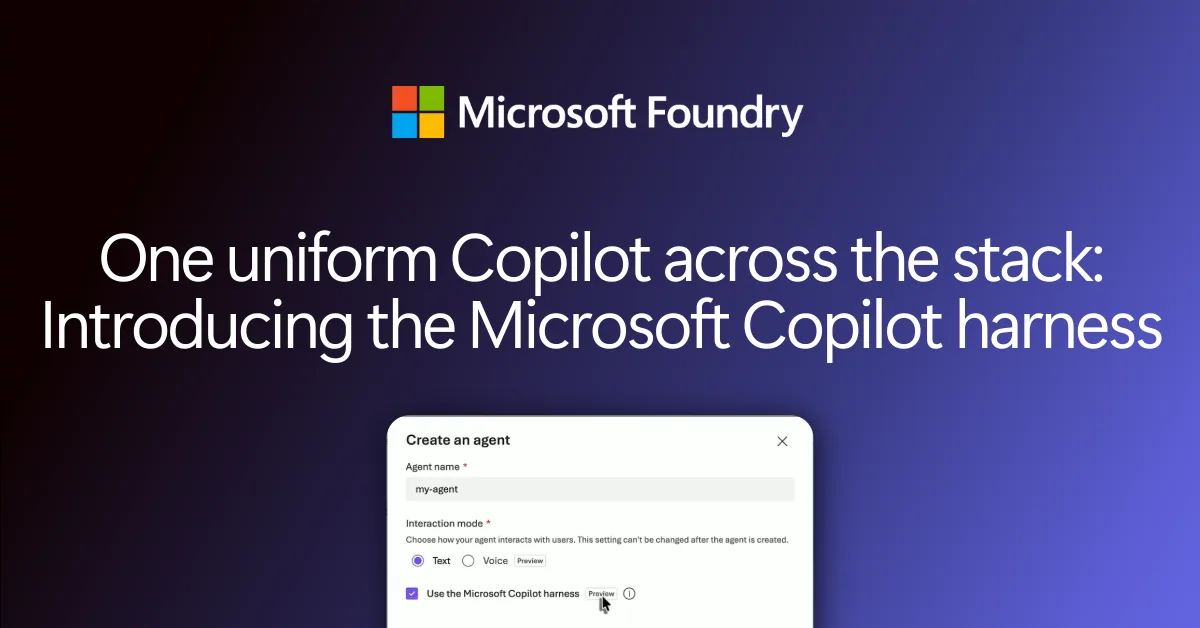
During GitHub Universe on Oct 28, Microsoft put the Microsoft Copilot harness, the shared agent execution layer behind Copilot Code, Copilot Studio, the GitHub Copilot app, the CLI and VS Code, into Foundry Agent Service as a public preview. Microsoft runs the agent loop and sandbox while developers supply instructions, skills, tools and model choice; Microsoft says it works across 20+ frontier models plus bring-your-own-key. Long-running resilience for hosted agents also reached GA. Harness runtime usage is free until Dec 1.
Zoom
Key Takeaways
Microsoft says the harness spans 20+ frontier models plus bring-your-own-key, so you can swap models without rewriting orchestration (official blog)
Preview building blocks: reusable skills, Foundry and MCP tools with explicit auth and approvals, file and code execution with built-in subagent delegation, and source-controlled agent definitions
Pricing: harness runtime is free until Dec 1; after that sandbox compute is USD 0.0994 per vCPU-hour and 0.0118 per GiB-hour, with model inference billed separately (Foundry blog)
Long-running resilience for hosted agents went GA the same week: interrupted work restarts with its original input, and your app saves checkpoints
Limits: you pick the harness only when creating a new agent; existing agents are unchanged and switching later is not supported yet
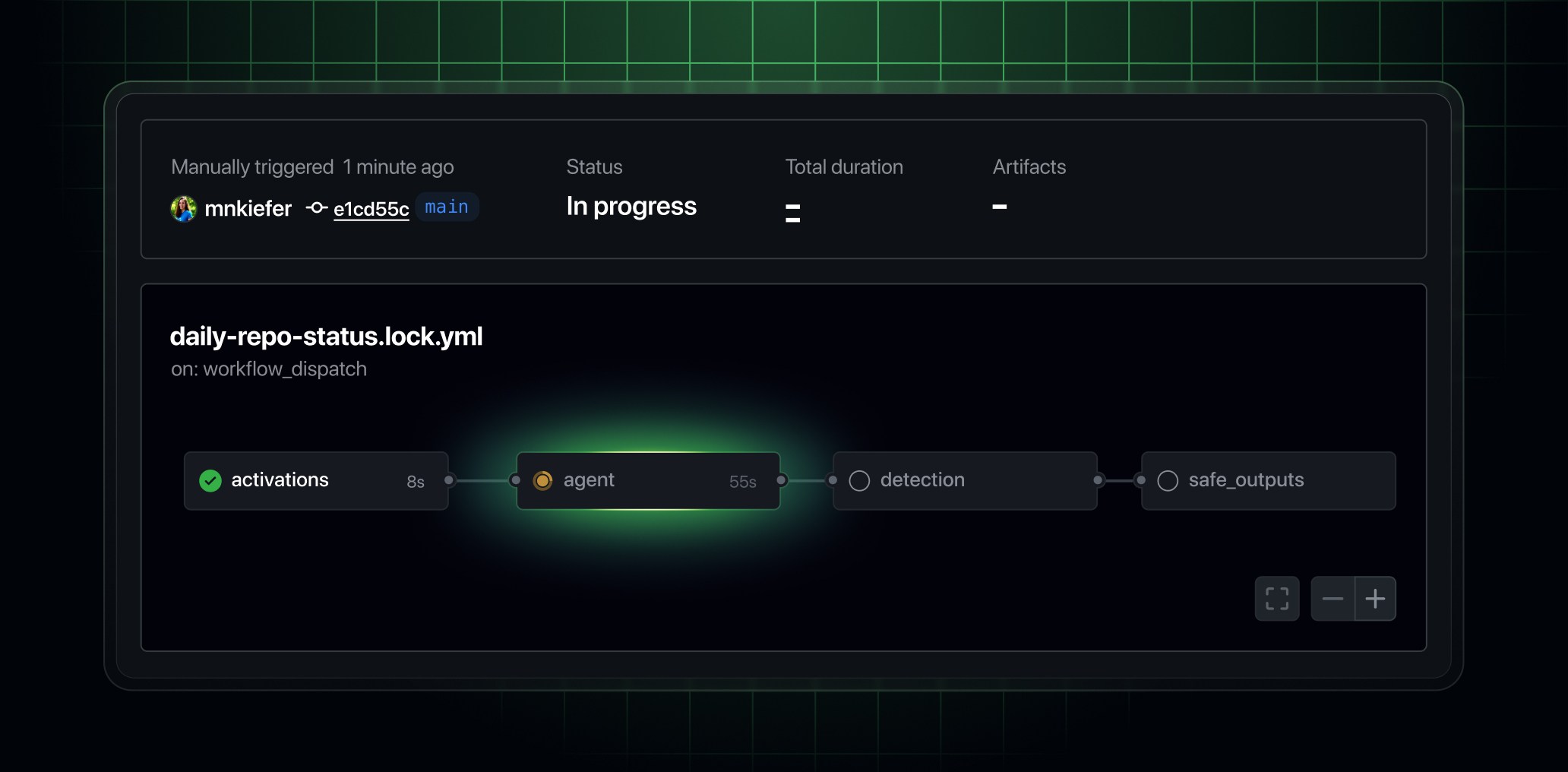
At Universe 2026 on Oct 28, GitHub made GitHub Agentic Workflows, an open source GitHub Next project, generally available on GitHub Free, Team and Enterprise. Developers describe tasks such as issue triage, CI failure analysis, documentation updates and test writing in natural-language Markdown, and gh aw compiles them into standard Actions YAML run by Copilot or a coding agent of their choice. GA adds self-hosted ARC runners with Docker-in-Docker, a non-experimental gh aw forecast cost estimate, per-workflow model providers and model routing, and Cloud Hypervisor or NVX micro-VM isolation.
Zoom
Key Takeaways
Availability: GitHub Free, Team and Enterprise on github.com; using the default Copilot CLI engine requires a Copilot license
How it works: requirements in Markdown, compiled to standard Actions YAML that reuses existing runner groups and policies; run with Copilot or your own coding agent
Safe defaults: read-only permissions, a sandboxed container behind the Agent Workflow Firewall, safe-outputs validation, and a threat detection job before changes are applied
New at GA: self-hosted ARC runners with Docker-in-Docker, gh aw forecast out of experimental (with threat detection credits and monthly ranges), per-workflow model providers, model routing, micro-VM isolation and cross-repo enclaves
Customer story (Accenture's figures): one lead saved about 29 hours a week, AI authors 91% of the team's commits, and production errors fell from about 11,000 a day to under 1,000
On Oct 28, GitLab CEO Bill Staples announced in a blog post and on X that new and existing customers can request free credits to run a security sprint with Claude Mythos alongside GitLab Orbit, Secrets Manager and Duo Agent Platform. The core capability is the Business Logic Security Analyzer, the first GitLab feature to support Anthropic's Claude Mythos 5.1. It reads the whole repository, infers what each endpoint should enforce, and flags authorization and mass-assignment flaws that pattern-based SAST misses. The analyzer has been in early access for a small group of GitLab.com Ultimate customers since Oct 20.
Zoom
Key Takeaways
The Business Logic Security Analyzer is the first GitLab feature to support Claude Mythos 5.1; it also supports Claude Opus 5.5, Sonnet 5.5, Sonnet 5 and Sonnet 4.6, all as GitLab-managed models via GitLab's AI gateway
It starts with three flaw classes: broken object-level authorization (BOLA), missing or improper authorization, and mass assignment
Scans can run on the whole repository from Duo Chat or the API, or automatically on each merge request after its pipeline passes; findings land in the Vulnerability Report and MR security widget as SAST results
Early access is limited to a small group of GitLab.com Ultimate customers; each scan consumes GitLab Credits, with cost scaling with the application's attack surface
New on Oct 28: a security sprint offer where qualifying teams can request free credits for Ultimate, Duo Agent Platform, Orbit and Secrets Manager
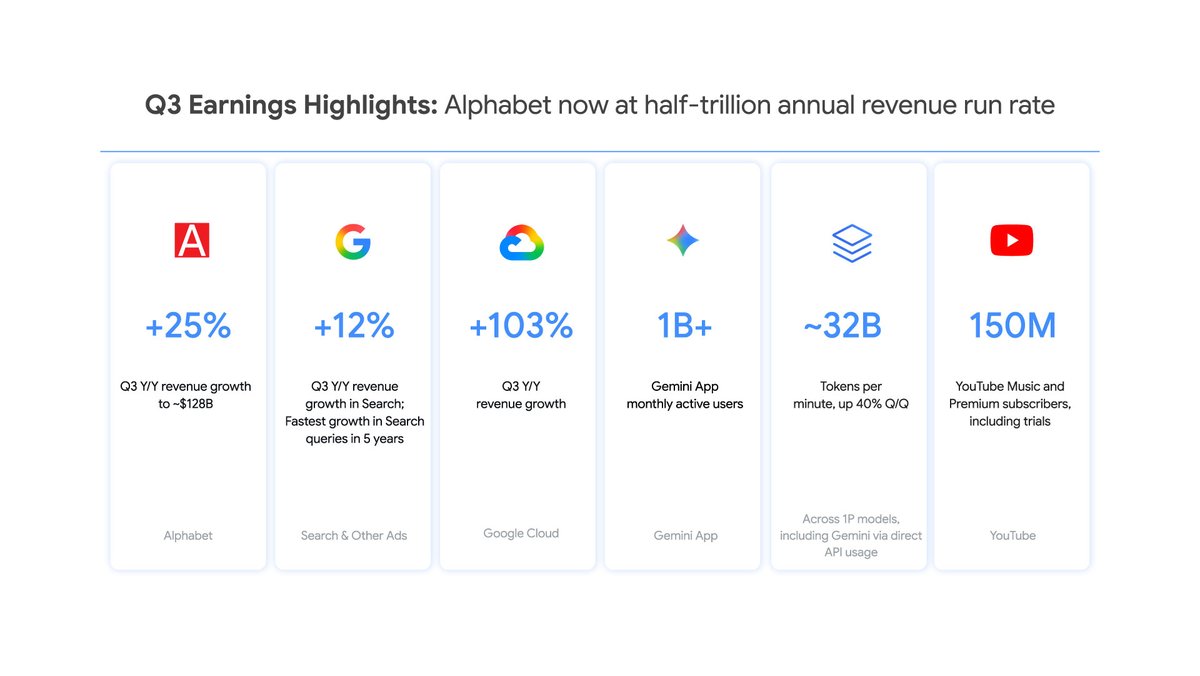
After the US market close on Oct 28, Alphabet reported Q3 2026 results: revenue rose 25% to $127.6B, and Google Cloud revenue more than doubled, up 103% to $30.7B, which the company attributes to enterprise AI infrastructure, AI solutions and TPU system sales. In the release and on X, Sundar Pichai said first-party model APIs now process nearly 32B tokens per minute, more than four times a year ago, and that the Gemini app has reached one billion users. The cost: Q3 capital expenditures of $51.4B and free cash flow of negative $9.1B.
Zoom
Key Takeaways
Revenue of $127.58B, up 25% year over year and the 13th straight quarter of double-digit growth; Pichai says Alphabet is on a $500B annual revenue run rate
Google Cloud revenue of $30.71B versus $15.16B a year ago, up 103%; Cloud operating income of $11.12B versus $3.59B
First-party model APIs process nearly 32B tokens per minute, more than 4x a year ago; Pichai's X post puts quarter-over-quarter growth at 40%
The Gemini app reached one billion users, which Google calls the fastest-growing product in its history; Search query growth is the highest in five years
Q3 capex of $51.36B versus $23.95B a year ago, and free cash flow of negative $9.07B, the second negative quarter in a row