
AI Coding Live News

OpenAI Shares Progress on ChatGPT and Codex for Hardware Engineering: GPT-6 Astra Designs a Codex Device in Under a Week, Mazda Joins for Aerodynamics Research

On November 3, OpenAI published "Accelerating engineering for the physical world," describing how its models help with mechanical design, electrical design and simulation. Two employees used GPT-6 Astra to design a device for talking to Codex (enclosure, PCB, firmware and software) in under a week, and a contract manufacturer built a small prototype batch in under a month, though manufacturing readiness still took several rounds of human review. Token usage across OpenAI hardware teams has grown 23-fold since February. On BenchCAD 2.0, a newer internal model averaged 0.875 versus 0.594 for GPT-6 Astra at its highest reasoning setting (OpenAI-reported). OpenAI is also expanding its work with Chip Ganassi Racing and announced a new research collaboration with Mazda.
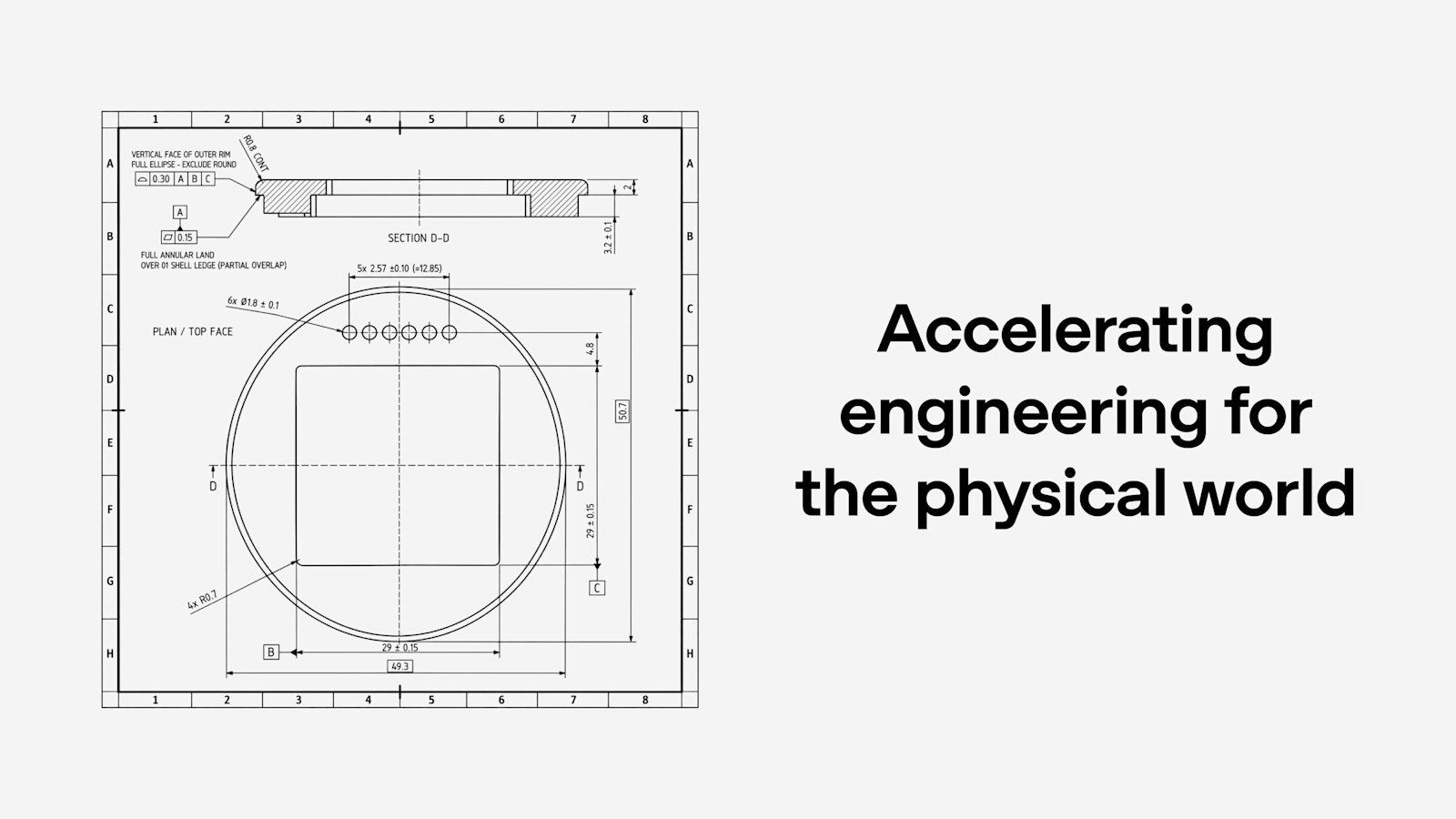
OpenAI Shares Progress on ChatGPT and Codex for Hardware Engineering: GPT-6 Astra Designs a Codex Device in Under a Week, Mazda Joins for Aerodynamics Research

Key Takeaways

  • In a test with no direct human edits, GPT-6 Astra handled the look, enclosure structure, component selection, PCB layout, UI and firmware; two employees finished the design in under a week as a side project, and prototypes came back in under a month, per the OpenAI blog.
  • OpenAI names the gaps: Astra did not consistently account for the manufacturer's production limits, tolerances or assembly details, so manufacturing readiness took several rounds of review.
  • OpenAI hardware and infrastructure teams use Codex and ChatGPT for CAD models, 2D manufacturing drawings, simulation and FEA setup, and design reviews; token usage has grown 23-fold since February (OpenAI-reported).
  • BenchCAD 2.0 (reconstructing 3D parts and assemblies, identifying circuit-board connections): a newer internal model scored 0.875 versus 0.594 for GPT-6 Astra at its highest reasoning setting (OpenAI-reported; the internal model is unnamed and unreleased).
  • Collaborators: Chip Ganassi Racing is testing 3D-scan-to-editable-CAD and 2D drawing workflows; Mazda is working with OpenAI researchers on airflow and structural simulations for vehicle design, with results promised "in the coming months."

Read full story

Anthropic shares early results from Claude in drug development: six partners including BMS, plus its own programs via Mithril Medicine

In an Oct 27 blog post, Anthropic described months of deep research partnerships between its life sciences team and six organizations (BigHat, Bristol Myers Squibb, Divergence Labs, Enveda, Generate Biomedicines and The Column Group), covering hit generation, lead optimization, manufacturing paperwork and clinical trial planning. It also said it acquired the one-person company Mithril Medicine to run its own programs for rare childhood muscular dystrophy. Anthropic stresses the work is mostly preclinical so far.

Anthropic shares early results from Claude in drug development: six partners including BMS, plus its own programs via Mithril Medicine

Key Takeaways

  • Divergence Labs: Claude generated about 35,000 antibody designs in roughly a month, largely autonomously, yielding 3 hits that bind IgE and 20 that dislodge it, 3 of which beat the standard drug at dislodging (vendor-reported)
  • BigHat: about 1,010 variants made and tested in about 10 weeks; the best versions bound over 10x more tightly, the cancer lead stayed in solution 18°C higher, and the other lead clumped over 100x more slowly
  • Enveda: across 1,061 pages of manufacturing documents Claude caught all 11 issues humans found plus 7 they missed, cutting review time 89% (from over 25 hours to under 3)
  • Generate Biomedicines: a CAR-T component designed with Claude Code was about 70% shorter and let immune cells make roughly 10x as many receptors
  • Mithril Medicine acquisition: its founder used Claude to coordinate 11 external labs and went from idea to promising mouse results in under 18 months; human trials could start as soon as late 2028 (official blog)
Read full story

LMBuild: Benchmarking LLM Agents on Generating Buildable and Functional 3D Structures with Physics and Kinematic Constraints

LLM agents have demonstrated striking dexterity in generating intricate 3D geometries, raising expectations for automated industrial design and physical manufacturing. However, producing visually aesthetic 3D meshes is fundamentally distinct from synthesizing objects that can be physically manufactured, assembled, and operate as intended. Contemporary benchmarks evaluate visual fidelity while ignoring physical realizability, joint kinematics, and assembly sequencing. Researchers from UIUC and Microsoft introduce LMBuild (arXiv:2610.04292), a comprehensive benchmark for evaluating LLM agents on generating buildable and functional 3D structures. LMBuild models generated objects as assembled physical systems encompassing discrete part decompositions, mechanical joints, physical materials, and procedural build sequences. Evaluating 30 frontier agent systems, LMBuild discovers that while basic geometric structural soundness is solved by top frontier models, kinematic functional affordance and physical operability remain profound bottlenecks; moreover, providing explicit functional specifications dramatically improves assembly completeness and physical kinematics.

Key Takeaways

  • UIUC and Microsoft present LMBuild, a 64-page benchmark evaluating LLM agents on generating physically buildable, functional 3D assemblies
  • Formalizes structures into part decompositions, kinematic joints, materials, and assembly sequences under four physical evaluation dimensions
  • Benchmarking 30 agent systems reveals that while geometry alignment is solved, physical operability remains difficult, needing functional specifications
Read full story

Anthropic opens Model Hardware Standard preview so agents can safely operate lab and factory equipment

Anthropic kicked off phase one of the Model Hardware Standard (MHS) research preview: a proposed interface so AI agents can safely operate scientific and advanced-manufacturing equipment. The company said MHS currently best covers lab and manufacturing gear, and that many developers are already using Claude Code to drive hardware such as boards and cameras. The research preview is intended to bring those devices under one interface rather than one-off scripts per instrument. For coding-agent vendors, this is a concrete expansion of the agent surface area from repositories, terminals, and browsers onto physical equipment, with safety and discoverability as first-class constraints. Anthropic published a dedicated news post and a collaboration story with HHMI on how the standard began. Teams already letting Claude Code touch cameras or lab controllers are the intended early adopters.

Key Takeaways

  • Coding agents are moving from repos onto lab benches and factory floors; a hardware interface standard is the next substrate.
  • Claude Code is already driving boards and cameras; MHS is the path to one safe interface for those devices.
  • Phase one targets discoverable, safer control of scientific and advanced-manufacturing equipment.
Read full story
ADSponsored

Anthropic Launches Model Hardware Standard (MHS) Research Preview for AI-Operated Lab Equipment

Anthropic opened the first research-preview phase of the Model Hardware Standard (MHS), a shared interface so AI agents can discover and safely operate physical lab and manufacturing equipment.

Key Takeaways

  • Provides standardized machine-interface protocols for AI agents to discover and operate lab and manufacturing equipment;
  • Early partners including Genentech cut hardware integration time from days/weeks down to hours;
  • Open to Claude Code developers working on physical device drivers and instrumentation to expand the standard.
Read full story

Anthropic opens Model Hardware Standard preview for agents that operate lab and factory equipment

Anthropic kicked off phase one of the Model Hardware Standard (MHS) research preview: a standard so AI agents can safely operate scientific and advanced-manufacturing equipment. Bespoke hardware integration that took days or weeks is cut to hours or minutes, with discoverable devices and safer control. Early tests: real-time error handling on a Genentech drug-discovery run, compressing an HHMI Janelia imaging experiment from weeks to a day, and lifting QuEra laser stabilization from 58% to 99.3%. Developers already using Claude Code on boards and cameras are the next devices MHS aims to cover.

Key Takeaways

  • Coding agents are moving from repos onto lab benches and factory floors; a hardware interface standard is the next substrate.
  • Claude Code is already driving boards and cameras; MHS is the path to one safe interface for those devices.
  • The preview is for safety evals and physical-intuition gaps before open-sourcing with industry partners.
Read full story