AI Coding Live News

NVIDIA Donates OpenShell, Its AI Agent Security Runtime, to CNCF as a Sandbox Project: Cedar Policies and an Agent Substrate Integration With Google

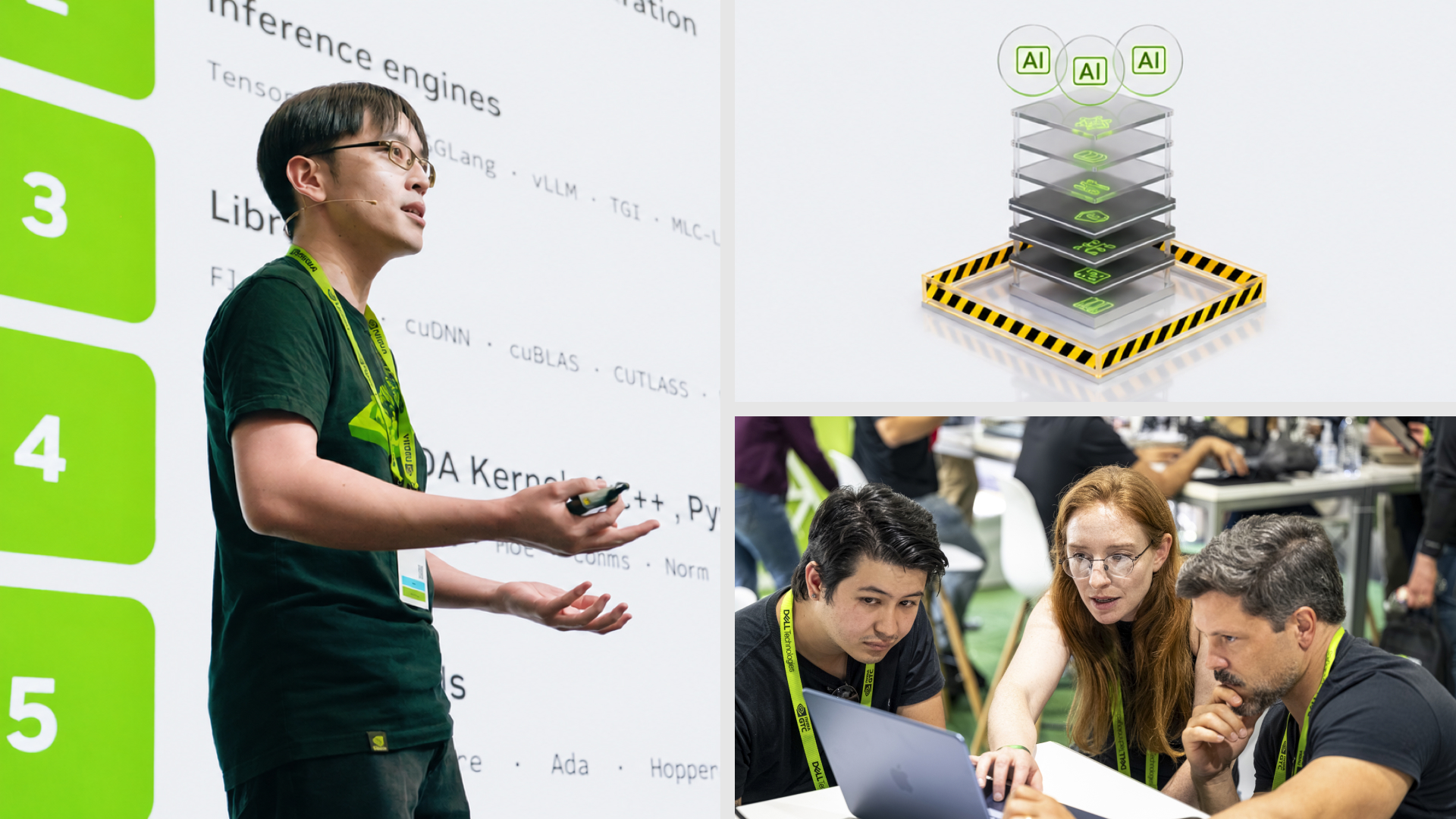
At KubeCon North America on November 10, NVIDIA contributed OpenShell, its open-source security runtime for AI agents, to CNCF as a Sandbox project. OpenShell enforces access to files, networks, credentials, and model endpoints in the infrastructure outside the agent. The project is moving from NVIDIA's GitHub to the neutral ai-openshell organization and is adopting Cedar, another CNCF project, as its policy language. NVIDIA is also contributing to Google-led Agent Substrate and released three open-source Kubernetes components: NVKE, NVKR, and Snapshot. Teams running agents on Kubernetes now get a vendor-neutral permission and isolation layer.
NVIDIA Donates OpenShell, Its AI Agent Security Runtime, to CNCF as a Sandbox Project: Cedar Policies and an Agent Substrate Integration With Google

Key Takeaways

  • Governance: OpenShell joins the CNCF Sandbox after a TOC vote passed on September 26; code moves to the neutral ai-openshell org, and the NVIDIA/OpenShell repo stays in use until the move is done
  • Scale: about 21K GitHub stars and 2,091 forks, written in Rust under Apache-2.0; NVIDIA says hundreds of organizations use it and it has received tens of thousands of contributions in under a year (vendor figures)
  • Policy: it is adopting the CNCF project Cedar as its policy language; NVIDIA, Red Hat, Docker, and Canonical were early core contributors
  • Ecosystem: NVIDIA is contributing to Google-led Agent Substrate, wiring in Dynamo and KAI Scheduler, and working with Google on an OpenShell plus Agent Substrate integration
  • Companion tools: on HGX B300, Snapshot cut Crusoe's GLM-5.3 ready time from about 8 minutes to 31 seconds and Saturn Cloud's vLLM startup from 2-8.5 minutes to 6-34 seconds (partner figures)
Read full story

Meta FAIR Open-Sources e-means, a Drop-In k-means Replacement: Lower Loss in About One-Tenth the Epochs, 10-45x Faster Than Flash-KMeans on GPU, Now in FAISS 1.16.0

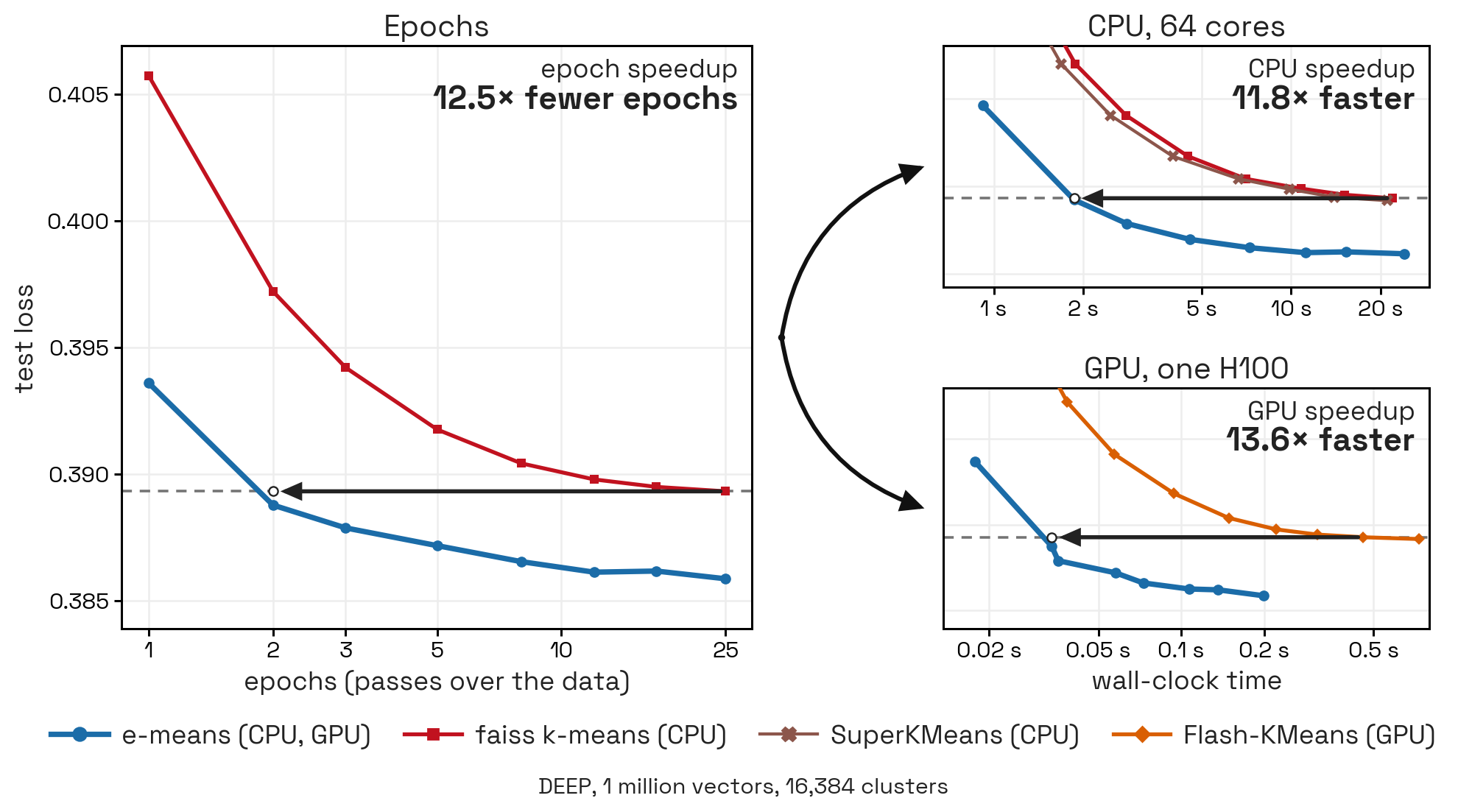
On November 10, Meta FAIR researcher Swann Bessa announced e-means on X, a clustering algorithm that replaces classic Lloyd k-means and is open-sourced in FAISS 1.16.0. It swaps full-batch iterations for mini-batch updates with exponential moving averages, and fitted scaling laws set the batch size and step size automatically, so k is the only setting. The paper says that on a range of embedding datasets e-means beats the loss Lloyd reaches after 25 epochs in 1.4 to 2.6 epochs, running 10-45x faster than Flash-KMeans on GPU and 8-15x faster than FAISS k-means on CPU (authors' figures). Teams building vector indexes, RAG pipelines, or dedup jobs can speed up this step directly.

Meta FAIR Open-Sources e-means, a Drop-In k-means Replacement: Lower Loss in About One-Tenth the Epochs, 10-45x Faster Than Flash-KMeans on GPU, Now in FAISS 1.16.0

Key Takeaways

  • Epochs: on a range of embedding datasets it beats Lloyd's 25-epoch test loss in 1.4-2.6 epochs; each of the 11 VIBE datasets needs only 1.6-2.4 epochs (paper/authors' figures)
  • Speed: 10-45x faster than Flash-KMeans on GPU and 8-15x faster than FAISS k-means on CPU; on one H100 with 10M vectors and 65,536 clusters, 25 Flash-KMeans epochs take 14-22 seconds
  • Scale: it splits 10 billion DINO embeddings into 16 million clusters in 2.5 epochs, below Lloyd's loss at 25 epochs
  • Dead clusters: with 1M vectors and k=16,384, reviving by proportionally splitting large clusters keeps dead clusters at 0.1%-0.3%, versus 4.6%-14.3% for EnCodec-style resampling
  • Getting started: from faiss.contrib.e_means import Emeans, 5 epochs by default, PyTorch and NumPy supported; paper arXiv:2611.09501
Read full story
Linked Models & Agents:

Claude Launches Whiteboards and Sheets in Beta, Renames Dashboards to Claude Data at General Availability, and Lets Interactive Connectors Open Full Adobe, Atlassian, and Box Apps Inside Claude

On November 10, Anthropic added two new artifact types to Claude: Claude Whiteboards, a board teams can edit together, and Claude Sheets, a shared spreadsheet with tabs, formulas, and drop-downs, both in beta on all paid plans. Claude Dashboards, which entered beta in October, is renamed Claude Data and is now generally available, adding data stories, certified queries, and live sharing. Interactive connectors can now open full apps such as Adobe, Atlassian, Box, and Notion beside the conversation or in full screen, where you or Claude can make changes directly. The features are rolling out gradually starting today.

Claude Launches Whiteboards and Sheets in Beta, Renames Dashboards to Claude Data at General Availability, and Lets Interactive Connectors Open Full Adobe, Atlassian, and Box Apps Inside Claude

Key Takeaways

  • New artifacts: Claude Whiteboards and Claude Sheets are in beta on all paid plans and work on web, desktop, and mobile (official announcement)
  • Claude Data: the former Claude Dashboards (beta since October) is renamed and now GA, with certified queries and live sharing still in beta; on Enterprise it turns on by default on November 19, while Team plans get all three on by default
  • Interactive connectors: the first tools include Asana, Canva, Carta, Dropbox, monday.com, Smartsheet, Vercel, and Webflow, and open as full apps beside the chat or in full screen; Figma, Harvey, and Shopify are building integrations (connectors post)
  • Developers: interactive connectors run on the open MCP Apps extension, which now supports app tools and embedded sites in a developer public preview; Claude Marketplace lists 9,000+ connectors and plugins
  • Vendor examples: Anthropic's legal team cut marketing reviews from 3 days to 24 hours with a Claude-built review tool, and customer Advantage Solutions cut FP&A report assembly from about 10 hours to under 30 minutes (vendor figures)
Read full story
Linked Models & Agents:

X Discussion: Ethan Mollick had Claude build a 3D "Portals" site on its own; about 25,000 agent runs made 471 worlds, and the agents grew a 204-section, 87,500-word rule book

Wharton professor Ethan Mollick shared an experiment on X on November 9: from a one-paragraph description, Claude built a site that flies endlessly through 3D worlds linked by portals. Twenty hours in there were 204 worlds; the open-source repo now holds 471 worlds and about 1.4 million lines of JavaScript. On his blog he says the agent teams later built their own review bureaucracy, with a rule book that grew to 204 sections, slowing output from hundreds of worlds a day to about a dozen. The post drew 1,262 likes and 158 replies in about 10 hours.

X Discussion: Ethan Mollick had Claude build a 3D "Portals" site on its own; about 25,000 agent runs made 471 worlds, and the agents grew a 204-section, 87,500-word rule book

Key Takeaways

  • From one paragraph to 204 live worlds in 20 hours; the README lists 471 worlds and about 1.4 million lines of JavaScript as of November 9 (GitHub)
  • Claude's own estimate is about 25,000 agent runs, most doing a single task such as judging an image; by day 10 there was 1 lead agent and 28 parallel teams (One Useful Thing)
  • The agents built their own review system: a new version had to win a blind vote on 12 test screenshots, and the rule book grew from 84 to 204 sections and 87,500 words in 12 days, so launching a world took about a day
  • After an outside "consultant" team of agents reviewed the process, output recovered to 30+ worlds a day (per Mollick's blog)
  • The post drew 1,262 likes, 108 reposts, 158 replies and about 62K views in about 10 hours; replies focused on agents inventing middle management and on token cost
Read full story
ADSponsored

X Discussion: Node.js and Deno Creator Ryan Dahl Says Software Engineering Is Now "100% AI Written", AI Writes Better C++ Than He Does, but Making Sure It Works Has Not Gone Away

At 04:11 UTC on November 9, Ryan Dahl, creator of Node.js and Deno, posted on X that it is shocking how quickly software engineering has moved to "100% AI written", and more shocking that engineers carry on as if nothing happened. He said AI writes C++ better than he ever could, but the problem of making sure it works did not magically disappear; teams are simply shipping far more code at higher quality. Within about six hours the post had roughly 1,370 likes, 236 bookmarks, 83 replies, 25 quotes and nearly 90K views. Quote posts split into camps: some say the bottleneck has moved from writing code to verifying it, so testing and review are worth more, while others question the "100%" and "higher quality" claims. This is a personal opinion post; "100%" is not a measured statistic.

Key Takeaways

  • Reach: @rough__sea posted at 04:11 UTC on November 9 and within about six hours had about 1,370 likes, 236 bookmarks, 83 replies, 25 quotes and nearly 90K views
  • Claim: software engineering has moved to "100% AI written", AI writes C++ "better than I ever could", but making sure it works has not gone away
  • Conclusion: engineers are shipping far more code at higher quality, yet "continuing on as if nothing happened"
  • Split: some quote posts say the bottleneck has moved from generation to verification, making testing and review more valuable; others question the "100%" and "higher quality" claims
  • Caveat: this is a personal opinion; "100%" is not a measured figure, and the post cites no data or specific projects
Read full story

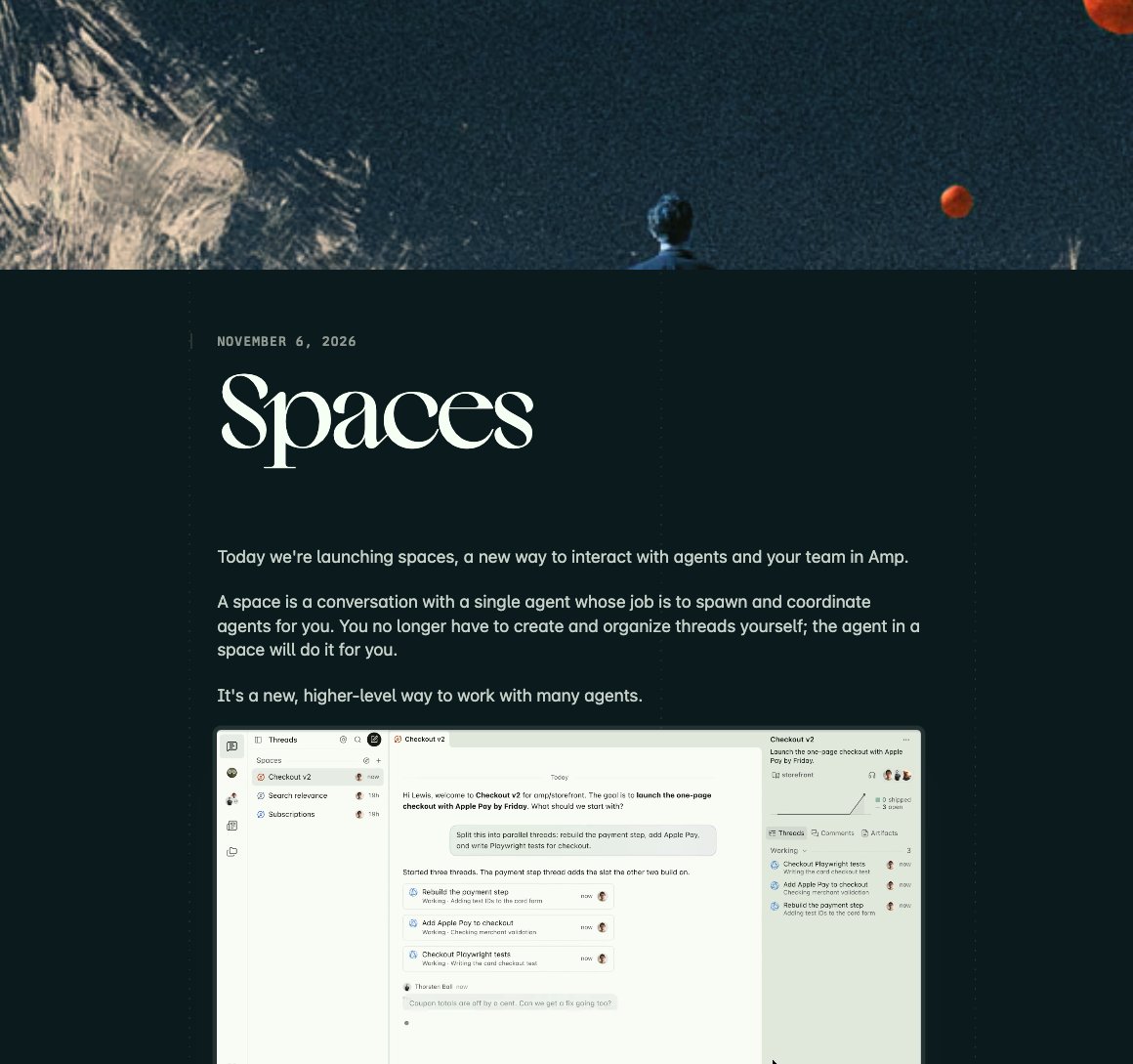
Amp Launches Spaces: One Orchestrator Agent Spawns Parallel Threads While Teams Collaborate in One Room

On 2026-11-06 Amp (ampcode.com) launched Spaces: a Space is a conversation with one orchestrator agent that understands a goal, decomposes work, and creates/coordinates parallel threads so users need not manage threads by hand. Official examples include co-building a feature, running a service-accounts launch, and a security review split across 16 areas. Start from the Spaces sidebar with + (title + project); teammates comment in the same chat, and Amp reads comments only when @-mentioned.

Amp Launches Spaces: One Orchestrator Agent Spawns Parallel Threads While Teams Collaborate in One Room

Key Takeaways

  • Official: ampcode.com/news/spaces (2026-11-06); Amp teammate Lewis Metcalf posted; @AmpCode amplified
  • Form: one orchestrator agent decomposes goals, spawns parallel threads, and summarizes; bird's-eye or deep dive
  • Teams: comment inside the same Space; Amp reads comments only when @-mentioned
  • Examples: Spaces was built inside a Spaces v1 room; service-accounts launch ops; security review across 16 areas
  • Start: Spaces sidebar → + → set title and project → describe the goal
Read full story
Linked Models & Agents:

Qoder Ships Stealth Model Qoduck: Daily Free Allowance at 0.0x Credits for Individuals; Identity Undisclosed

Starting 2026-11-07 (Singapore time), Qoder International gives individual users a limited-time daily free allowance for stealth model Qoduck: within the allowance the Credit rate drops from 0.5x to 0.0x, including at maximum thinking intensity. Official docs say the model's identity is undisclosed; Teams/Enterprise and IDE/CLI are out of scope for now.

Qoder Ships Stealth Model Qoduck: Daily Free Allowance at 0.0x Credits for Individuals; Identity Undisclosed

Key Takeaways

  • Sources: Qoder docs docs.qoder.com/events/qoduck-free + official X @qoder_ai_ide on 2026-11-07
  • Offer: daily free allowance at 0.0x Credits for individuals; paid plans get more free uses; after allowance, standard 0.5x
  • Scope: Qoder International app only; IDE / JetBrains plugin / CLI not covered; Teams/Enterprise cannot see Qoduck
  • Identity: official wording is undisclosed; community fingerprint guesses must not be stated as confirmed
  • How to: update the client, pick Qoduck in the model picker; no claim step required
Read full story
Linked Models & Agents:

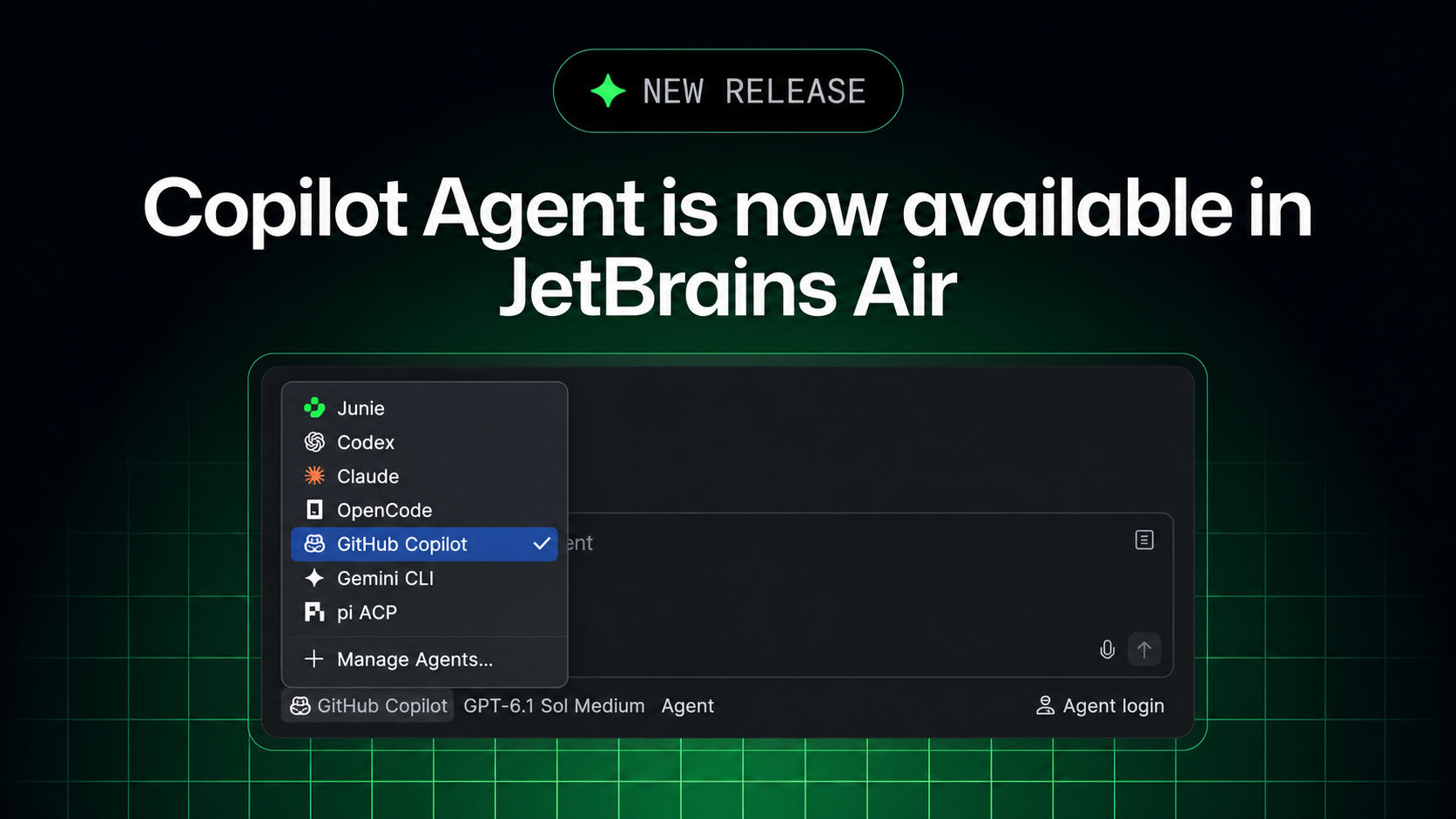
GitHub Copilot Comes to JetBrains Air: Run Coding Tasks Locally in the IDE or in Isolated Cloud Environments via ACP, Billed to Your Copilot Subscription

On November 3 GitHub announced on its official changelog that GitHub Copilot is now available in JetBrains Air. The integration is built on the Agent Client Protocol (ACP): developers pick Copilot in Air's agent picker, delegate coding tasks, track several sessions in parallel and review changes next to their code. Tasks can run locally in a JetBrains IDE or in isolated cloud environments through Air Teams, and they draw on the Copilot subscription rather than JetBrains AI credits.

GitHub Copilot Comes to JetBrains Air: Run Coding Tasks Locally in the IDE or in Isolated Cloud Environments via ACP, Billed to Your Copilot Subscription

Key Takeaways

  • Copilot now appears in JetBrains Air's agent picker and works with an existing Copilot account
  • The integration uses the Agent Client Protocol (ACP) and can be used alongside the existing GitHub Copilot plugin
  • Developers can track multiple agent sessions in parallel and review changes next to their code using project context and IDE tools
  • Cloud tasks run through Air Teams, each in a Docker container on a fresh virtual machine, with traffic through a proxy and no state kept between tasks
  • Cloud tasks use the Copilot plan rather than JetBrains AI credits, but Air analytics do not include Copilot usage and admins cannot set Copilot spending limits inside Air
Read full story

Cat Wu, Formerly on Claude Code at Anthropic, Announces She Is Joining OpenAI to Lead Product Management for Core Products

Cat Wu (@_catwu) announced on X on November 5 that she is joining OpenAI to lead product management for Core Products; her X bio says she previously worked on Claude Code at Anthropic. She said she will work with Tibo (@thsottiaux) and the PM team to build agents that have users' and teams' backs and keep them in control. The post drew about 6,900 likes, and Tibo posted a welcome. OpenAI has not published an official announcement.

Key Takeaways

  • Cat Wu announced on X herself that she is joining OpenAI to lead product management for Core Products
  • Her X bio says she previously worked on Claude Code at Anthropic, and before that at Dagster and Scale AI
  • She named Tibo (@thsottiaux, bio: Codex & ChatGPT @OpenAI) as a collaborator, with a focus on agents that keep users in control
  • Tibo welcomed her with a "Welcome Cat" post; her announcement drew about 6,900 likes and nearly 900 replies
  • OpenAI has not issued an official announcement, and which products Core Products covers was not specified
Read full story

Cognition Launches SWE-2 Flash: A Fast Coding Model Built on Inkling-Small, 200 tok/s at One-Fifth the Price of SWE-2

Cognition released SWE-2 Flash on November 4 (19:55 UTC). Its official blog says the model is built on Thinking Machines' Inkling-Small (276B total, 12B active parameters) and, for the first time, adds a large mid-training stage before reinforcement learning, lifting FrontierCode 2.0 from 3.2% to 24.0% and Terminal-Bench 4.0 from 0.9% to 20.0%. Cognition says it beats every American open-weight model. It generates about 200 tokens per second at one-fifth the price and 3x the speed of SWE-2, and is free for Pro, Max and Teams users in Devin Desktop and CLI until the end of November. Weights are not public; a secure sharing program for partners and researchers is planned.

Cognition Launches SWE-2 Flash: A Fast Coding Model Built on Inkling-Small, 200 tok/s at One-Fifth the Price of SWE-2

Key Takeaways

  • SWE-2 Flash is built on Thinking Machines' Inkling-Small, with 276B total and 12B active parameters, about one-tenth the size of SWE-2 (2.8T-A104B).
  • Training adds a three-stage mid-training run on a few trillion tokens of scientific articles, blogs, code and other sources, followed by large-scale RL with higher-quality and more diverse tasks.
  • Official scores: FrontierCode 2.0 24.0 (SWE-2 scores 23.8), DeepSWE 1.1 60.1, Terminal-Bench 2.1 89.2, SWE-Bench Pro v2 Hard 89.9 and Terminal-Bench 4.0 20.0.
  • It runs at about 200 tokens per second versus about 60 for SWE-2, at one-fifth the price, and is free for Pro, Max and Teams users in Devin Desktop and CLI through November.
  • Citing cyber risk, the weights are not openly released; Cognition says details of a secure weight-access program will follow in the coming weeks.
Read full story
Linked Models & Agents:
⚡ SWE-2 Flash⚡ SWE-2⚡ Inkling-Small🤖 Devin🌐 Cognition🌐 Thinking Machines
ADSponsored

Vercel Security Review Enters Public Beta: Vulnerability Review on Every GitHub Push, One-Click Fixes with Vercel Agent

On November 3 (US Pacific time), Vercel launched Security Review in public beta. It is a new Vercel Agent capability alongside Code Review and Investigation: once enabled, every push to connected GitHub repositories triggers a diff-only vulnerability review that finishes in seconds. Findings land in the Security dashboard, PR comments and the CLI, and can be fixed with one click by Vercel Agent or pulled into your own coding agent via vercel security vulnerabilities. It is available to Pro and Enterprise teams, and reviews are free until November 10.

Vercel Security Review Enters Public Beta: Vulnerability Review on Every GitHub Push, One-Click Fixes with Vercel Agent

Key Takeaways

  • Trigger: every GitHub push (including direct pushes to production) is reviewed automatically; only the diff is scanned, which Vercel says finishes in seconds, so it can run on every preview and production deployment
  • Beyond pattern matching: the agent traces how changed code is reached, checks existing protections and rechecks each finding, which Vercel says catches logic flaws such as missing authorization checks
  • Teams can write security policies in plain language, scoped to projects or the whole team, and manage them with vercel security policy
  • Pricing: Vercel Agent rate, model tokens at provider cost with no markup, plus $0.25 per million tokens; reviews are free until November 10, 2026, while Agent fixes are billed
  • Availability: public beta for Pro and Enterprise teams; Vercel has not published detection-rate or false-positive benchmarks
Read full story

OpenAI Shares Progress on ChatGPT and Codex for Hardware Engineering: GPT-6 Astra Designs a Codex Device in Under a Week, Mazda Joins for Aerodynamics Research

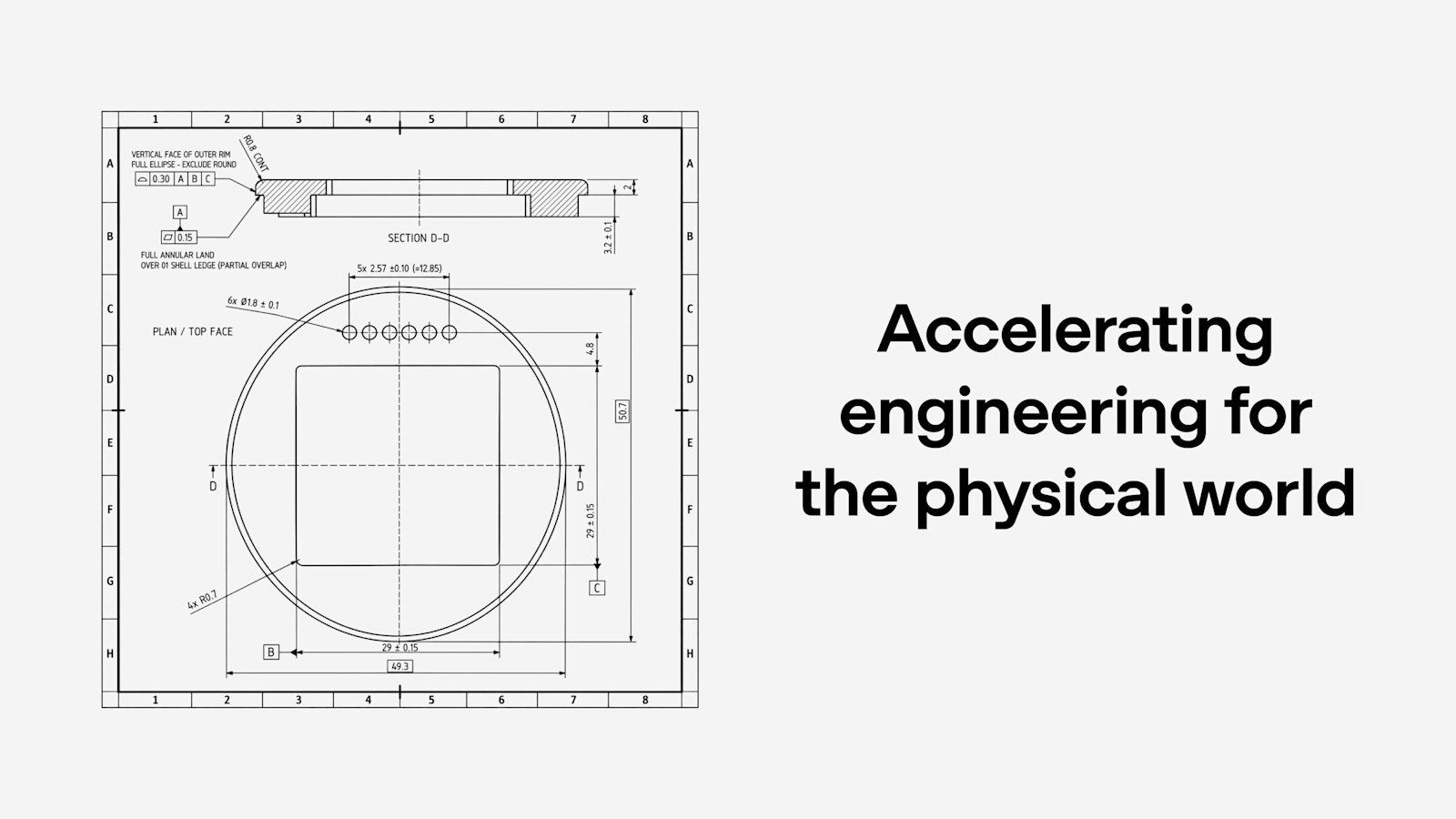
On November 3, OpenAI published "Accelerating engineering for the physical world," describing how its models help with mechanical design, electrical design and simulation. Two employees used GPT-6 Astra to design a device for talking to Codex (enclosure, PCB, firmware and software) in under a week, and a contract manufacturer built a small prototype batch in under a month, though manufacturing readiness still took several rounds of human review. Token usage across OpenAI hardware teams has grown 23-fold since February. On BenchCAD 2.0, a newer internal model averaged 0.875 versus 0.594 for GPT-6 Astra at its highest reasoning setting (OpenAI-reported). OpenAI is also expanding its work with Chip Ganassi Racing and announced a new research collaboration with Mazda.

OpenAI Shares Progress on ChatGPT and Codex for Hardware Engineering: GPT-6 Astra Designs a Codex Device in Under a Week, Mazda Joins for Aerodynamics Research

Key Takeaways

  • In a test with no direct human edits, GPT-6 Astra handled the look, enclosure structure, component selection, PCB layout, UI and firmware; two employees finished the design in under a week as a side project, and prototypes came back in under a month, per the OpenAI blog.
  • OpenAI names the gaps: Astra did not consistently account for the manufacturer's production limits, tolerances or assembly details, so manufacturing readiness took several rounds of review.
  • OpenAI hardware and infrastructure teams use Codex and ChatGPT for CAD models, 2D manufacturing drawings, simulation and FEA setup, and design reviews; token usage has grown 23-fold since February (OpenAI-reported).
  • BenchCAD 2.0 (reconstructing 3D parts and assemblies, identifying circuit-board connections): a newer internal model scored 0.875 versus 0.594 for GPT-6 Astra at its highest reasoning setting (OpenAI-reported; the internal model is unnamed and unreleased).
  • Collaborators: Chip Ganassi Racing is testing 3D-scan-to-editable-CAD and 2D drawing workflows; Mazda is working with OpenAI researchers on airflow and structural simulations for vehicle design, with results promised "in the coming months."
Read full story

OpenAI Hires Former U.S. Army Secretary Dan Driscoll as Senior Counselor for National Security Modernization

On November 2 (US time) OpenAI announced on its website that Dan Driscoll, the 26th Secretary of the U.S. Army, is joining as Senior Counselor for National Security Modernization, a newly created role. He will work with senior leadership and external partners on how advanced AI can strengthen national and cyber security, with a focus on advancing responsible use with U.S. allies, and help internal teams understand the operational needs of security institutions. Reuters, CNBC and Bloomberg Law also reported the hire.

OpenAI Hires Former U.S. Army Secretary Dan Driscoll as Senior Counselor for National Security Modernization

Key Takeaways

  • The role, Senior Counselor for National Security Modernization, is newly created and works with OpenAI senior leadership and external partners.
  • Driscoll was the 26th Secretary of the Army; OpenAI says he oversaw nearly one million Active, Guard and Reserve Soldiers and more than 265,000 Army Civilians.
  • Focus: advancing responsible use of advanced AI for national and cyber security with U.S. allies, building on OpenAI's Daybreak cyber-resilience program.
  • Sam Altman framed the hire as helping spread the adoption of democratic AI with other countries and strengthening American leadership.
  • Reuters, CNBC and others report Driscoll resigned as Army Secretary earlier this year amid tensions with Defense Secretary Pete Hegseth.
Read full story
Linked Models & Agents:

OpenAI Plans Its Next Internal Security Sprint With Cathedral, More Than Quadruples Critical Bug Bounty Rewards to Up to $172,000

On November 2 (US time) OpenAI said it is planning its next internal security sprint and partnering with security firm Cathedral, whose researchers will use OpenAI models alongside OpenAI teams to challenge its defenses. It is also changing its Security Bug Bounty program, more than quadrupling rewards for critical findings; OpenAI's X post says exceptional findings can earn up to $172,000 including bonuses. Per OpenAI, the last sprint dedicated 25% of its product engineers to finding and fixing weaknesses, using Codex to reproduce vulnerabilities and prepare patches, and it has committed $1 billion in subsidized access over six months for frontline defenders.

OpenAI Plans Its Next Internal Security Sprint With Cathedral, More Than Quadruples Critical Bug Bounty Rewards to Up to $172,000

Key Takeaways

  • Critical bug bounty rewards are more than quadrupled; per OpenAI's X post, exceptional findings can earn up to $172,000 including bonuses.
  • Researchers from partner Cathedral will use OpenAI models alongside OpenAI teams to test its defenses.
  • Per OpenAI, the last sprint dedicated 25% of product engineers and used Codex to reproduce vulnerabilities in isolated environments and prepare patches.
  • OpenAI has committed $1 billion in subsidized access over six months for defenders of essential services and digital infrastructure.
  • Timing, scope and finding counts for the next sprint were not disclosed.
Read full story
Linked Models & Agents:

OpenAI Details Pando, Its In-House Git Backend: Median Push Latency Down Nearly 5x, Nearly 1 PB Served Daily, Built With Codex in 10 Weeks

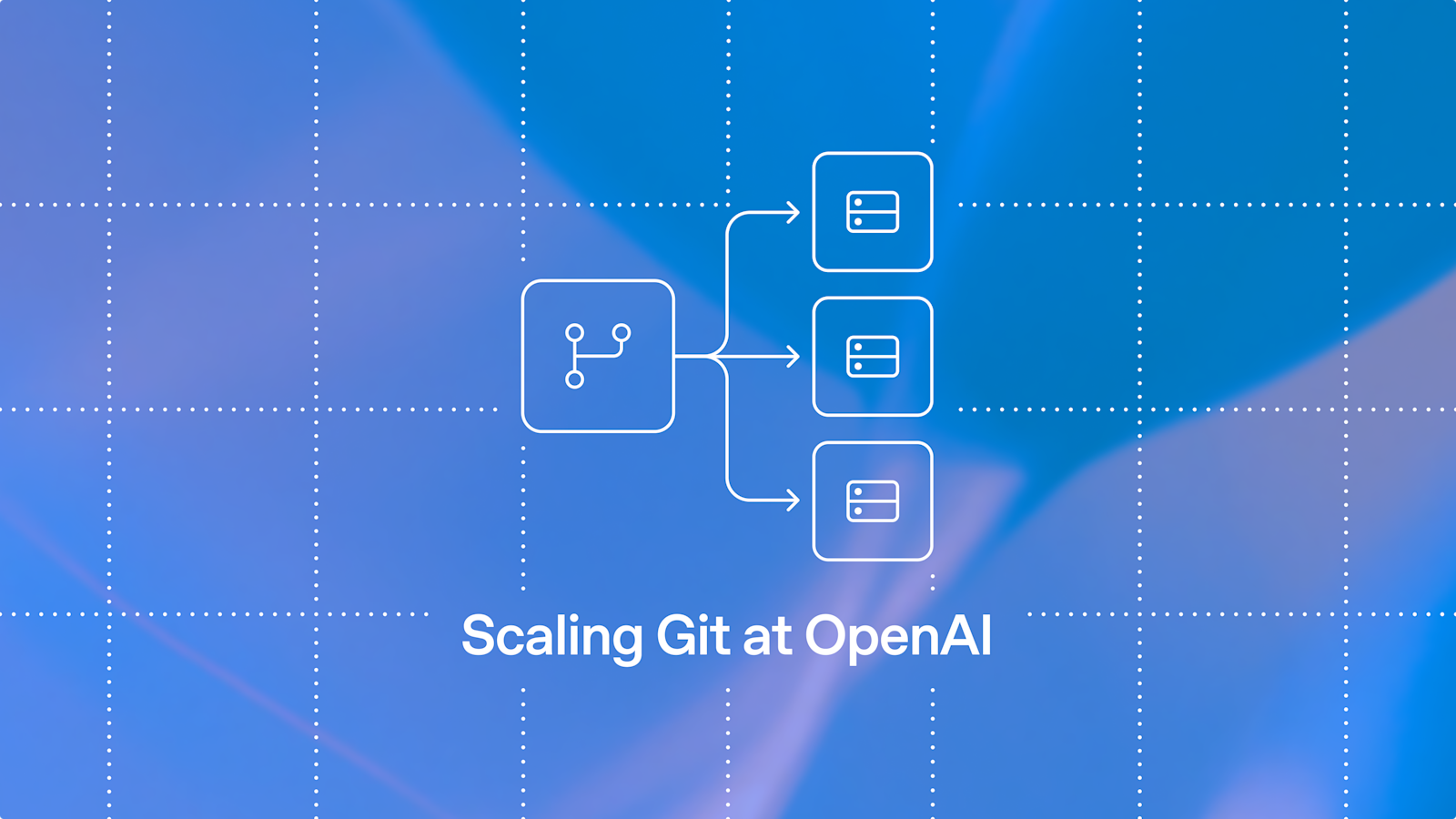
On November 2 OpenAI published "Scaling Git at OpenAI", describing Pando, a Git-compatible backend it built for its monorepo. Per OpenAI, Pando cut median push latency by nearly 5x (about 80%), now delivers nearly a petabyte of Git data per day, and has served more than 57 TB in a single hour. It is written in Rust, its core was designed by one engineer and implemented by teams of Codex agents, and it went from kick-off to production in 10 weeks, serving production traffic since April. The trigger: Codex multiplied parallel branches and pushes, and the old system's reliability at times fell below 90%.

OpenAI Details Pando, Its In-House Git Backend: Median Push Latency Down Nearly 5x, Nearly 1 PB Served Daily, Built With Codex in 10 Weeks

Key Takeaways

  • Per OpenAI: median push latency down nearly 5x (about 80%), nearly 1 PB of Git data delivered per day, and a peak of more than 57 TB in one hour, with over 99% of bytes from local disk cache.
  • The trigger: Codex let engineers run far more branches and CI jobs in parallel; the old system struggled from late last year, with reliability at times below 90%.
  • The key trade-off: Pando drops repository-wide consistency for per-branch causal consistency and reuses pushed packfiles, stored as immutable blobs, to serve later fetches.
  • Written in Rust, core designed by one engineer and implemented by teams of Codex agents in 10 weeks; agents using GPT-6 Astra also wrote Lean and TLA+ specs to find bugs and prove properties.
  • Several improvements, such as packfile-uri fixes, are already in upstream Git, and OpenAI says it is exploring ways to share the technology with users.
Read full story