AI Coding Live News

OpenAI Shares Progress on ChatGPT and Codex for Hardware Engineering: GPT-6 Astra Designs a Codex Device in Under a Week, Mazda Joins for Aerodynamics Research

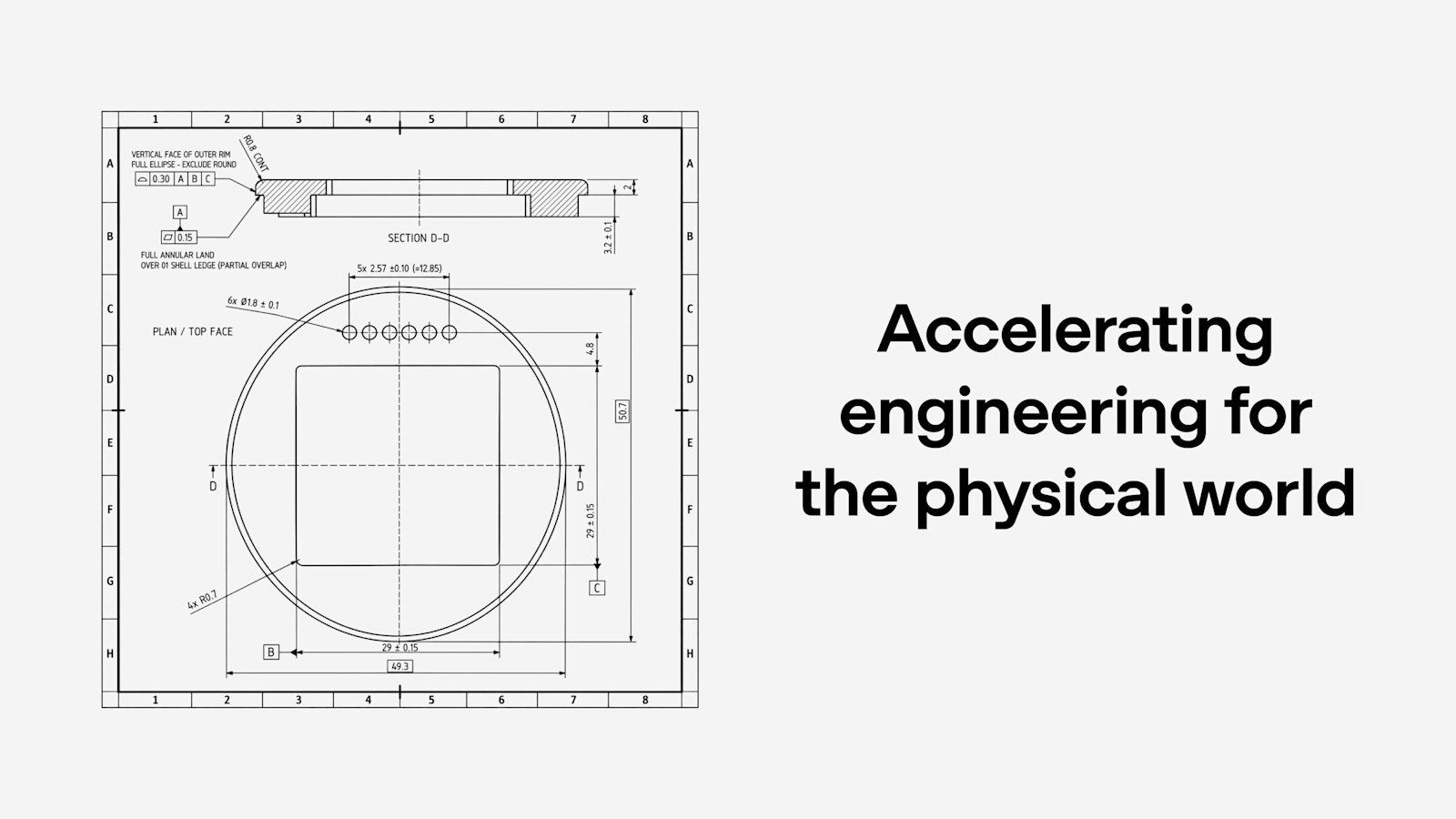
On November 3, OpenAI published "Accelerating engineering for the physical world," describing how its models help with mechanical design, electrical design and simulation. Two employees used GPT-6 Astra to design a device for talking to Codex (enclosure, PCB, firmware and software) in under a week, and a contract manufacturer built a small prototype batch in under a month, though manufacturing readiness still took several rounds of human review. Token usage across OpenAI hardware teams has grown 23-fold since February. On BenchCAD 2.0, a newer internal model averaged 0.875 versus 0.594 for GPT-6 Astra at its highest reasoning setting (OpenAI-reported). OpenAI is also expanding its work with Chip Ganassi Racing and announced a new research collaboration with Mazda.
OpenAI Shares Progress on ChatGPT and Codex for Hardware Engineering: GPT-6 Astra Designs a Codex Device in Under a Week, Mazda Joins for Aerodynamics Research

Key Takeaways

  • In a test with no direct human edits, GPT-6 Astra handled the look, enclosure structure, component selection, PCB layout, UI and firmware; two employees finished the design in under a week as a side project, and prototypes came back in under a month, per the OpenAI blog.
  • OpenAI names the gaps: Astra did not consistently account for the manufacturer's production limits, tolerances or assembly details, so manufacturing readiness took several rounds of review.
  • OpenAI hardware and infrastructure teams use Codex and ChatGPT for CAD models, 2D manufacturing drawings, simulation and FEA setup, and design reviews; token usage has grown 23-fold since February (OpenAI-reported).
  • BenchCAD 2.0 (reconstructing 3D parts and assemblies, identifying circuit-board connections): a newer internal model scored 0.875 versus 0.594 for GPT-6 Astra at its highest reasoning setting (OpenAI-reported; the internal model is unnamed and unreleased).
  • Collaborators: Chip Ganassi Racing is testing 3D-scan-to-editable-CAD and 2D drawing workflows; Mazda is working with OpenAI researchers on airflow and structural simulations for vehicle design, with results promised "in the coming months."
Read full story

X Discussion: Elon Musk Says Grok Bot Serving Costs Were Unsustainably High Relative to Revenue; Replit CEO Amjad Masad Warns Subsidized AI Subscriptions Face a Rug Pull

After users on X complained that their Grok Bot usage ran out early this cycle, Elon Musk replied that "the cost of serving Grok Bot was unsustainably high relative to revenue", a reply with about 13K likes and 5.5M views. Replit CEO Amjad Masad then quoted the news, saying people enjoying subsidized AI subscriptions should "get ready to get rug pulled", sparking a debate over whether flat-rate AI plans can last. This is an X discussion with personal views; xAI has not published a formal pricing or limit announcement.

Key Takeaways

  • Trigger: user @DogecoinNorway said their Grok Bot usage hit 100% with 4 days left until reset, a post with about 1.24M views.
  • Musk replied that the cost of serving Grok Bot was unsustainably high relative to revenue, with about 13.2K likes, 5.51M views and 1,900+ quotes.
  • Amjad Masad (Replit CEO) quoted it, warning subsidized AI subscriptions are about to get rug pulled, with about 2,347 likes and 146K views; in replies he said Replit never subsidized.
  • xAI has not published a formal limit or pricing change; rely on official notices for specifics.
Read full story

Codex 28-day run, day 27: OpenAI's Tibo posts "Banked 1/2" as the first of two saved usage resets lands

At 00:43 UTC on Nov 1, Tibo (@thsottiaux), who works on Codex and ChatGPT at OpenAI, posted "Banked 1/2" on X; the post has about 6,860 likes and 660K views. In his day 26 post the day before he had teased that "next two days will be resets… banked…", so this is day 27 of his 28-day run: the first of two Codex usage resets you can save and use when you choose. According to OpenAI's Help Center, a banked reset does not refresh usage on arrival; you redeem it in desktop Settings > Usage & billing, web Usage settings, or /usage in the CLI. Eligible plans and the expiry for this particular offer have not been published.

Key Takeaways

  • Source: Tibo's own X post "Banked 1/2" (00:43 UTC, Nov 1), with about 6,860 likes, 1,066 replies and 660K views as of 15:10 SGT
  • Context: his day 26 post (about 14K likes) teased "next two days will be resets… banked…", so a second one is expected on day 28
  • Where to redeem: desktop Settings > Usage & billing, web Usage settings, or /usage then Redeem reset in Codex CLI; not available in the mobile app (OpenAI Help Center)
  • Rule: at least one covered allowance must be below 80% remaining; Plus and Business Standard get the 5-hour and weekly allowances back, Pro 100/200/500 the weekly allowance, and Go the monthly allowance
  • Caveat: using one restarts the usage period from that day; eligible plans and the expiry for this offer have not been published, so check your account
Read full story
Linked Models & Agents:
O
OpenAIhelp.openai.com·
👀62
🔥83

OpenAI will pool ChatGPT and Codex into one token-based usage allowance starting in December for Plus, Pro, and Business; Instant chat is excluded

On Oct 31, OpenAI's Help Center added a page titled "Understanding ChatGPT and Codex usage limits": starting in December, the usage allowance on Plus, Pro, and Business plans will be shared across ChatGPT and Codex as OpenAI brings the agentic capabilities of Work into the main ChatGPT experience. Usage will be measured in tokens, so stronger models and more complex tasks use more; Instant chat will not draw from the allowance. Users will see combined remaining usage and reset times in Settings > Usage, and can wait for a reset, upgrade, or buy credits when they run out. OpenAI says it expects most users will not need to wait for resets more often than they do now, but it has not given an exact start date or per-plan allowances. The news drew strong concern from Plus users on X.

Key Takeaways

  • Timing: takes effect in December, exact date not announced; covers Plus, Pro, and Business plans (OpenAI Help Center)
  • Metering: everything is measured in tokens and Instant chat is excluded; the Business pricing page now also notes that plan usage will have a shared limit across ChatGPT and Codex starting in December (Business pricing)
  • Today's baseline: only Work and Codex share an allowance now; Plus is estimated at 5-45 local messages per 5 hours on GPT-6 Astra, 15-160 on GPT-6.1 Sol, and 350-3,000 on GPT-6 Luna (official estimates, help article)
  • Pro 100/200/500 currently have no 5-hour limit in Work and Codex; per-plan allowances after the merge have not been published
  • OpenAI's position: most users should not wait for resets more often than today; when out, wait, upgrade, or buy credits
Read full story
ADSponsored

Anthropic adds two sentences to Claude Code's Opus 5.5 prompt to steer it away from recreating specific existing games; original and genre games still allowed

Around Oct 27, users noticed Claude Code receiving a new server-side rule (flag name tengu_heron_brook): build original games, games in a genre, and games from the user's own designs and assets, but do not build a recreation of a specific existing game, even if it is renamed or called original. The post that surfaced it drew about 8,700 likes and nearly 2 million views on Oct 30. The same day, Addy Osmani, who works on Claude Code at Anthropic, confirmed on X that the team added two sentences to Claude Code's prompt on Opus 5.5 because using Claude to infringe IP is against Anthropic's usage policy. He said original games, genre games, and games built from your own designs and assets should keep working, that the team will keep iterating, and that users can send him wrongly refused requests.

Key Takeaways

  • Scope: the change is just 2 sentences in Claude Code's system prompt for Opus 5.5, pushed from the server with no user-side toggle (Addy Osmani's post)
  • Rule text (per the flag tengu_heron_brook users captured): original games, genre games, and games from the user's own designs and assets are allowed; a recreation of a specific existing game is not, "even if it is renamed or called original" (original report, about 8,700 likes and nearly 2M views)
  • Basis: Anthropic's Usage Policy prohibits using its products to infringe, misappropriate, or violate a third party's intellectual property rights
  • Feedback path: Osmani says the team will keep tuning the line and asked users to send him wrongly refused requests; there is no separate Anthropic blog post yet, and benchmarks do not apply
Read full story
O
OpenAI / Google / Microsoft / Anthropic@AICoder·
👀23
🔥83

OpenAI, Google, Microsoft and Anthropic back one robots.txt AI-training opt-out token, __usage_ai-training; Anthropic has started, Microsoft honors it from Feb 1, 2027

On October 30, OpenAI, Google, Microsoft and Anthropic each published posts committing to one shared robots.txt training-preference signal: a site writes a single Disallow group for the policy token __usage_ai-training to tell every participating provider not to use its content for generative AI training. The mechanism comes from an IETF individual Internet-Draft filed that day by Anthropic standards lead Kevin Kelley and is not yet a formal standard. Timelines differ: The Verge and CNA report Anthropic has already started implementing it, OpenAI says "in the coming months", Microsoft honors it from February 1, 2027, and Google plans support during 2027.

Key Takeaways

  • Syntax: in robots.txt, User-Agent: __usage_ai-training plus Disallow: / states a site-wide preference against AI training, and Allow rules can carve out paths such as /press-kit/; omitting the group means no preference is expressed
  • Draft: draft-kelley-aipref-training-preference-signal-00 by Kevin Kelley (Anthropic), filed 2026-10-30 and expiring 2027-05-03, an individual IETF draft with no formal standing yet
  • Timeline: Anthropic has reportedly started; OpenAI says "in the coming months"; Microsoft honors it from 2027-02-01 and sites relying on NoArchive/NoCache should migrate by 2027-03-01; Google plans support in 2027
  • Training only, not crawling: the draft says the token is not a crawl directive, wildcard User-Agent: * groups do not match it, and existing GPTBot, ClaudeBot and Google-Extended rules keep working
  • Microsoft also adds a page-level AI Grounding preference whose new DisallowExtended value limits grounding to Microsoft's own products (Copilot, AI Overview and others) and excludes third-party grounding services such as Foundry API access
Read full story
Linked Models & Agents:

Claude API launches the Usage and Cost Analytics API in beta and raises the request size limit to 128 MB

Per the official Claude API release notes, on Oct 29 Anthropic launched the Usage and Cost Analytics API in beta, with two endpoints, /v1/organizations/analytics/usage and /analytics/cost, that filter and group token usage and cost by model, workspace, API key, and the user or service account behind each request, with 1-minute, 1-hour, or 1-day buckets. The older Usage and Cost API is now legacy but still supported. On Oct 28 the maximum request size for the Messages and Token Counting APIs on the first-party Claude API rose from 32 MB to 128 MB.

Key Takeaways

  • The new API needs the analytics-usage-cost-2026-08-24 beta header; one endpoint returns token and request counts, the other cost in USD (per the official docs)
  • group_by takes up to 5 dimensions, time buckets can be 1m, 1h, or 1d, and each filter accepts up to 100 values
  • Claude Console and Claude Enterprise organizations share the same endpoints and fields; it also works on Claude Platform on AWS and Claude Models on Google Cloud (Anthropic managed)
  • The old Usage and Cost API and four Enterprise Analytics usage and cost report endpoints are now legacy but still supported, with migration guides
  • Since Oct 28 the Messages and Token Counting APIs accept requests up to 128 MB instead of 32 MB (4x), on the first-party Claude API only
Read full story

Claude renames its Max plans to Max and Ultra and removes the 5-hour limit for verified Ultra accounts

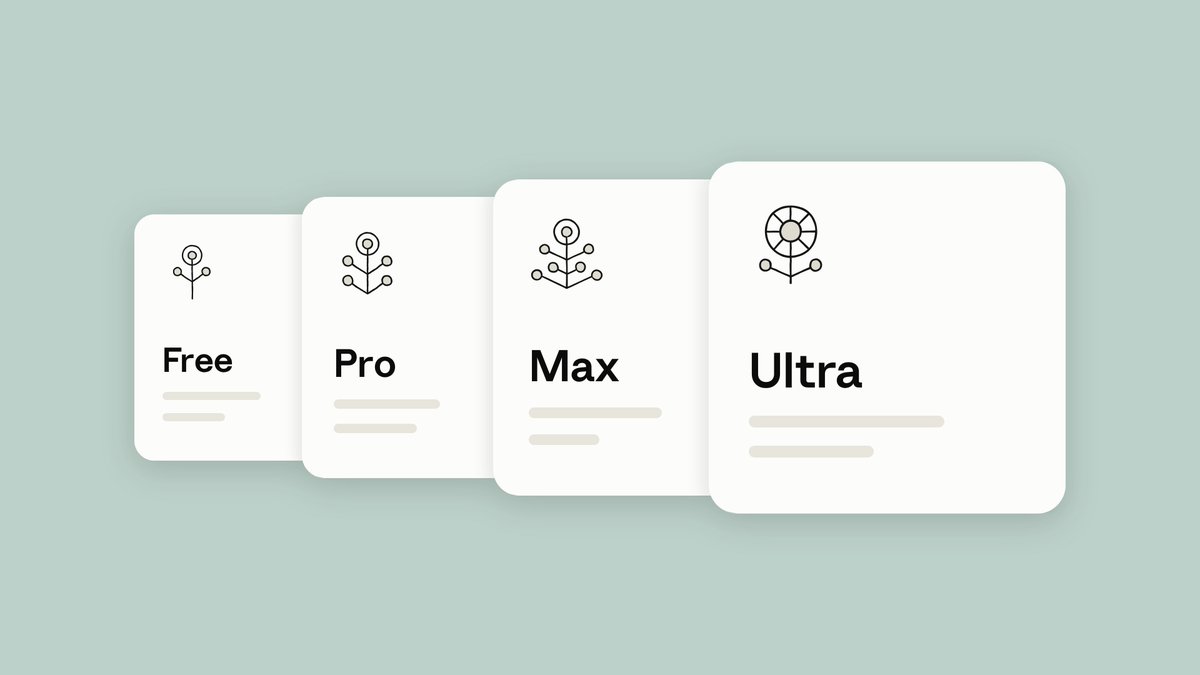
On Oct 30 Anthropic's official @claudeai account announced that Max 5x is now called Max (still $100/month) and Max 20x is now Ultra (still $200/month), with nothing for existing subscribers to do. Verified Ultra accounts also lose the rolling 5-hour usage limit starting that day, beginning with most existing subscribers; newer accounts keep a temporary limit until verified, and weekly limits are unchanged.

Claude renames its Max plans to Max and Ultra and removes the 5-hour limit for verified Ultra accounts

Key Takeaways

  • Prices are unchanged: Max is $100/month, Ultra is $200/month, and Pro is $20 billed monthly (per claude.com/pricing)
  • The pricing page lists Max at 5x Pro usage every 5 hours and every week, and Ultra at 10x Pro weekly usage with no 5-hour limit for verified accounts
  • Both tiers include monthly API credits, $100 on Max and $200 on Ultra, and Fable can use up to half the weekly limit
  • Newer accounts keep a temporary 5-hour limit until verified, which Anthropic says prevents fraud and abuse; users get an email when it is lifted
  • Weekly limits are unchanged; Anthropic has not published the verification criteria or timeline
Read full story
Linked Models & Agents:
⚡ Claude Fable⚡ Claude Opus⚡ Claude Sonnet🤖 Claude Code🌐 Anthropic

OpenAI raises Work and Codex usage on ChatGPT Pro and Business Premium: Pro 100 and Pro 500 doubled, Pro 200 cut canceled

On Oct 29, OpenAI's Codex and ChatGPT lead Tibo announced on X that usage for Pro 100/200/500 and Business Premium doubles effective today. OpenAI's Help Center confirms that Pro 100 and Pro 500 now get twice their previous Work and Codex allowance, the Pro 200 reduction announced in a Sept 29 email is canceled, and Pro 200 subscribers on the lower allowance are doubled up to the higher one. Plus is unchanged.

Key Takeaways

  • Pro 100 ($100/mo) and Pro 500 ($500/mo) now get twice their previous Work and Codex allowance, applied automatically to existing subscriptions without waiting for renewal (Help Center)
  • The Pro 200 reduction announced in a Sept 29 email is canceled; Pro 200 users on the lower allowance are doubled to the higher one, still at $200/mo
  • Weekly GPT-6 Pro chat message limits stay the same on Pro 100 and Pro 500; Pro 200's lower weekly limit is raised to the higher one
  • Business Premium Work and Codex usage also goes up (the official release notes give no multiplier; Tibo's post says doubled); Plus is unchanged
  • Tibo says extended limits for dots continue and stay separate from default usage
Read full story

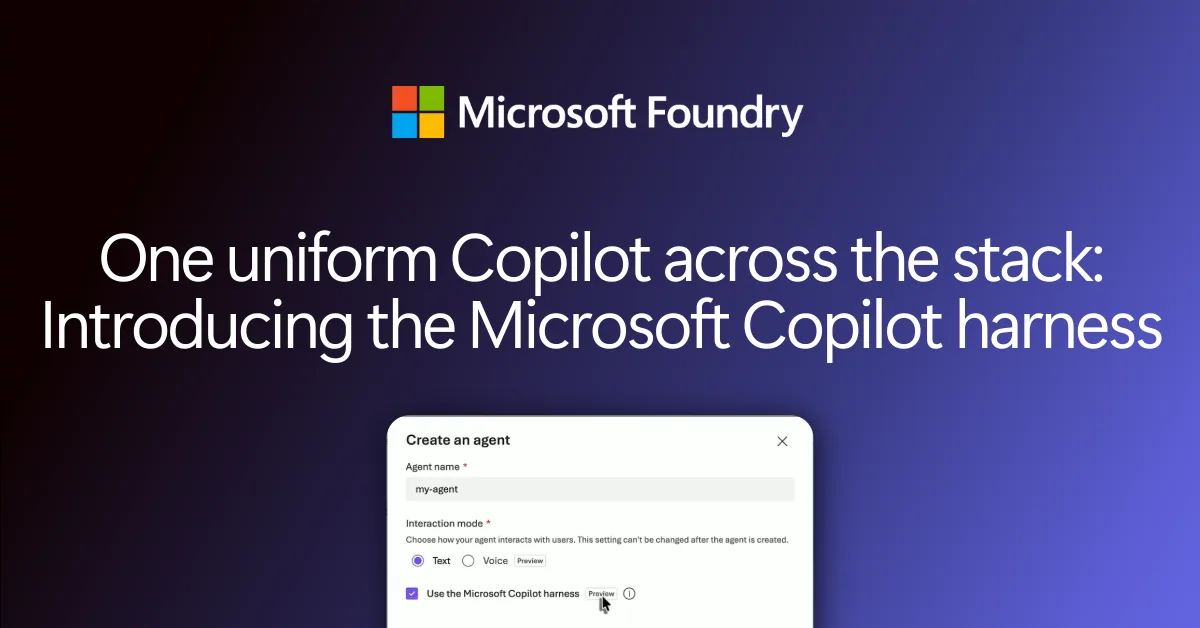
Microsoft opens the GitHub-built Copilot harness in Foundry Agent Service: public preview, 20+ frontier models plus BYOK, billing from Dec 1

During GitHub Universe on Oct 28, Microsoft put the Microsoft Copilot harness, the shared agent execution layer behind Copilot Code, Copilot Studio, the GitHub Copilot app, the CLI and VS Code, into Foundry Agent Service as a public preview. Microsoft runs the agent loop and sandbox while developers supply instructions, skills, tools and model choice; Microsoft says it works across 20+ frontier models plus bring-your-own-key. Long-running resilience for hosted agents also reached GA. Harness runtime usage is free until Dec 1.

Microsoft opens the GitHub-built Copilot harness in Foundry Agent Service: public preview, 20+ frontier models plus BYOK, billing from Dec 1

Key Takeaways

  • Microsoft says the harness spans 20+ frontier models plus bring-your-own-key, so you can swap models without rewriting orchestration (official blog)
  • Preview building blocks: reusable skills, Foundry and MCP tools with explicit auth and approvals, file and code execution with built-in subagent delegation, and source-controlled agent definitions
  • Pricing: harness runtime is free until Dec 1; after that sandbox compute is USD 0.0994 per vCPU-hour and 0.0118 per GiB-hour, with model inference billed separately (Foundry blog)
  • Long-running resilience for hosted agents went GA the same week: interrupted work restarts with its original input, and your app saves checkpoints
  • Limits: you pick the harness only when creating a new agent; existing agents are unchanged and switching later is not supported yet
Read full story
ADSponsored

Claude Code lead Boris Cherny on faster usage drain: every shared session reviewed, no regression found, fixes for a few smaller issues rolling out

Since Oct 21 many developers on X have complained that Claude Code was draining usage limits much faster. On Oct 28 (UTC) Boris Cherny, who leads Claude Code at Anthropic, replied on X that the team reviewed every session ID users shared, found no single root cause and no regression in Claude Code, and is rolling out fixes for a few smaller issues that made some sessions burn tokens faster. Most fast-drain cases traced back to one or two heavy sessions using xhigh effort, /goal, Workflows, Agent Teams or long SDK jobs.

Key Takeaways

  • The complaint post that started it said usage was draining 5x faster and drew about 1,660 likes and 240+ replies (a user claim, not official data)
  • Boris Cherny: the team checked every shared session ID, found no single root cause or Claude Code regression, and is rolling out fixes for a few smaller issues
  • Heavy features were the main driver: xhigh effort, /goal, Workflows, Agent Teams and long SDK jobs
  • Subagents inherit the session effort level by default, which adds up fast; /usage shows where tokens went
  • The official docs say Agent Teams use about 7x more tokens than standard sessions when teammates run in plan mode
Read full story
Linked Models & Agents:

GitHub Enterprise now includes Copilot: $0 seat charge for Enterprise Cloud users, $10 a month Copilot Standalone for others, with AI usage metered from the first request

At Universe 2026 on Oct 28, GitHub announced a new Copilot access billing model: users with a GitHub Enterprise Cloud license pay no Copilot seat charge, and users without one can get Copilot Standalone at $10 per user per month. Both get the same features and models as Copilot Enterprise but no monthly per-seat AI credits; all usage is metered against the enterprise budget from the first request. It is available now only to Enterprise Cloud customers working with a GitHub or Microsoft account team, opens to self-serve customers in stages, and Copilot Business and Enterprise stay on sale.

Key Takeaways

  • Seat charge: $0 for users with a GitHub Enterprise Cloud license; users without one get Copilot Standalone at $10 per user per month
  • Versus the old plans: Copilot Business is $19 per user per month with 1,900 pooled AI credits and Copilot Enterprise is $39 with 3,900; the new model includes no credits and meters usage from the first request
  • When the budget runs out: code completion and next edit suggestions keep working, while Copilot Chat, Copilot code review and Copilot in the cloud need available budget
  • Availability: from Oct 28 only for Enterprise Cloud customers working with a GitHub or Microsoft account team; self-serve opens in stages, and GitHub Free and Team are not eligible
  • Switching is voluntary, but the billing model applies to the whole enterprise, cannot be mixed with Copilot Business or Enterprise seats, and admins still have to assign seats
Read full story

X discussion: screenshots of ChatGPT merging Chat and Work go viral, and OpenAI's Tibo says it is not rolling out yet

This is an X discussion, not an official launch. On Oct 28, X user Angel (@Angaisb_) posted a screenshot saying ChatGPT is unifying Chat and Work and asked how that would change usage limits; the post drew about 440,000 views. About an hour and a half later, Tibo (@thsottiaux), whose X bio reads Codex & ChatGPT @OpenAI, quoted it: the team is working on this but it is not rolling out yet, the plan is to bring the best of Chat and Work together at some point this year, and they will proceed carefully and take their time. His reply drew about 2,800 likes and more than 900 replies.

X discussion: screenshots of ChatGPT merging Chat and Work go viral, and OpenAI's Tibo says it is not rolling out yet

Key Takeaways

  • The original screenshot post came from Angel (@Angaisb_) at 22:05 UTC on Oct 28, with about 1,400 likes and 440,000 views at crawl time
  • OpenAI's Tibo (@thsottiaux, bio Codex & ChatGPT @OpenAI) quoted it at 23:35 UTC: the team is working on it, but it is not rolling out yet
  • Tibo's stated direction: combine Chat and Work capabilities at some point this year, carefully and without rushing; timing and usage-limit rules have not been announced
  • Tibo's reply drew about 2,800 likes, 940+ replies and 390,000 views, with discussion centered on how usage limits would work after a merge
Read full story

OpenAI gives ChatGPT Pro and Business subscribers up to $500 a month in API credits to build apps and agents

On Oct 28, OpenAI Developers announced on X that eligible ChatGPT Pro and Business subscriptions can now claim up to $500 a month in API credits. Pro tiers get $100, $200 or $500 per month; Business workspaces get $20 per paid Standard seat and $100 per paid Premium seat, pooled and capped at $500 per workspace. Credits go to one linked API organization, expire at the end of each billing cycle, and do not add to ChatGPT or Codex usage limits.

Key Takeaways

  • Amounts: Pro $100, $200 and $500 tiers get $100, $200 and $500 per month; Business gets $20 per paid Standard seat and $100 per paid Premium seat, capped at $500 per workspace per month
  • Plus, free trials and complimentary subscriptions do not qualify; Enterprise, Edu and legacy Codex seats are not eligible for this offer; the paid subscription must be at least 7 days old
  • One subscription or workspace links to one API organization, and the person claiming must own both the subscription or workspace and the API organization, using the same email on both
  • The first grant is prorated, unused credits expire at the end of the billing cycle with no rollover, and no API payment method is needed while free credits are active
  • Business workspaces billed annually upfront receive the full year at once, capped at $6,000
Read full story

Anthropic expands GSA partnership: new OneGov deal gives all levels of US government 40% off Claude Enterprise, Claude for Government and the API

On Oct 27 Anthropic announced a new OneGov agreement with the US General Services Administration (GSA): government customers get 40% off Claude Enterprise, Claude for Government and the Claude API. For the first time the discount covers every product surface (direct purchases today, cloud-provider channels in the coming months) and extends to state, local, tribal and territorial governments. Anthropic estimates about $1 billion in savings, with no minimum spend and pay-as-you-go usage.

Anthropic expands GSA partnership: new OneGov deal gives all levels of US government 40% off Claude Enterprise, Claude for Government and the API

Key Takeaways

  • 40% off Claude Enterprise, Claude for Government and the Claude API; direct purchases today, cloud-provider channels in the coming months (vendor-stated)
  • Anthropic estimates about $1 billion in government savings, with no minimum spend commitment and pay-for-what-you-use billing
  • About 500 US federal, state and local organizations use Claude; weekly Claude for Government active users are up about 8x since February and federal civilian usage is up about 20x in a year (vendor-stated)
  • Utah gave Claude Code to 34 developers across 10 agencies: 80% had a working environment within 30 minutes and 71% reported saving 20+ hours over a four-week pilot (vendor-stated)
  • Claude for Government went GA on Sep 30 at FedRAMP High; select Bedrock models hold DoD IL4/IL5, and Claude Enterprise is pursuing FedRAMP Moderate via FedRAMP 20x
Read full story