AI Coding Live News

X Discussion: Vercel CEO Guillermo Rauch Says "Own Your Intelligence," Urging Local Models to Keep Spreading and Developers to Own Their Agent Harness and Data

Vercel CEO Guillermo Rauch posted on X on November 1: "Own your intelligence. Anyone that opposes this has something to sell you (perhaps your own intelligence back to you.)" He argued that local models need to keep proliferating; since the biggest models may be out of reach locally for now, the best option is to keep your options open: own your harness, data, connections and runtime, meaning your agents, and embrace open source. Within about 12 hours the post drew about 2,500 likes, 128K views and over 100 quote posts, with debate centered on how to balance local and cloud AI.

Key Takeaways

  • This is Rauch's personal opinion post, not an official Vercel announcement or product release.
  • The original post (2026-11-01 21:08 UTC) had about 2,533 likes, 255 reposts, 266 replies, 107 quotes, 128K views and 581 bookmarks at fetch time.
  • Core claim: local models should keep spreading; until the biggest models can run locally, keep your options open by owning your harness, data, connections, runtime and agents, and embrace open source.
  • Mark (@marksuman), co-founder and CEO of Maple AI, replied in a quote post that it will be hybrid: cloud will always be more powerful, so local-first AI should be paired with private cloud.
  • Engineer Shantanu Goel (@shantanugoel) quoted it saying "Guillermo says the truth that most others won't!", drawing about 37 likes.
Read full story
Linked Models & Agents:

Vercel Labs launches agent-desktop: computer use for any coding agent via OS accessibility trees, not pixels, on macOS, Windows and Linux

On October 31, Chris Tate of Vercel Labs, creator of agent-browser, announced agent-desktop on X as "agent-browser, for your whole computer". It is an Apache-2.0 Rust CLI and C library that reads a desktop app's OS accessibility tree and returns every actionable element as a JSON ref; the agent clicks or types on a ref and snapshots again to verify, with no pixel matching, headless by default. Version 1.0.0 shipped on October 27 and added Linux support; the current npm release is 1.0.2.

Vercel Labs launches agent-desktop: computer use for any coding agent via OS accessibility trees, not pixels, on macOS, Windows and Linux

Key Takeaways

  • Install: npm install -g agent-desktop, one package with native x64/ARM64 binaries; 1.0.0 (Oct 27) added Linux (glibc 2.35+, via AT-SPI), and the latest npm release is 1.0.2 (Oct 30)
  • Loop: snapshot prints a JSON tree with refs, click @<snapshot_id>:eN acts, then snapshot again to verify; a changed UI returns STALE_REF, and errors say whether a retry is safe
  • Scope: the README lists 60 command names, 56 of them operational, spanning windows, keyboard and mouse, notifications, clipboard, waits and session traces
  • Headless by default: ref actions go through accessibility APIs without moving the pointer or stealing focus, with --headed for physical input; Chris Tate says multiple agents can use the computer in parallel, each with its own cursor
  • Benchmarks: no official success-rate or speed numbers; it is a tool with no model inside, and web pages stay with agent-browser
Read full story

Suhail launches Particle and its first model, Particle-1: a DeepSeek V4.1 Flash post-train that uses about 45% fewer tokens on coding tasks

On Oct 28, Mixpanel founder Suhail Doshi announced his new company Particle on X, with its first model, Particle-1, live now. Particle's blog says it is a reinforcement-learning post-train of DeepSeek V4.1 Flash that uses 28.4% to 52.2% fewer output tokens and costs 34.4% to 51.6% less per task across four coding and data engineering benchmarks, with pass rates inside the base model's confidence intervals. It is available through the Particle API, OpenRouter and Vercel AI Gateway; Particle's docs list $0.25 input and $1.00 output per million tokens with a 1,048,576-token context window.

Suhail launches Particle and its first model, Particle-1: a DeepSeek V4.1 Flash post-train that uses about 45% fewer tokens on coding tasks

Key Takeaways

  • Across four benchmarks (Terminal-Bench 2.1, ReactBench, ADE Bench, DeepSWE 1.1), 28.4% to 52.2% fewer output tokens and 34.4% to 51.6% lower cost per task (vendor-reported)
  • Particle's summary table: $0.2211 per task versus $0.3368 for DeepSeek V4.1 Flash and $0.6523 for GLM 5.3 Flash; 59,580 mean output tokens versus 83,246 and 98,155
  • Task pass rate 72.57% versus 71.15% for the base model and 66.82% for GLM 5.3 Flash; GPQA Diamond 90.40% (base 90.91%), MMLU 86.08% (base 85.98%)
  • Training: a rank-64 LoRA on the experts in all layers, about 1.25% of the model's parameters, trained with sequence-level GSPO in two RL stages
  • Pricing: Particle docs currently list $0.25 input, $0.03 cached input and $1.00 output per million tokens, a 1,048,576-token context and a 131,072-token output ceiling
Read full story

Vercel CI enters beta: runs only the Turborepo tasks a change affects, 2-6x faster CI built for coding agents

On Oct 28 Vercel launched Vercel CI in beta on all plans. It reads turbo.json, runs only the tasks affected by a code change, serves unchanged tasks from Remote Cache, and gives each task its own machine on Hive, Vercel's compute layer. Vercel says time from git push to "CI passed" in its own repos is 2-6x faster and that nearly 8 million tasks have run across its repos and the private beta; agents can watch and debug CI through the Vercel CLI and MCP.

Vercel CI enters beta: runs only the Turborepo tasks a change affects, 2-6x faster CI built for coding agents

Key Takeaways

  • Speed: push-to-"CI passed" time in Vercel's own repos is 2-6x faster (vendor figure)
  • Scale: nearly 8 million tasks completed across Vercel's repos and the private beta
  • Setup: add "tags": ["ci"] to a task in turbo.json, with no workflow YAML, and Remote Cache is on by default
  • Agent-ready: vc ci ls, inspect, logs and grep plus Vercel MCP let agents inspect runs, logs and flaky tests
  • Compatible: posts a check to GitHub pull requests so existing branch protection still works; beta on all plans
Read full story
ADSponsored

Vercel open-sources durable-harness: Claude Code, Codex, OpenCode and Pi agents resume from a durable log after crashes instead of starting over

On Oct 20, Vercel released durable-harness, an open-source package (Apache 2.0, npm 0.0.1-beta.6, marked experimental). It adds durability from the outside to existing coding-agent harnesses such as Pi, OpenCode, Codex and Claude Code: every model and tool call is logged before and after it runs in a Workflow SDK World, and if a function times out or crashes, a queue hands the turn to a new function that resumes from the log, so finished model calls are not billed twice. It runs on Vercel, on local files, or on self-hosted Postgres and other backends.

Vercel open-sources durable-harness: Claude Code, Codex, OpenCode and Pi agents resume from a durable log after crashes instead of starting over

Key Takeaways

  • Supports 5 harnesses: Pi, OpenCode, Codex, Claude Code and libfx's fx (eve and fx are already durable on their own)
  • Mechanism: an intent is recorded before each model or tool call and the outcome after it; each turn is backstopped by a queue message so a new function resumes from the log
  • Finished model calls are read back from the log, so Vercel says you never pay twice for the same call's tokens; only tools marked replay: 'safe' are rerun
  • Swappable backends: Vercel World, local files, Postgres, plus MongoDB, Redis and Turso; two environment variables move it to Postgres
  • Status: Apache 2.0, npm 0.0.1-beta.6, and the README marks it experimental with an API that may change
Read full story

Inception launches Mercury 3 diffusion LLM: 1,068 tokens/s and 1M context, beating GPT-6 Luna and Haiku 5.5 on several benchmarks per the vendor

On October 19 Inception released Mercury 3, which it calls the most capable diffusion LLM (dLLM) to date. Per the vendor, it is more than 40x the size of Mercury 1, outputs 1,068 tokens/s, expands context from 260K (Mercury 2.5) to 1M tokens, and beats GPT-6 Luna and Claude Haiku 5.5 (both medium) on GPQA Diamond, IFBench, SWE-Bench Atlas and more. List price is $0.20/M input and $0.70/M output, 50% off at launch. It is live on the Inception API, OpenRouter, Baseten and Vercel AI Gateway with an OpenAI-compatible API. All scores are vendor-reported and not yet independently reproduced.

Inception launches Mercury 3 diffusion LLM: 1,068 tokens/s and 1M context, beating GPT-6 Luna and Haiku 5.5 on several benchmarks per the vendor

Key Takeaways

  • Speed: 1,068 tokens/s output; the vendor table lists GPT-6 Luna at ~130 and Haiku 5.5 at ~240 (vendor figures).
  • Scores: GPQA Diamond 89.23, IFBench 76.84, SWE-Bench Atlas 51.08, all above Luna and Haiku 5.5; but DeepSWE v1 at 46.31 trails Haiku 5.5 (51.62), and MRCR v2 also trails Haiku.
  • Scale and context: more than 40x the parameters of Mercury 1, with a 1M-token window (260K on Mercury 2.5).
  • Price: $0.20/M in and $0.70/M out list, 50% off at launch ($0.10/$0.35), cached input 90% off; new API keys get 100M free tokens.
  • Access: Inception API, OpenRouter, Baseten and Vercel AI Gateway, OpenAI-compatible as a drop-in replacement.
Read full story

Perplexity Releases Open-Weight Multimodal Decision Models pplx-decider-v1.2 (27B) and Flash (4B) on OpenRouter and Vercel AI Gateway

Perplexity Developers (@perplexitydevs) announced the launch of pplx-decider-v1.2 (27B) and pplx-decider-flash-v1.2 (4B) across OpenRouter and Vercel AI Gateway. Taking both text and images as input, these open-weight multimodal decision models return typed answers with calibrated probabilities at just $0.02 per million input tokens for the 27B checkpoint and half the cost for the 4B Flash variant.

Perplexity Releases Open-Weight Multimodal Decision Models pplx-decider-v1.2 (27B) and Flash (4B) on OpenRouter and Vercel AI Gateway

Key Takeaways

  • Dual open-weight multimodal decision models: launches 27B pplx-decider-v1.2 and 4B pplx-decider-flash-v1.2 taking text or images and returning typed answers with probabilities
  • Ultra-low $0.02/1M token pricing: 27B checkpoint costs $0.02 per million input tokens, while 4B Flash runs faster at half the price
  • Live on OpenRouter and Vercel AI Gateway: provides drop-in rolling aliases for low-latency agent routing and multimodal classification
Read full story
Linked Models & Agents:

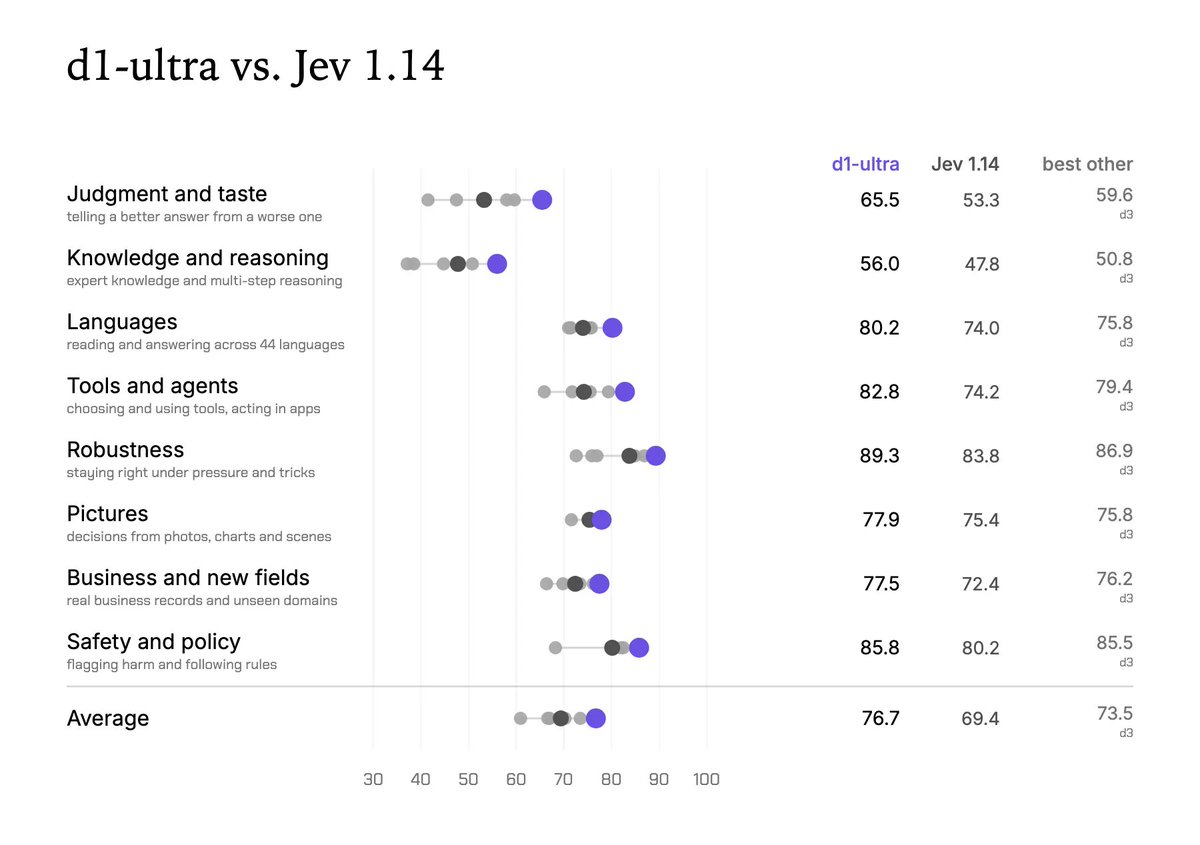
Liquid AI releases d1-ultra decision model: calibrated probabilities with zero generated tokens, #1 on Artificial Analysis Decision Index (65), $0.042 per M input tokens

Liquid AI released d1-ultra on Oct 15: a multimodal decision model that takes text and images and, in one forward pass, returns probabilities for yes/no, choice and score questions without generating tokens; billed on input only. Artificial Analysis ranks it #1 on Decision Index v1.0 at 65, at least 8 points ahead, with an 85% non-hallucination rate. Available on the Liquid API, Vercel AI Gateway and OpenRouter.

Liquid AI releases d1-ultra decision model: calibrated probabilities with zero generated tokens, #1 on Artificial Analysis Decision Index (65), $0.042 per M input tokens

Key Takeaways

  • Artificial Analysis Decision Index v1.0: 65, ranked #1 and at least 8 points ahead (independent)
  • AA-Omniscience-Decision non-hallucination 85% vs 40% for runner-up Microsoft-Decision-1; more abstention drops accuracy to 32% vs d1's 41%
  • $0.042 per M input tokens, output free; a 1024x1024 image counts as 1,536 tokens
  • 32,768-token context, 44 languages, leads all eight categories of Liquid's 112-eval suite (vendor)
  • Call via Liquid /decisions/v1/systemone with model d1-ultra, or liquid/d1-ultra on Vercel AI Gateway / OpenRouter
Read full story
Linked Models & Agents:

OpenUI 1.0 ships: the open-source generative-UI standard adds custom actions and functions; its own benchmark shows ~52% fewer tokens than JSON render formats

On 2026-10-15 Thesys shipped OpenUI 1.0 (MIT, ~11K GitHub stars). OpenUI Lang 1.0 adds custom actions (defineAction), custom functions (defineFunction), library.extend and a stored-message format, so agents can stream interactive cards, forms and charts instead of walls of text. In the project's tiktoken benchmark, seven UI scenarios total 4,800 tokens, 52.8% fewer than Vercel JSON-Render. The 1.0 features currently require the React renderer.

OpenUI 1.0 ships: the open-source generative-UI standard adds custom actions and functions; its own benchmark shows ~52% fewer tokens than JSON render formats

Key Takeaways

  • Token efficiency (project benchmark, tiktoken GPT-5 encoder): 7 scenarios total 4,800 tokens vs Vercel JSON-Render 10,180 (-52.8%) and Thesys C1 JSON 9,948 (-51.7%); up to -67.1% on a contact form (benchmarks)
  • New in 1.0: defineAction custom actions reach the host onAction with typed params; defineFunction adds custom @ functions whose failed calls evaluate to null instead of breaking the page
  • Compatibility: Vue/Svelte/Angular renderers stay on 0.4; 1.0 language features need the React renderer for now
  • Upgrade gotcha: bump lang-core, react-lang and the prompt-generating server together; a 1.0 prompt teaches bare action steps that 0.x clients won't run
  • Traction: ~11K stars six months after open-sourcing (MIT); the founder's launch post drew ~1.18M impressions and 1,800+ bookmarks (GitHub)
Read full story

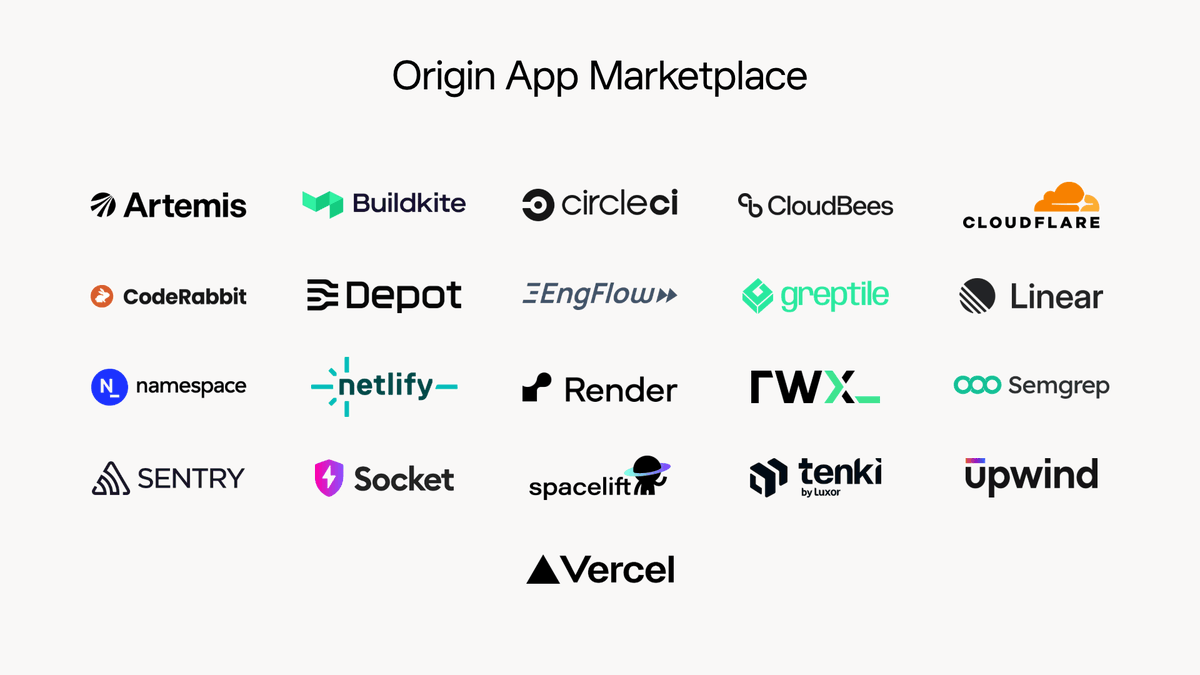
Cursor launches the Origin App Marketplace with 20+ CI, deploy, code-review and security integrations, open to public submissions

On Oct 13 Cursor launched the Origin App Marketplace: its code hosting platform Origin now connects to 20+ apps across deployments (Cloudflare, Vercel and more), CI (CircleCI, Buildkite and more), code review (CodeRabbit, Greptile, Tenki), security (Semgrep, Socket and more), monitoring (Sentry) and project management (Linear), and the marketplace is open to public submissions from any developer-tool team.

Cursor launches the Origin App Marketplace with 20+ CI, deploy, code-review and security integrations, open to public submissions

Key Takeaways

  • 21 launch apps in 6 categories: deploy (5), CI (7), code review (3), security (4), monitoring (1), project management (1)
  • Public submissions: build privately in your namespace, make it public, submit with slug, tags and a demo video, then Cursor reviews and lists it
  • Apps authenticate with an app JWT plus installation access tokens, receive webhooks, and write back check runs, PR comments and reviews
  • The official origin-apps plugin answers questions from live Origin API docs and plans ports of existing apps
  • Launch post: ~1,356 likes and ~68K views as of Oct 14 morning
Read full story
ADSponsored
L
Louis Raillé@Louis-CFM·
👀145
🔥97

Coucou hits ★3146: open-source notch companion for Claude Code/Codex approvals; Linux beta ships

Open-source Louis-CFM/coucou (MIT, ★3146) parks Claude Code/Codex/Cursor/Gemini CLI/Antigravity sessions in the Mac notch (top-edge island on Windows/Linux), with in-island Allow/Deny/Always approvals, live diffs, file drop, and service pills. macOS v0.1.3 shipped 2026-10-03; Linux 0.1.1 beta is out; Windows installer is paused for a Defender false positive.

Coucou hits ★3146: open-source notch companion for Claude Code/Codex approvals; Linux beta ships

Key Takeaways

  • Repo Louis-CFM/coucou MIT — ★3146 / 494 forks at dig time; site louis-cfm.github.io/coucou
  • Watches Claude Code, Codex, Cursor, Gemini CLI, Antigravity; third-party pills via coucou_agent (AGENTS.md)
  • In-island Allow/Deny/Always + AskUserQuestion for Claude Code; hooks no-op if Coucou is closed (never blocks the CLI)
  • macOS v0.1.3 (2026-10-03); Linux linux-v0.1.1 beta; Windows installer paused (Defender FP — build from source)
  • No telemetry/account; secrets in OS keystores
Read full story

InclusionAI Ling-3.1-flash: 560B/25B-active MoE; vendor SWE-Pro 65.39 & CyberGym 87.9; free on Vercel/OpenCode through Oct 13

On 2026-09-30 InclusionAI (Ant Group) announced Ling-3.1-flash: ~560B total / ~25B active MoE hybrid-reasoning model, designed for up to 1M context (trial/gateway routes often expose 256K–262K). Weights are not on Hugging Face yet. Vercel AI Gateway and OpenCode Zen list limited-time free access (~through 2026-10-13). Vendor-reported scores include SWE-Pro 65.39, Terminal-Bench 4.0 40.40, CyberGym 87.90—not independently reproduced.

InclusionAI Ling-3.1-flash: 560B/25B-active MoE; vendor SWE-Pro 65.39 & CyberGym 87.9; free on Vercel/OpenCode through Oct 13

Key Takeaways

  • Scale: ~560B total / 25B active (vs Ling-3.0-flash 124B/5.1B); design target 1M context; trial/gateway often 256K–262K
  • Architecture (vendor summary): 7×KDA : 1×Gated MLA; 512 routed experts pick 8 + 1 shared
  • Vendor benches (unreproduced): SWE-Pro 65.39, TB4.0 40.40, CyberGym 87.90, BrowseComp 91.67
  • Access: Vercel AI Gateway inclusionai/ling-3.1-flash(-free) via Novita free ~to Oct 13; OpenCode Zen ling-3.1-flash-free
  • Caveats: no public weights yet; free routes may use data to improve the model; some scores are environment-qualified
Read full story

Vercel AI SDK: [email protected]–7.0.126 speech telemetry + tool-approval clear; @ai-sdk/openai ultrafast service tier

Vercel shipped [email protected] (speech/transcription telemetry) through [email protected] (clear tool approvals on addToolOutput) on 2026-09-30—22 commits since covered [email protected]. Same day @ai-sdk/[email protected] adds OpenAI serviceTier: 'ultrafast' (docs: access-controlled, gpt-5.6-sol), plus Azure MAI speech/transcribe and MCP OAuth conditional invalidation patches in the tree.

Vercel AI SDK: ai@7.0.124–7.0.126 speech telemetry + tool-approval clear; @ai-sdk/openai ultrafast service tier

Key Takeaways

Read full story

Vercel AI SDK [email protected]: idle SSE heartbeats; prune tool content when retaining zero messages; user messages supersede pending tool approvals

Vercel shipped [email protected] on 2026-09-30 (compare): optional SSE heartbeats keep idle UI message streams open; prune all tool content when retaining zero trailing messages; ignore pending tool approvals superseded by user messages; preserve partial reasoning tags at streamed text ends. Build migrates tsup→tsdown with gateway/provider/utils bumps.

Vercel AI SDK ai@7.0.123: idle SSE heartbeats; prune tool content when retaining zero messages; user messages supersede pending tool approvals

Key Takeaways

Read full story

Vercel AI SDK: `@ai-sdk/openai` 3.0.121 / 2.0.132 add native GPT-6.1 Sol support

Vercel AI SDK shipped @ai-sdk/[email protected] and @ai-sdk/[email protected] on 2026-09-30, adding native GPT-6.1 Sol (gpt-6.1-sol) support on the v5/v6 provider lines (#21747, backport #21749). Official pricing: $2/$10 per 1M tokens (cached input $0.10), 1.05M context, 128k max output.

Vercel AI SDK: `@ai-sdk/openai` 3.0.121 / 2.0.132 add native GPT-6.1 Sol support

Key Takeaways

  • Shipped @ai-sdk/[email protected] and @2.0.132 with GPT-6.1 Sol (#21747 / #21749)
  • Model id gpt-6.1-sol; specs $2/$10 per 1M, cached input $0.10, 1.05M context, 128k max out
  • Mid-tier coding/computer-use path vs Astra; aligns with Codex defaulting to Sol
  • Upgrade: npm i @ai-sdk/[email protected] (or 2.0.132 on v5 line)
  • Docs: OpenAI provider
Read full story