AI Coding Live News

SenseTime Ships SenseNova 6.8 Flash: An Office Agent Model With Long-Term Memory and Proactive Interaction That Builds Animated Slides, Motion Posters and Editable Blender 3D Projects

On the evening of November 2, SenseTime released the official version of SenseNova 6.8 Flash, a multimodal agent model with two main upgrades. First, long-term memory and proactive interaction: it keeps user goals and constraints across tasks and sessions and flags affected items when information changes. Second, design generation across Web, SVG, Three.js, Blender, animated PPT and motion posters, with Figma integration. It is live in SenseNova Studio, the Raccoon assistant and the SenseNova Token Plan; the official X account says the Token Plan offers a free trial of 1,500 API requests every 5 hours. SenseTime says it beats some international frontier models on agent collaboration, data analysis and presentation generation, but the announcement lists no specific scores.

SenseTime Ships SenseNova 6.8 Flash: An Office Agent Model With Long-Term Memory and Proactive Interaction That Builds Animated Slides, Motion Posters and Editable Blender 3D Projects

Key Takeaways

  • The official release landed on the evening of November 2, positioned as a multimodal agent model for office collaboration and design delivery
  • Long-term memory plus proactive interaction: it remembers goals, constraints and preferences across sessions and suggests changes when related information shifts (demos ran on an internal Raccoon build)
  • Design output spans Web, SVG, Three.js, Blender, animated PPT and motion posters, producing editable PPTX files and Blender projects, with Figma integration
  • Available in SenseNova Studio, the Raccoon assistant and the SenseNova Token Plan; the official X post cites 1,500 free API requests every 5 hours
  • SenseTime only says it beats some international frontier models on agent collaboration, data analysis and presentation generation; no scores were published and there is no independent evaluation yet
Read full story
Linked Models & Agents:
⚡ SenseNova 6.8 Flash⚡ SenseNova Loop-9B-Preview🤖 Raccoon🌐 SenseTime

Fireworks Forge Launches: Ultra-fast Inference Preview Hits 1,500 Tokens/s, Half-Price Background Mode, Nexus Desktop for Codex and Claude Desktop, Sovereign Private Preview

At its first Forge conference on November 3, open-model inference platform Fireworks launched a batch of products. Ultra-fast, powered by NVIDIA Blackwell, is in public preview at up to 1,500 tokens per second on DeepSeek V4.1 Flash, cutting a 30-turn agent task from 1 minute to 8 seconds. Background Mode runs deferrable work at half price, alongside multi-day prompt caching and higher rate limits. Nexus Desktop brings open-model routing into the Codex app, Claude Desktop and OpenCode, with Pro plans from $8 per month. Fireworks also announced No Eval, serverless LoRA inference, the Fireworks Sovereign private preview and a 60+ partner Frontier Ecosystem.

Fireworks Forge Launches: Ultra-fast Inference Preview Hits 1,500 Tokens/s, Half-Price Background Mode, Nexus Desktop for Codex and Claude Desktop, Sovereign Private Preview

Key Takeaways

  • Ultra-fast public preview: on NVIDIA Blackwell, up to 1,500 tokens per second on DeepSeek V4.1 Flash; in Fireworks' benchmark a 30-turn agent task fell from 1 minute to 8 seconds (Fireworks blog)
  • Cost options: Background Mode runs deferrable work at half price; multi-day prompt caching cuts the cost of resuming long context; higher serverless rate limits and Elastic Burst are generally available
  • Nexus Desktop launches: personalized routing across open and closed models inside the Codex app, Claude Desktop and OpenCode; Pro from $8 per month, Teams from $10 per seat per month
  • Training: No Eval (private preview) turns production traces into task evals; serverless LoRA inference (public preview) starts with GLM 5.3 Flash at per-token pricing with no idle charge; free training on Muse Glimmer 30B through November 30
  • Enterprise: Fireworks Sovereign (private preview) runs the inference engine in a customer's own cloud or data center; Fireworks says it already manages over 25,000 GPUs in customer environments; plus a 60+ partner Frontier Ecosystem
Read full story

LiberAI Unveils Liber-0 World Action Model: Pretrained on 2.2M Hours of Human Experience, 36% Zero-Shot Success Across 60 Manipulation Tasks

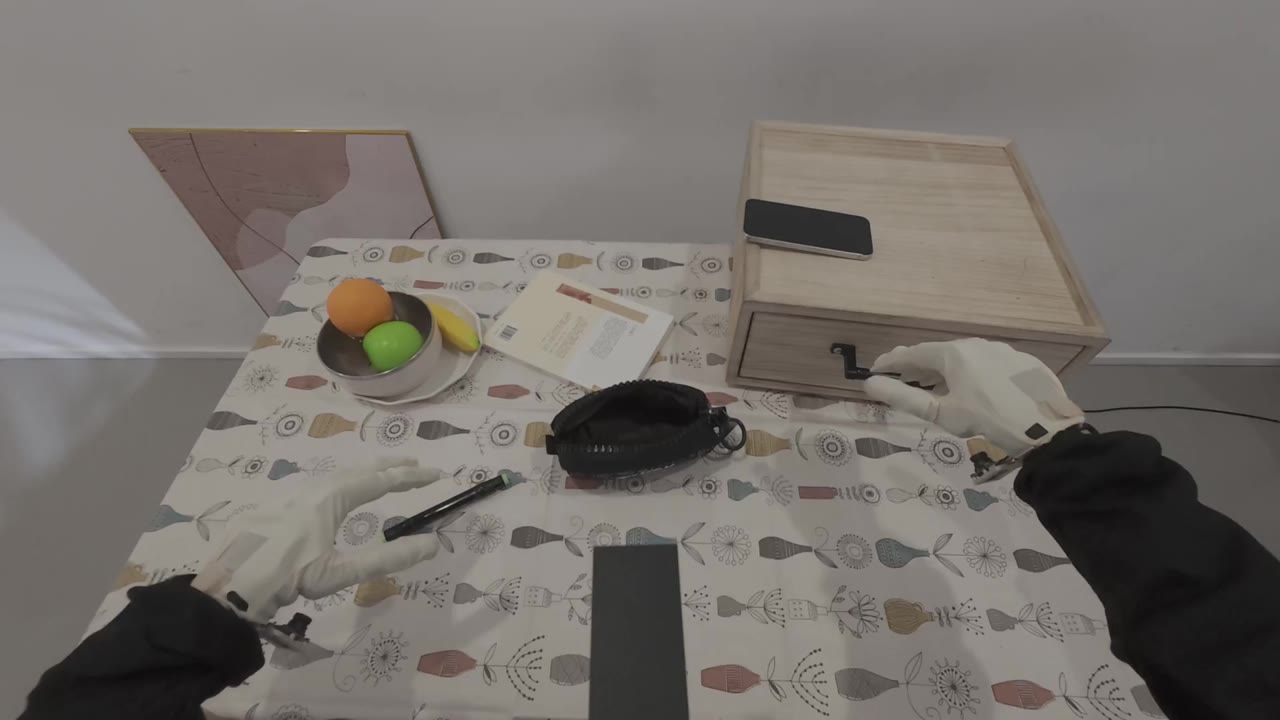
Robotics company LiberAI announced Liber-0 on its official X account and technical blog. It is a World Action Model that jointly predicts future frames and actions, pretrained on more than 2.2 million hours of human experience and anchored by precise hand-motion data from its own LiberSense Glove. On 60 tasks proposed by GPT-6 across 600 trials, Liber-0 reached 36.0% overall success without robot demonstrations collected for those tasks, but only 10.5% on challenging multi-step tasks. No open weights or API have been announced.

LiberAI Unveils Liber-0 World Action Model: Pretrained on 2.2M Hours of Human Experience, 36% Zero-Shot Success Across 60 Manipulation Tasks

Key Takeaways

  • Zero-shot results: 63.5% on pick-and-place, 34.0% on short non-pick-and-place tasks and 10.5% on challenging multi-step tasks, 36.0% overall (60 tasks x 10 trials)
  • For comparison, GPT-6 Astra used alone as a robot policy scored 8.3%, 5.0% and 1.7% on the same three task groups, with 87.3 s of reasoning per decision
  • 10K hours of glove data beat 200 times more web human video (2,000K hours), suggesting precise action labels matter more than raw video volume
  • Glove data plus 25% of the robot demonstrations reached a progress score of 75.6, above the 72.8 from robot-only training with the full pool, using 75% fewer robot demos
  • All figures are LiberAI self-reported internal evaluations; no open weights, API or commercial timeline has been announced
Read full story
Linked Models & Agents:

Axion 1.0 Open Agent Foundation Model: Two SFT Stages Plus RL, 35B-A3B Reproduction Checkpoint Under Apache 2.0, Full Recipe Released

arXiv paper 2611.03233 by Yuqi Jia, Yunjie Tian and five co-authors introduces Axion 1.0, an agent foundation model that is open beyond its weights. It uses just two lightweight SFT stages plus reinforcement learning, with no dedicated mid-training, DPO or on-policy distillation, and about 18K SFT trajectories in total. Training code is hosted under the bytedance GitHub organization, and the training data and an Axion 1.0-35B reproduction checkpoint (Qwen3.6-35B-A3B base, 35B total / 3B active, Apache 2.0) are on Hugging Face; weights for the paper's 122B model are listed as coming soon.

Axion 1.0 Open Agent Foundation Model: Two SFT Stages Plus RL, 35B-A3B Reproduction Checkpoint Under Apache 2.0, Full Recipe Released

Key Takeaways

  • A minimal recipe: SFT stage one for self-contained scientific reasoning, stage two for tool use and information seeking, then RL for long-horizon interaction, with 18,363 SFT trajectories and 484 RL tasks
  • The release covers data construction, generation, filtering, verification, prompts and training code (GitHub), not just weights
  • The 35B reproduction checkpoint scores 52.8 on HLE, 60.4 on SEAL-0, 85.0 on FrontierScience Olympiad and 55.0 on FrontierScience Research (HF model card)
  • The paper's 122B model reports 59.0 on HLE with restricted website access and 66.7 on FrontierScience Research; 122B weights are not out yet
  • All scores are self-reported; the HF card lists Claude Opus 5 at 63.6 on HLE, so Axion still trails the strongest closed models
Read full story
Linked Models & Agents:
⚡ Axion 1.0-35B⚡ Axion 1.0-122B⚡ Qwen3.6-35B-A3B🌐 ByteDance🌐 Hugging Face
ADSponsored

Tencent Releases Hy4: First Hy Model With Vision and Computer Use, Live on Tencent Cloud and OpenRouter, Open Weights Planned

On November 4, Tencent Hy published Hy4 on its official site. Versus Augusts Hy4 preview, Tencent says it scaled up pre-training and post-training, added vision for the first time, added computer use across CLI and GUI, and trained specifically on Blender, CAD and engines like Unreal, Unity and Godot. Hy4 is live on Tencent Cloud and OpenRouter (tencent/hy4, 1M context) at the same API price as the preview. Weights and a system card are promised soon, and a cheaper Hy4 flash is coming.

Key Takeaways

  • Official blog: Introducing Hy4, dated 2026-11-04; the Tencent Hy transparency center also lists V1.0 Hy4
  • Two firsts: vision (fine-grained image detail, complex charts, math visual reasoning) and computer use (CLI plus GUI, with targeted training on Blender, CAD and long cross-app workflows)
  • Tencent's own evals: on 579 real finance tasks rated by 213 finance professionals Hy4 scores 3.04, first among open-weight models (DeepSeek-V4.1-Flash-1017 2.97, Kimi K3.1 Pro 2.68, GLM-5.3 2.68); GameDev +19.1%, GameLogic +9.8%; internal search hallucination rate 15.76% to 5.45%
  • Same API price as the preview: $0.042 cached input, $0.834 input, $2.501 output per million tokens; the OpenRouter page currently shows 50% off ($0.417/$1.251), 1,048,576 context and up to 65,536 output tokens
  • Weights are not out yet: Tencent says it will open-source them with a full system card, working with vLLM and SGLang; Hy4 flash is due soon
Read full story
Linked Models & Agents:
⚡ Hy4⚡ Hy4 preview⚡ Hy4 flash🤖 CodeBuddy🤖 WorkBuddy🌐 Tencent

Artificial Analysis Upgrades Its Six Capability Indexes to v2.0, Weighting Non-Hallucination and Agentic Tool Use; Claude Opus 5.5 Leads All Six

Independent evaluator Artificial Analysis announced on X on November 4 that its six Capability Indexes (Finance & Accounting, Strategy & Ops, Legal, Healthcare & Medical, Engineering, Economics) are now v2.0, aligned with Intelligence Index v5.0 evaluations and weighting Non-Hallucination and Agentic Tool Use more heavily. Across the indexes, HLE becomes HLE-Diamond, AA-Omniscience moves to v1.1 and GDPval-AA is removed; Engineering gains a new Science capability. Per Artificial Analysis, Claude Opus 5.5 (max) leads all six, with GPT-6 Astra (max) second in Finance & Accounting, Legal and Engineering. Among open-weights models, Kimi K3.1 Pro (weights not yet released) leads all six at #5 to #8.

Artificial Analysis Upgrades Its Six Capability Indexes to v2.0, Weighting Non-Hallucination and Agentic Tool Use; Claude Opus 5.5 Leads All Six

Key Takeaways

  • The six indexes map O*NET occupation tasks to representative benchmarks, weighted by how often each capability appears in that occupation (methodology page)
  • Common changes: HLE becomes HLE-Diamond, AA-Omniscience moves to v1.1, and GDPval-AA is dropped from Agentic Knowledge Work (now AA-Briefcase v1.1)
  • Non-Hallucination weight rises to 15% in Finance & Accounting and Legal; Agentic Tool Use (AutomationBench-AA) is 35% of Strategy & Ops, its largest component
  • Engineering adds Science (20%, CritPt v2 Hard Subset plus Terminal-Bench-Science 0.1) and FrontierCode 2.0 under Agentic Coding; Economics swaps AA-LCR for GDP.pdf
  • Results per Artificial Analysis: Claude Opus 5.5 (max) is #1 in all six; among open weights, Kimi K3.1 Pro leads all six, MiniMax-M3.1-Flash leads Strategy & Ops (#10) and DeepSeek V4.1 Flash 1017 (max) leads Healthcare & Medical (#12)
Read full story

X Discussion: Sam Altman Says People Should Always Control the Future and That This Should Ultimately Constrain AI Progress

At 01:40 UTC on November 4, OpenAI CEO Sam Altman (@sama) posted on X that "people should always be in control of the future," saying OpenAI is against the idea of people being relegated to doing things that "AI systems think makes sense to reward in humans," and that people should not cede control of the future to superintelligence, a requirement that "should ultimately constrain AI progress." Within about 25 minutes it drew roughly 1,360 likes, 337 replies and nearly 100K views; Francois Chollet and others voiced support while many replies pushed back. This is Altman's stated view, not a new OpenAI policy or product announcement.

Key Takeaways

  • Engagement: about 1,360 likes, 337 replies, 89 reposts, 74 quotes and roughly 99K views within about 25 minutes (per the X API); the high reply ratio signals a contested post
  • Three core lines: people should always be in control of the future; OpenAI rejects people being relegated to doing what "AI systems think makes sense to reward in humans"; people should not cede the future to superintelligence, and that requirement "should ultimately constrain AI progress"
  • Support: Francois Chollet (@fchollet) posted "Co-sign," saying the only future worth building is one where AI remains a tool in human hands; Matthew Berman said Altman made the same point in their interview last week
  • Pushback: replies asked "which people?", argued that AI systems "don't think anything," or contrasted the post with Altman's recent comments on RAM and concentrating compute in data centers
  • The post does not say where the quoted phrase comes from and names no concrete policy or timeline; online links to a GPT-6.2 Astra release date are speculation
Read full story
Linked Models & Agents:

X Discussion: Greg Isenberg Says He Talks to His Agents More Than His Human Teammates, Shares a Full Agent-Run Company Stack

On November 3, founder and Late Checkout CEO Greg Isenberg (@gregisenberg) posted a long thread on X saying his team has 50+ people in 12 countries, yet he "talks to my agents more than my human teammates." He listed an agent-driven stack covering ideation, design, build, user testing, bug fixing and data review. Within hours it drew about 1,050 likes, 2,300 bookmarks and 183 replies. This is a personal workflow and opinion, not verified productivity data.

Key Takeaways

  • Engagement: about 1,050 likes, 2,300 bookmarks, 183 replies and 75K views within hours (per the X API); bookmarks far exceed likes, so readers are saving it as a checklist
  • Coverage: ideation, design, build, user testing, bug fixing and data review are all handed to agents; humans handle "creative feedback, relationships and telling the agents what they got wrong"
  • Build: pingdotgg/t3code as the control surface and stablyai/orca to run parallel agents, each in its own git worktree
  • Quality control: every output is scored 1-10 by an LLM judge and anything under 8 goes back; every agent mistake becomes a new skill
  • All of this is self-reported; no verifiable productivity or cost figures were published
Read full story

Vercel Security Review Enters Public Beta: Vulnerability Review on Every GitHub Push, One-Click Fixes with Vercel Agent

On November 3 (US Pacific time), Vercel launched Security Review in public beta. It is a new Vercel Agent capability alongside Code Review and Investigation: once enabled, every push to connected GitHub repositories triggers a diff-only vulnerability review that finishes in seconds. Findings land in the Security dashboard, PR comments and the CLI, and can be fixed with one click by Vercel Agent or pulled into your own coding agent via vercel security vulnerabilities. It is available to Pro and Enterprise teams, and reviews are free until November 10.

Vercel Security Review Enters Public Beta: Vulnerability Review on Every GitHub Push, One-Click Fixes with Vercel Agent

Key Takeaways

  • Trigger: every GitHub push (including direct pushes to production) is reviewed automatically; only the diff is scanned, which Vercel says finishes in seconds, so it can run on every preview and production deployment
  • Beyond pattern matching: the agent traces how changed code is reached, checks existing protections and rechecks each finding, which Vercel says catches logic flaws such as missing authorization checks
  • Teams can write security policies in plain language, scoped to projects or the whole team, and manage them with vercel security policy
  • Pricing: Vercel Agent rate, model tokens at provider cost with no markup, plus $0.25 per million tokens; reviews are free until November 10, 2026, while Agent fixes are billed
  • Availability: public beta for Pro and Enterprise teams; Vercel has not published detection-rate or false-positive benchmarks
Read full story

Grok Bot Rolls Out a New Shopping Experience: Find the Best Deal, Compare Product Cards, and Track Orders After You Approve the Buy

On November 3, the official Grok Bot account @bot posted a video promoting a new shopping experience: have the Bot find the best deal, compare items, and track all your orders. The features come from the official changelog for version 0.78.1 (which includes 0.78.0), dated October 27: products appear as cards with photo, rating, price and store plus up to two badges, and three or four results scroll in a carousel. Product pages list in-stock options first, and Buy now starts an order you approve. After purchase the Bot tracks shipping and delivery, with shipment cards showing carrier and stage. Shop Pay can be connected in the Vault Payments tab and set as the preferred method.

Grok Bot Rolls Out a New Shopping Experience: Find the Best Deal, Compare Product Cards, and Track Orders After You Approve the Buy

Key Takeaways

  • The official post went out at 21:50 UTC on November 3 with a 17-second demo video; about 1,687 likes, 122 reposts, 292 replies and 112K views at fetch time
  • Source of the features: the official 0.78.1 changelog entry (October 27, includes 0.78.0), titled Shopping cards and subscription templates
  • Product cards: photo, rating, price and store, up to 2 badges such as Top rated, 3 or 4 results in a carousel; product pages list in-stock options first and disable options no store has
  • Ordering and tracking: orders started with Buy now need your approval; afterward the Bot reports shipping and arrival, and shipment cards show carrier and stage
  • Payments: the Vault has had a Payments tab since 0.77.0 (October 26); 0.78.1 lets you connect Shop Pay and make it the method Bots use first
Read full story
Linked Models & Agents:
ADSponsored

Epic Confirms Unreal Engine 5.9: Preview Next Week With Improved AI Workflows and Web Back as a Target Platform

On November 3, the official Unreal Engine account said UE 5.9 is happening, with a Preview build next week that includes improved AI workflows, web as a target platform, and rendering and animation updates; changes are already landing in the 5.9 branch on GitHub, with more details to come. This reverses Epic's June State of Unreal stance that 5.8 was the last planned major UE5 release, with 5.9 kept only as an option. UE 5.8 shipped the Experimental Unreal MCP plugin, which lets MCP clients such as Claude Code and Cursor drive the editor; the 5.9 AI workflow changes likely build on it, but Epic has not published a feature list yet.

Key Takeaways

  • Timing: the official post went out at 13:05 UTC on November 3 and says the 5.9 Preview arrives next week; the exact date and the final release date are not announced
  • Scope (per Epic): improved AI workflows, web as a target platform, and rendering and animation updates; changes are already landing in the 5.9 branch on GitHub
  • Context: in June, State of Unreal called 5.8 the last planned major UE5 release; UE6 targets Early Access at the end of 2027, with the full release 12 to 18 months later
  • AI groundwork: the Experimental Unreal MCP plugin in 5.8 embeds an MCP server in the editor at http://127.0.0.1:8000/mcp by default, loopback only and with no authentication
  • Reach: about 2,552 likes, 251 reposts, 114 quotes and 215K views at fetch time
Read full story

OpenAI Shares Progress on ChatGPT and Codex for Hardware Engineering: GPT-6 Astra Designs a Codex Device in Under a Week, Mazda Joins for Aerodynamics Research

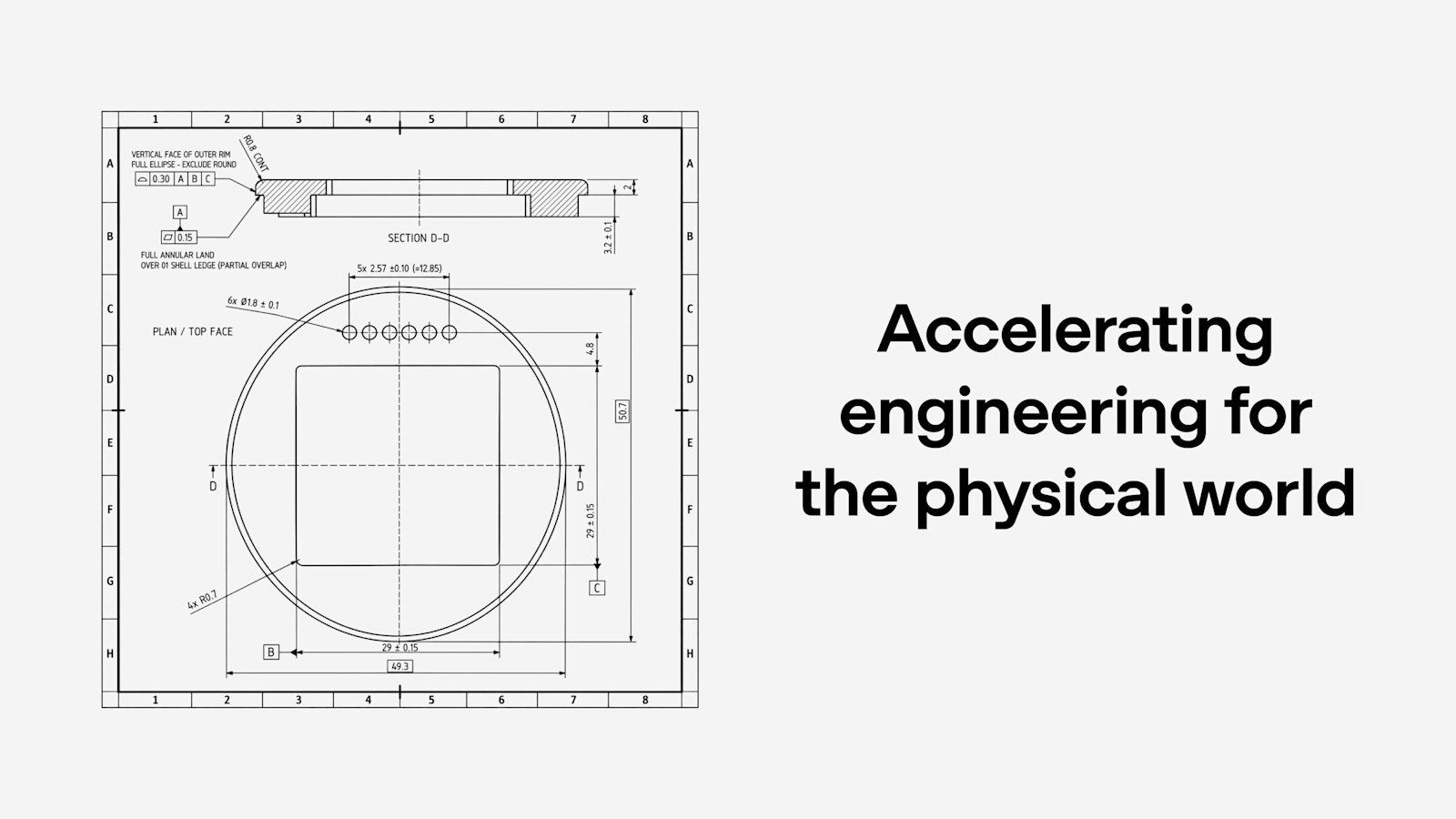
On November 3, OpenAI published "Accelerating engineering for the physical world," describing how its models help with mechanical design, electrical design and simulation. Two employees used GPT-6 Astra to design a device for talking to Codex (enclosure, PCB, firmware and software) in under a week, and a contract manufacturer built a small prototype batch in under a month, though manufacturing readiness still took several rounds of human review. Token usage across OpenAI hardware teams has grown 23-fold since February. On BenchCAD 2.0, a newer internal model averaged 0.875 versus 0.594 for GPT-6 Astra at its highest reasoning setting (OpenAI-reported). OpenAI is also expanding its work with Chip Ganassi Racing and announced a new research collaboration with Mazda.

OpenAI Shares Progress on ChatGPT and Codex for Hardware Engineering: GPT-6 Astra Designs a Codex Device in Under a Week, Mazda Joins for Aerodynamics Research

Key Takeaways

  • In a test with no direct human edits, GPT-6 Astra handled the look, enclosure structure, component selection, PCB layout, UI and firmware; two employees finished the design in under a week as a side project, and prototypes came back in under a month, per the OpenAI blog.
  • OpenAI names the gaps: Astra did not consistently account for the manufacturer's production limits, tolerances or assembly details, so manufacturing readiness took several rounds of review.
  • OpenAI hardware and infrastructure teams use Codex and ChatGPT for CAD models, 2D manufacturing drawings, simulation and FEA setup, and design reviews; token usage has grown 23-fold since February (OpenAI-reported).
  • BenchCAD 2.0 (reconstructing 3D parts and assemblies, identifying circuit-board connections): a newer internal model scored 0.875 versus 0.594 for GPT-6 Astra at its highest reasoning setting (OpenAI-reported; the internal model is unnamed and unreleased).
  • Collaborators: Chip Ganassi Racing is testing 3D-scan-to-editable-CAD and 2D drawing workflows; Mazda is working with OpenAI researchers on airflow and structural simulations for vehicle design, with results promised "in the coming months."
Read full story

X Discussion: Paul Graham Pushes Back on an "AI Bubble" Post, Saying AI Cannot Be Both Fake and Destroying Jobs

On November 2, X user Fav (@favwontmiss) posted that "the AI bubble bursting is going to be one of the biggest reality checks in tech history," accusing AI companies of burning billions, destroying jobs, draining natural resources and forcing products nobody asked for into daily life. The post drew about 6,600 likes, 670 reposts and 370,000 views. On November 3, Y Combinator co-founder Paul Graham (@paulg) replied: "You can't claim both that AI is fake and that it's destroying jobs. If it were fake it wouldn't be able to." His reply drew about 1,600 likes and 44,000 views, and the debate reached X trending. These are opinions from both sides, not established facts.

Key Takeaways

  • The original post: Fav (@favwontmiss) called an AI bubble burst "one of the biggest reality checks in tech history," with about 6,600 likes, 670 reposts and 370,000 views; see the original post.
  • Paul Graham's rebuttal: the critiques "AI is fake" and "AI is destroying jobs" contradict each other; see his reply, with about 1,600 likes and 44,000 views.
  • Where the sides talk past each other: "bubble" is about valuations and whether spending pays back, while "replacing jobs" is about whether the capability is real. Both can hold at once (useful technology that is still overvalued), which is a recurring point in the replies.
  • Why it matters to developers: the argument does not change what the tools can do, but it shapes enterprise AI budgets, hiring narratives and public acceptance of AI coding products.
Read full story
Linked Models & Agents:

CrowdStrike Agrees to Acquire Fiddler and Dreadnode and Ships an AI Kill Switch, Bringing Agent Observability, Pre-Deployment AI Security Testing and Agent Termination Into Falcon

At Fal.Con Europe in Barcelona on November 3, CrowdStrike said it signed definitive agreements to acquire AI agent observability company Fiddler AI and automated AI security testing company Dreadnode, and launched an AI Kill Switch in Falcon Guardian that can terminate a misbehaving agent, block it from relaunching and cut its enterprise network access. Both deals are expected to close in CrowdStrike's fiscal Q4 FY27, with the products generally available that quarter. CrowdStrike did not disclose prices; CyberScoop, citing the Wall Street Journal, put Fiddler at about $400 million and Dreadnode at about $95 million.

CrowdStrike Agrees to Acquire Fiddler and Dreadnode and Ships an AI Kill Switch, Bringing Agent Observability, Pre-Deployment AI Security Testing and Agent Termination Into Falcon

Key Takeaways

  • Both acquisitions were announced the same day and are expected to close in CrowdStrike's fiscal Q4 FY27, paid mostly in cash plus some stock subject to vesting conditions.
  • CyberScoop, citing the Wall Street Journal, puts Fiddler at about $400 million and Dreadnode at about $95 million, roughly $495 million combined; CrowdStrike did not disclose the amounts.
  • Fiddler will be sold as Falcon Observe: pre-deployment evaluation, tracing of decisions and tool calls across the agent hierarchy, drift and hallucination detection, and evaluation costs cut by up to 98% using purpose-built models.
  • Dreadnode runs more than 100 known AI attack strategies (jailbreaks, prompt injection, multi-turn and agent-specific attacks) against models, agent reasoning loops, applications and MCP servers, mapping findings to OWASP LLM Top 10, OWASP Agentic ASI01-ASI10, MITRE ATLAS and NIST AI RMF.
  • The AI Kill Switch is available today: an authorized admin triggers it, the agent is stopped first at the Gateway (endpoint enforcement coming soon), blocked from relaunching and cut off from the network, with every action logged.
Read full story

Sarvam Releases Prism, an Open-Weight Decision Model Built on Sarvam 105B That Returns Calibrated Option Probabilities in About 44 ms, Apache 2.0

Indian AI company Sarvam released Sarvam Prism on November 3, a "System One" decision model for enterprise workflows: given a context and questions with fixed answer options, it returns a probability for every option in a single forward pass instead of generating text. Sarvam says that across the 25 decision models it tested, Prism averages 71.8 over three indices with a median response time of 44 ms on one B200, the highest score under 100 ms, and scores 82.5 on its Indian-language benchmark. Weights are on Hugging Face under Apache 2.0, with a hosted API as well. All scores are Sarvam's own measurements.

Sarvam Releases Prism, an Open-Weight Decision Model Built on Sarvam 105B That Returns Calibrated Option Probabilities in About 44 ms, Apache 2.0

Key Takeaways

  • Trained on the Sarvam 105B (105B-10B MoE) base; it only outputs option probabilities, so the answer is always one of the given options.
  • Vendor-reported indices: Jev Decision Index 67.0, Sarvam's recreation of the Artificial Analysis decision index 65.9, internal Indian-language benchmark 82.5, average 71.8; Perplexity Decider v1.2 averages 68.0 at about 117 ms.
  • Calibration: on English answers at 90%+ confidence it expects 3.3% errors and makes 2.2%; in Indian languages 5.4% expected vs 4.4% actual, while rivals underestimate errors by 1.5x to 4.8x.
  • By sorting options into a fixed order before scoring, it changed 0 of 2,000 answers across four shuffled option orders.
  • On 700 recorded agent runs it judges correctly 78.5% of the time overall, vs 70.7% for Claude Haiku 5.5.
  • Self-hosting needs one FP8-capable GPU with about 120 GB free memory (such as B200 or H200) and about 106 GB of disk for weights.
Read full story
Linked Models & Agents:
⚡ Sarvam Prism⚡ Sarvam 105B⚡ Perplexity Decider v1.2⚡ Jev 1.14⚡ Microsoft-Decision-1⚡ Claude Haiku 5.5🌐 Sarvam