

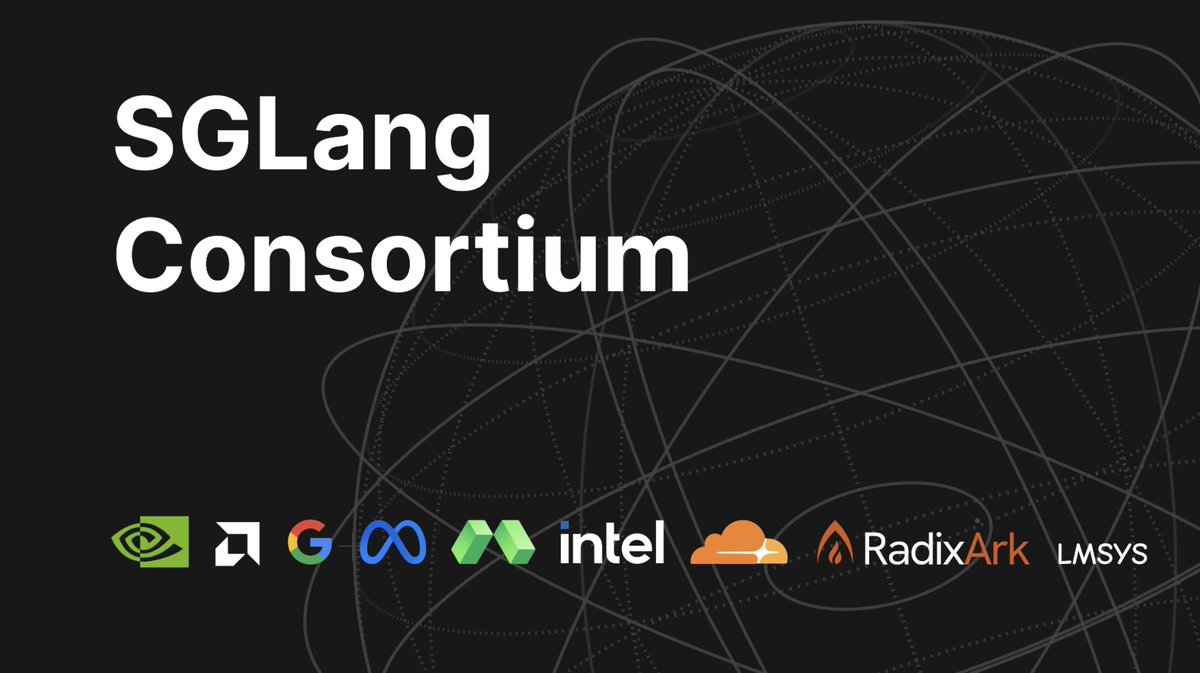
On November 12, LMSYS Org, the nonprofit behind the open-source inference engine SGLang, announced the SGLang Consortium in the opening keynote of the first SGLang Summit in San Francisco. Founding members NVIDIA, AMD, Intel, Google, Meta, Cloudflare, Modal and RadixArk will work with the SGLang maintainers on the roadmap, focusing on frontier model support, reasoning and multimodal workloads, distributed inference and hardware optimization. Each member names one technical representative and joins two roadmap meetings a year; SGLang maintainers keep authority over technical decisions and code acceptance, and the project stays open to the whole community.
Key Takeaways
- ✓Eight founding members: NVIDIA, AMD, Intel, Google, Meta, Cloudflare, Modal and RadixArk (the company founded by SGLang core authors), spanning GPU/CPU vendors, clouds and inference providers
- ✓Governance: each member names one technical representative and joins two roadmap meetings a year, with working groups and public progress updates in between; SGLang maintainers keep technical decisions and code acceptance
- ✓Four focus areas: frontier model support, reasoning and multimodal workloads, distributed inference, and optimization across hardware platforms
- ✓Scale (official figures): SGLang runs on hundreds of thousands of GPUs for users including Meta, Microsoft, Google, Amazon, Thinking Machines Lab, Cloudflare, Reflection and Modal
- ✓Context: citing Deloitte, LMSYS says inference will be about two-thirds of all AI compute in 2026, up from about half in 2025; the first summit runs November 12-13 at Fort Mason in San Francisco with 100+ speakers
Key Decision Metrics at a Glance
Turn your technical choice into a development budget
Compare 40 dev plans & simulate token costs vs $20/mo subscriptions
Project Links & Resources
Direct AccessIn-Depth Technical Analysis
Background and the problem
AI compute is shifting from training to inference. Citing Deloitte, LMSYS says inference will be about two-thirds of all AI compute in 2026, up from about half in 2025. How many tokens a given set of GPUs produces, and at what cost, depends heavily on the inference engine. SGLang is the open-source, full-stack inference engine maintained by LMSYS and part of the PyTorch ecosystem; LMSYS says it runs on hundreds of thousands of GPUs and is used in production by Meta, Microsoft, Google, Amazon, Thinking Machines Lab, Cloudflare and others. The more companies depend on it, the more their needs for new models and new hardware risk being handled in isolation, which calls for a formal channel.
Architecture and how it works
What launched is a collaboration structure, not new code. Each of the eight founding members names one technical representative and joins two roadmap meetings a year, contributing engineering time, deployment feedback, testing resources or joint development; working groups can collaborate between meetings, with public updates on roadmap direction and progress. The four focus areas are frontier model support, reasoning and multimodal workloads, distributed inference, and cross-hardware optimization. The key constraint: SGLang maintainers keep authority over technical decisions and code acceptance, so members cannot force merges, and the project stays open to everyone. With NVIDIA, AMD and Intel all at the table, cross-hardware support will be discussed on one shared roadmap.
Benchmarks and measured results
The announcement includes no new benchmarks or performance numbers. The only figures are official scale claims: SGLang runs on hundreds of thousands of GPUs and powers some of the largest production inference deployments in the world. RadixArk, Modal and the official SGLang account also posted the same day confirming they joined as founding members, and Modal said SGLang helped it serve trillions of tokens. Performance updates are more likely to come from summit sessions on NVIDIA Vera Rubin, AMD Instinct and other platforms.
Getting started for developers
SGLang users do not need to change anything for now: the license, repository and contribution process stay the same. The consortium will publish roadmap updates, so the LMSYS blog and the SGLang repository are the places to watch for priorities on day-0 model support, multimodal and distributed inference. Teams deploying on AMD or Intel hardware can expect more official optimization work. The summit runs November 12-13 at Fort Mason in San Francisco, with a main-stage livestream covering reinforcement learning, multimodal models and hardware platforms.
Benchmark side-by-side against alternatives, or calculate monthly token cost vs subscription break-even.
Discussion & Comments
0Sign in to join the discussion
Connect with AI developers to exchange benchmark insights.